Espag Window Handles: Inline vs Cranked Explained
Espag window handles are among the most common locking handles for modern timber, uPVC and aluminium casement windows in the UK. They operate a gearbox tha...
Espag window handles are among the most common locking handles for modern timber, uPVC and aluminium casement windows in the UK. They operate a gearbox that drives multi-point espagnolette gear or a locking rod, offering secure compression and weather-tight closing. This article explains the difference between inline and cranked espag window handles, provides practical selection and installation advice for homeowners and tradespeople, and outlines maintenance and security considerations.
What are espag window handles?
Espag window handles (short for espagnolette) connect to a gearbox that turns to operate an internal locking mechanism on the window. Turning the handle rotates a spindle or drives a locking rod to engage cams, hooks or rollers into keeps fitted on the frame. The handle type determines spindle alignment and clearance from the glass or frame, which affects reach and appearance.
Common advantages include good compression for sealing, compatibility with multi-point locks, and a range of finishes and locking options for security and child-safety. Espag handles are supplied in various projection styles; the two main types are inline and cranked.
Inline vs cranked: the mechanical difference
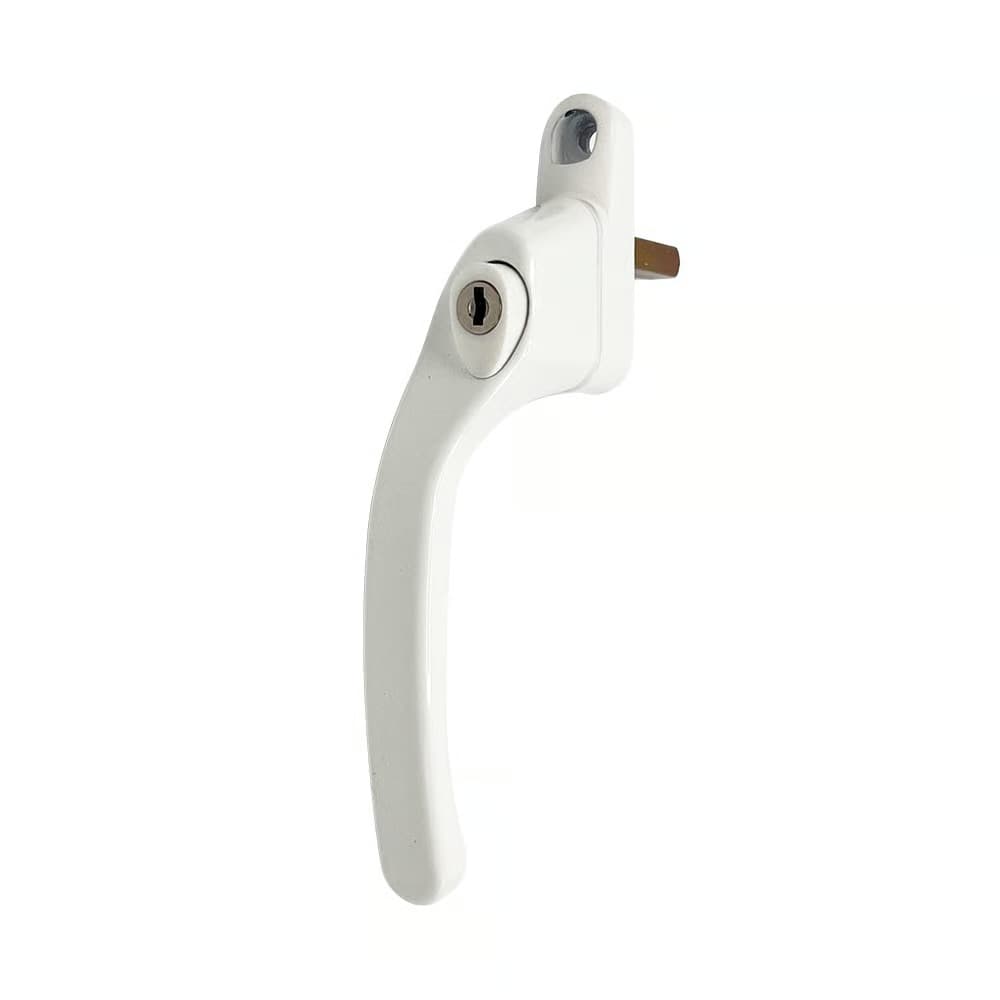
Inline espag handles sit straight in line with the handle spindle and backplate. The handle axis continues directly from the gearbox with no offset, so the handle mounts flush to the inside of the window sash. This is the most common arrangement for modern windows.
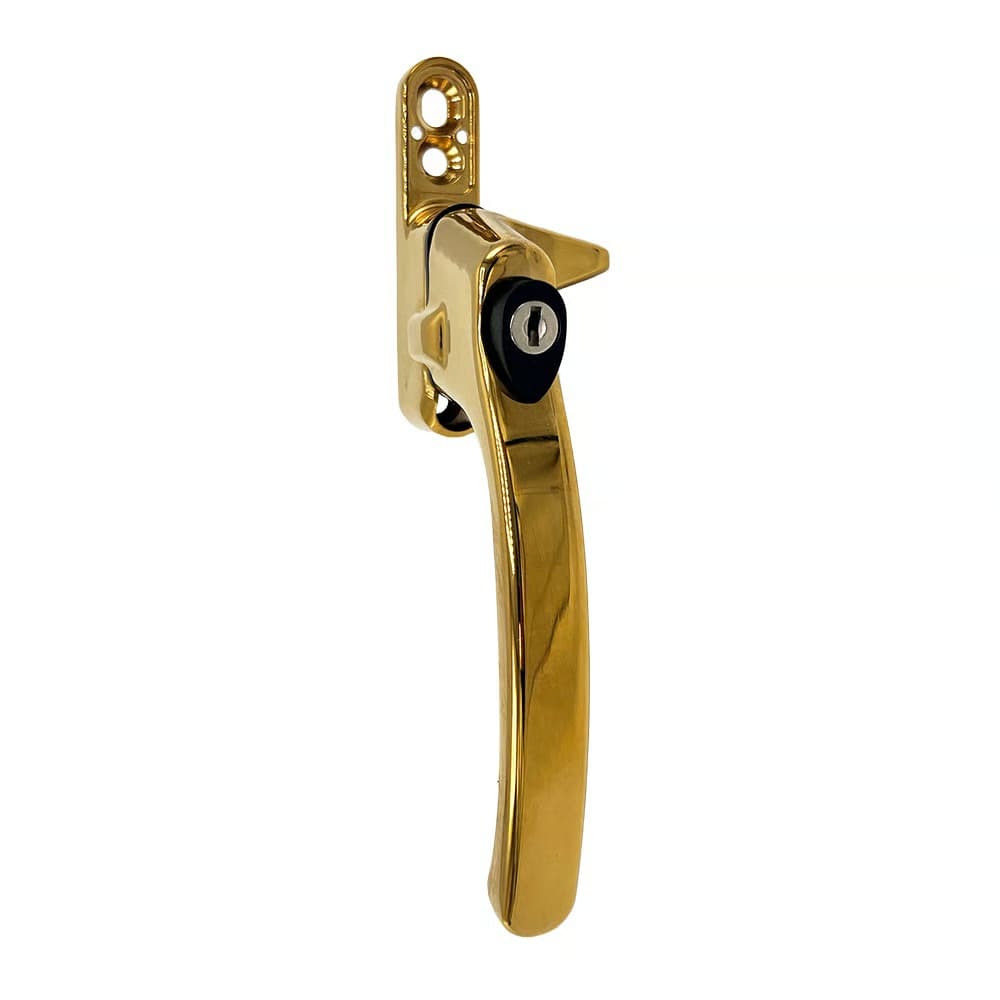
Cranked espag handles include a small vertical offset — a crank — between the gearbox and the handle barrel. The offset raises or lowers the handle relative to the gearbox, useful where the handle needs to clear beading, glazing, or furniture. Cranked handles are available in single-crank or double-crank profiles to accommodate different clearances.
Key mechanical distinctions:
- Inline: direct alignment, minimal projection, typically cleaner aesthetic, simpler fitting.
- Cranked: offset alignment to clear obstructions, available in varying crank heights, slightly different leverage and feel.
When to choose inline espag handles
Inline espag handles are the default choice where the handle can sit close to the sash without hitting beading or restricting sash movement. Practical benefits include:
- Easier installation: No need to account for crank offset when drilling or positioning the handle.
- A neater appearance: Creates a flush look that suits contemporary windows.
- Standard compatibility: Many replacement espag handles match inline spindles and gearbox positions.
When to choose cranked espag handles
Cranked espag handles are chosen where physical clearance is an issue. Typical scenarios:
- Deep glazing beads or decorative beading that would foul a straight handle.
- Rolled sash profiles where the handle would otherwise sit away from the glass.
- Installation where internal furniture, radiators or window cills restrict handle movement.
An alternative handle type for timber or older metal windows is the cockspur design; the TSS Cockspur Window Handle provides a traditional lever profile for sash-style applications where espagnolette systems are not used. Cockspur handles project differently and are not a direct replacement for espag gearboxes, so verify the locking mechanism before specifying.
Practical measurement and fitting advice
Accurate measurement prevents purchasing the wrong type of espag handle: 1. Determine spindle type and length: Most espag handles use a 7mm square spindle; confirm by removing the existing handle. Measure centre-to-centre screw positions on the backplate. 2. Measure gearbox face to obstruction: For cranked selections, measure the vertical clearance needed to avoid beading or the sash lip. 3. Check screw fixing orientation: Some handles are non-handed; others are specific to right- or left-hand sashes. 4. Verify locking requirements: Choose key-locking espag handles for ground-floor rooms or where additional security is desired.
When fitting, ensure the gearbox is secure and that the handle operates smoothly through its full rotation. Avoid overtightening fixings which can bind the handle. If the handle feels loose after installation, check spindle engagement length and backplate seating; shim the backplate if necessary to achieve a firm fit.
Maintenance and security tips
Regular maintenance extends service life and retains security:
- Lubricate the gearbox and locking points annually with a light, non-greasy lubricant suitable for metal gearworks.
- Tighten fixings periodically to prevent play. Replace worn spindles or stripped gearbox teeth promptly.
- Inspect keys and locking barrels for wear; replace key-locking handles if the lock becomes stiff or unreliable.
- For improved security, select handles with anti-snap or anti-drill features and consider PAS 24-rated hardware when upgrading doors and critical ground-floor windows. A good choice for robust, trade-quality appearance and function is the TSS Offset UPVC Window Handles, which blends traditional look with modern security features.
Summary
Choosing between inline and cranked espag window handles depends on clearance, aesthetics and compatibility with the existing gearbox. Inline handles suit most contemporary installations for a flush look and straightforward fitting. Cranked handles resolve clearance problems where beading or profile geometry would obstruct a straight handle. Tradespeople should measure spindle and clearance dimensions carefully and select key-locking options where security is a priority. Regular lubrication, tightening and inspection keep espag mechanisms working smoothly and securely.