Replacement Double Glazed Window Handles: Quick Compatibility Guide
Replacement double glazed window handles are a common maintenance task for homeowners and tradespeople. Worn, broken or mismatched handles not only affect...
Replacement double glazed window handles are a common maintenance task for homeowners and tradespeople. Worn, broken or mismatched handles not only affect operation and security but also the overall appearance of a property. This guide provides practical, actionable steps to identify the correct replacement, take accurate measurements and fit new handles with confidence.
Identify the handle type first
The first step is to identify the type of handle fitted to the window. Common types on double glazed windows include espag (espagnolette) handles, cockspur handles and lever handles for tilt-and-turn units. Each type uses a different fixing pattern and connection to the locking mechanism.
- Espag handles have a spindle driving an internal locking rod and are usually operated by a key or push button. A common replacement is the TSS Cockspur Window Handles.
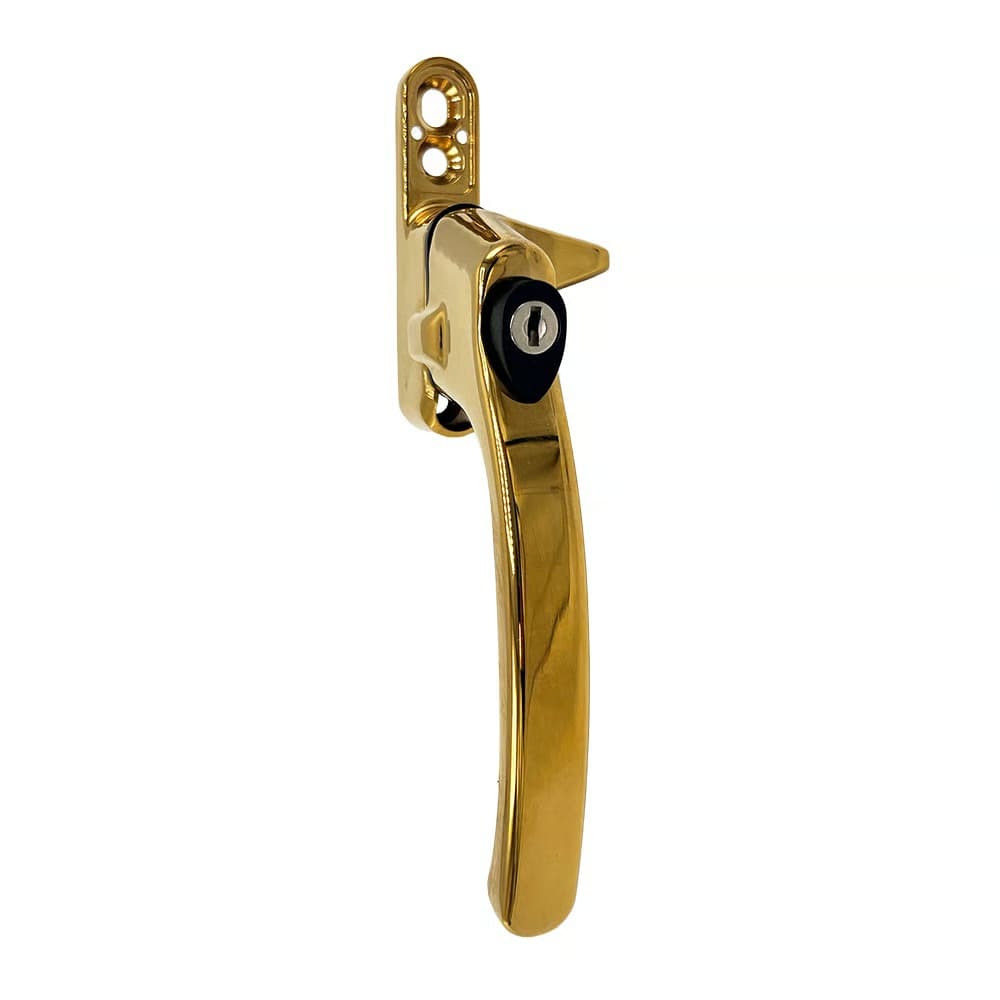
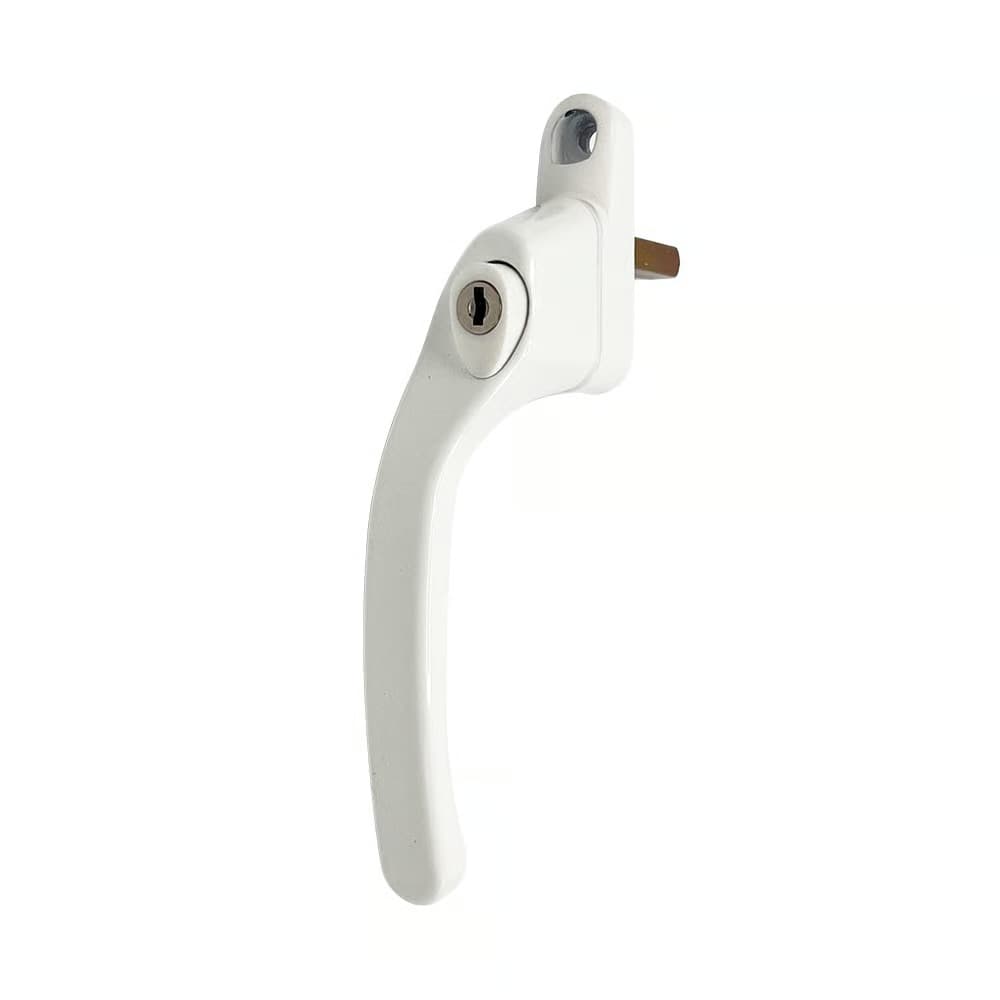
- Cockspur handles fix to the window frame and operate an external locking arm that hooks over the frame. A reliable example is the TSS Cockspur Window Handle.
- Lever handles for tilt-and-turn windows or multi-point locks may be found branded such as the TSS Offset UPVC Window Handles.
Measure correctly: the four key dimensions
Accurate measurement prevents return journeys. Take the following measurements with a ruler or digital caliper and note them down:
1. Screw centres (fixing centres): Measure the distance between the centres of the two fixing screws on the backplate. Common measurements are 43 mm, 48 mm or 92 mm depending on the handle style. 2. Spindle length and square size: For espag and lever handles, measure the length of the spindle from the face of the backplate to the end and the square size (usually 7 mm, 8 mm or 9 mm). 3. Backset (for some espag/espagnolette types): Distance from the edge of the window frame to the spindle centre; important when the handle must sit flush. 4. Handle projection and clearance: Measure how far the handle projects from the glass and ensure there is enough clearance to operate without obstruction from blinds or neighbouring openings.
Photographing the handle and lock face from different angles helps when ordering parts or seeking technical advice.
Check handedness and operation
Handles are handed — left or right — and some are reversible. Determine which side the handle is on when viewed from inside, and whether the handle turns up/down or left/right. Also record whether the handle locks with a key, push button or is non-lockable. When replacing a handle with a key-locking or ProSecure variant, confirm the lock cam orientation (the metal piece that engages the locking mechanism) and whether it requires a clockwise or counter-clockwise rotation to lock and unlock.
Confirm compatibility with locking mechanism
Not all handles are a simple cosmetic swap. Espag handles connect to internal multi-point locking mechanisms via a spindle and possibly a gearbox. Confirm the handle is compatible with:
- Spindle type and length
- Gearbox or follower connection (flat, D-shaped, splined)
- Locking cam position and adjustability
Removing the old handle safely
Before starting, ensure the window is closed and support the sash if necessary. Basic removal steps:
- Remove screw covers on the backplate if present.
- Undo the fixing screws while supporting the handle to prevent it dropping.
- Pull the handle away carefully; note the orientation of the spindle and any washers or shims.
- Inspect the mechanism for corrosion, broken parts or old sealant that may hinder a new installation.
Fitting the new handle: practical steps
Fitting a new handle is straightforward when measurements are correct:
1. Fit any adaptor or sleeve to the spindle if required (many handles include adaptors for common spindle sizes). 2. Insert the spindle into the window lock mechanism. Check that the cam or follower engages. 3. Offer the backplate to the frame, aligning the screw centres. Use the original screw holes if sound; if holes are stripped, consider using slightly longer stainless steel screws or a plastic plug rated for uPVC/Timber frames. 4. Tighten screws evenly to avoid distorting the backplate or cam. Do not over-torque plastic fittings — screws should be firm but not crushing. 5. Test operation through the full range: locking/unlocking, opening and closing. For key-locking handles, test with the key and remove any excess lubricant.
Apply a small amount of light machine oil to the spindle if the mechanism feels stiff. Avoid heavy greases that attract dust.
Security and legal considerations
Upgrading to a lockable handle on accessible windows improves security. Ensure any replacement meets relevant British Standards for hardware where required, particularly for ground-floor or easily accessible windows. Keep a record of keyed alike sets if multiple windows share the same key; this simplifies access for tradespeople while maintaining security.
Maintenance and troubleshooting
Regular maintenance extends handle life:
- Clean handles periodically with mild detergent and a soft cloth to prevent corrosive build-up.
- Check fixings annually and re-tighten if loose.
- Replace worn spindles or cams that show signs of rounding or wear to avoid stripping the mechanism.
- If the handle moves but the lock doesn’t engage, inspect the spindle connection and cam for wear; replacement of the handle or gearbox may be necessary.
Choosing a replacement
Select a handle that matches the style and finish of existing hardware for a coherent aesthetic. Where security is a priority, opt for key-lockable or ProSecure variants. Trade professionals should carry common sizes of spindles and adaptors to save time on site and prevent multiple visits.
Replacement double glazed window handles can be replaced quickly and economically with the right preparation. Accurate identification, careful measuring and correct installation reduce call-backs and improve long-term performance. For further technical details and a broader selection of options see the Window Handles Guide.