Replacement Window Handles for uPVC Windows: Matching the Original
Replacement window handles restore both function and appearance to uPVC windows. Whether a handle has seized, broken, or simply looks tired, fitting an app...
Replacement window handles restore both function and appearance to uPVC windows. Whether a handle has seized, broken, or simply looks tired, fitting an appropriate replacement that matches the original ensures secure locking, correct operation, and consistent aesthetics. This guide explains how to identify the correct part, match styles and finishes, and carry out straightforward replacements that suit both homeowners and tradespeople.
Identify the handle type and gearbox mechanism
uPVC window handles commonly fall into a few distinct types: espag (espagnolette) handles with a slim rectangular gearbox, cockspur handles that hook over the frame, and monkey tail or lever designs on older windows. The internal mechanism can be either a gearbox with a separate connecting rod or a handle fixed directly to a spindle that operates the locking points. Start by removing the handle to inspect the fixings and the spindle:
- Unscrew the two visible screws on the rose or backplate and pull the handle off.
- Note whether the handle is mounted on a square spindle, a splined spindle, or attached via set screws.
- Check the gearbox shape and any visible markings or numbers cast into the handle or gearbox; manufacturers often stamp part numbers useful for matching.
Match style, fixing centres and spindle type
Matching the original involves three practical dimensions: aesthetic style, screw fixing centres, and spindle size or profile.
- Style: Choose a handle finish and shape consistent with the property’s appearance. Modern properties commonly use white or chrome espag handles, while heritage properties may require brass or black finishes.
- Fixing centres: Measure the distance between screws on the rose or backplate. Standard centres are commonly 43mm or 92mm for certain backplates; noting the measurement reduces returns.
- Spindle type: Square spindles typically come in 7mm or 8mm sizes; some uPVC systems use splined spindles with multiple positions for lever orientation. If the spindle protruding from the gearbox is splined, ensure the replacement handle accepts a splined spindle.
Choosing the correct locking operation
Window handles operate different locking systems: single-point, multi-point espagnolette, or cockspur hook action. Ensure the replacement handle is compatible:
- Espag handles should match the gearbox or the espagnolette rod; most espag handles work with standard gearbox units when the spindle and screw centres match.
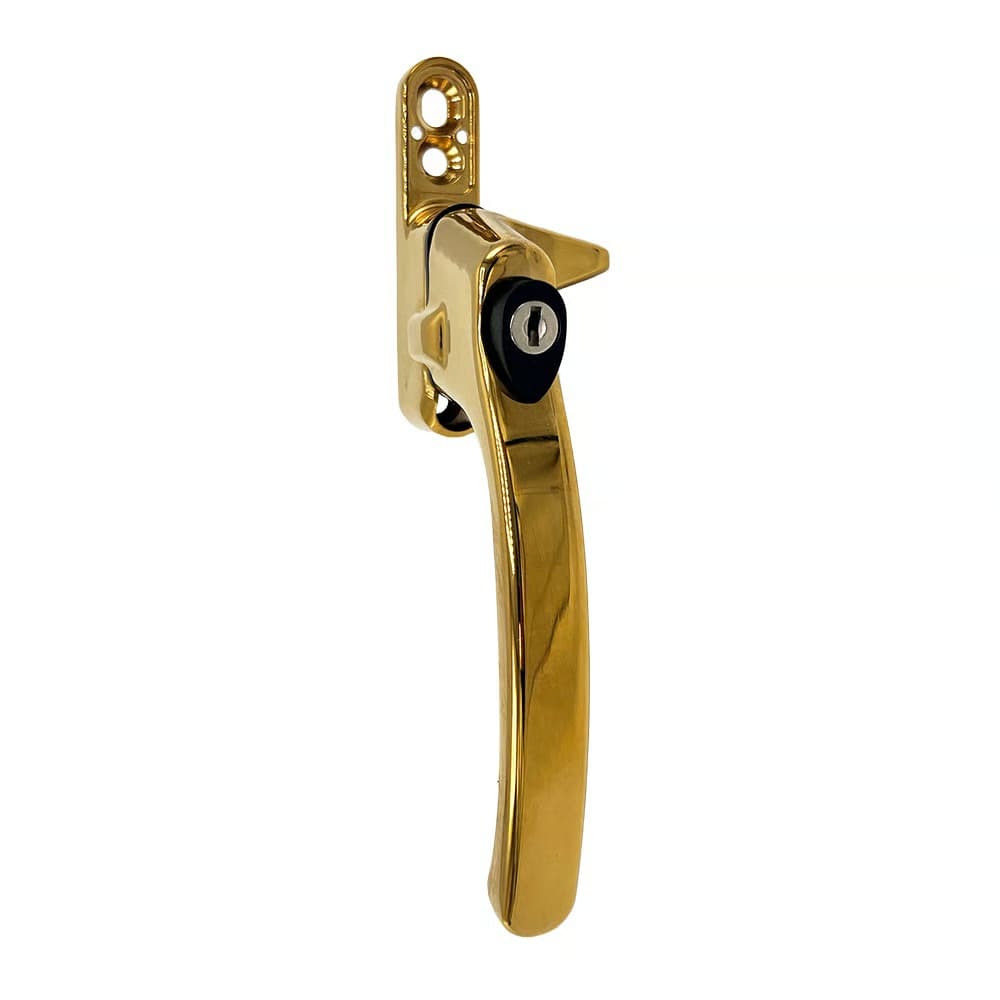
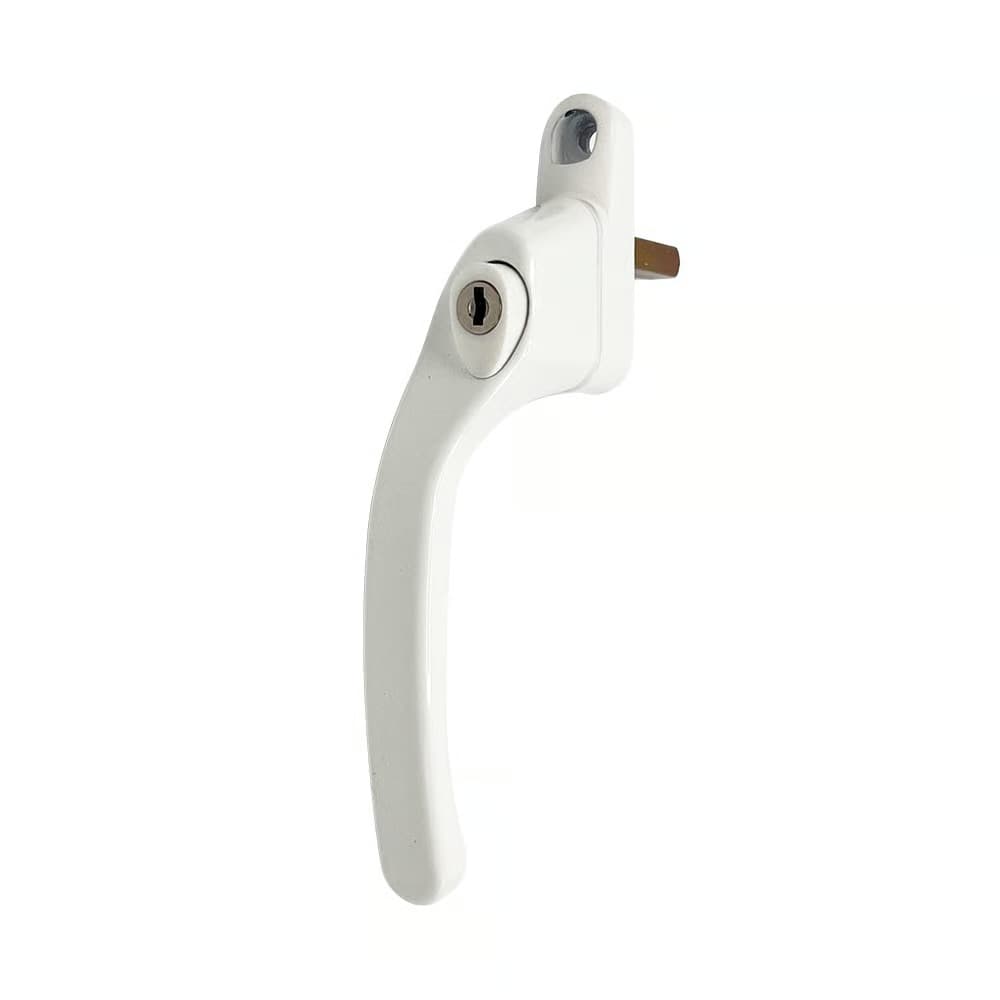
- Cockspur handles hook over the frame and require that the profile and hook length fit the frame rebate; the TSS Cockspur Window Handle is a practical option for many cockspur-style fittings.
- Consider whether the handle needs to be handed for left or right opening windows; many modern handles are reversible, but older designs may be handed and require ordering the correct orientation.
Measuring and preparing for a replacement
Accurate measurement minimises guesswork and installation time:
- Measure the backplate width and length, screw centre distance, and spindle projection from the face of the frame.
- Note whether the handle uses drive-in fixings or screws through the face into threaded inserts.
- Clean the area and remove any old sealant or paint before fitting to ensure a flush fit and proper sealing.
Fitting the new handle — step-by-step
Fitting a replacement is straightforward with basic tools: a screwdriver, tape measure, and possibly a pair of pliers.
1. Support the window sash to prevent it from moving while the handle is removed or fitted. 2. Remove the old handle by unscrewing the mounting screws and withdrawing the spindle from the gearbox. 3. Check the new handle’s spindle length and trim if necessary (only trim square spindles; splined spindles cannot be shortened). 4. Fit the new handle onto the spindle, ensuring the spindle engages with the gearbox correctly and the handle is positioned in the neutral orientation. 5. Tighten the fixing screws evenly; do not overtighten as this can strip plastic inserts in uPVC profiles. 6. Test operation through full open and closed positions to confirm correct engagement with locking points.
For espag handles, ensure the handle locks fully into the closed position and that the key or thumb-turn operates any locking mechanism smoothly. Where a replacement handle comes with a new gearbox, align the gearbox correctly before securing.
Security considerations and maintenance
uPVC window security has evolved; consider upgrading to handles with integral locking or anti-drill features for vulnerable ground-floor windows. The TSS Offset UPVC Window Handles offers increased security features suited to higher-risk locations.
Routine maintenance extends service life:
- Lubricate moving parts with silicone spray every 12 months.
- Inspect fixings and replace any worn screws.
- Tighten loose handles promptly to prevent wear to the gearbox and spindle.
When to replace the gearbox or call a professional
If the spindle or gearbox is damaged, noisy, or the locking points fail to engage despite a correct handle, the gearbox or espagnolette rod may need replacement. Complex cases, such as windows with hidden gaskets, sash weight systems, or specialised hardware, benefit from professional attention to avoid damage to the frame or glazing.
Replacement of a handle is typically a low-cost, high-impact improvement to function and appearance. Matching the original through careful measurement of spindle type, fixing centres and handle style ensures a correct fit first time, minimising downtime for homeowners and tradespeople.