Universal Window Handles: When Universal Won’t Fit
Universal window handles are marketed as a one-size-fits-most solution for replacing or upgrading window furniture, promising simplicity and quick fixes. I...
Universal window handles are marketed as a one-size-fits-most solution for replacing or upgrading window furniture, promising simplicity and quick fixes. In practice, several variations in window profile, locking mechanism and spindle dimensions mean a universal handle will not always fit or function correctly. This article explains why "universal" can be misleading, outlines how to assess compatibility, and provides practical steps for selecting the right replacement handle for domestic and trade projects.
Why "universal" sometimes won’t fit
Manufacturers often label handles as universal because they accommodate a range of common fixing centres, spindles and backplate sizes. However, windows differ by era, manufacturer and material. Differences that commonly cause fitment issues include:
- Spindle size and type: Square spindles are typical, but dimensions vary (commonly 7 mm, 8 mm or 9 mm). Some systems use splined or flat-sided spindles.
- Fixing centre and screw positions: Handles may be fixated through the backplate or via screw holes that do not match the existing window’s centres.
- Locking mechanism compatibility: Espagnolette mechanisms, cockspur locks and tilt-and-turn systems all require specific handle actuation points.
- Backset and clearance: The distance from the face of the handle to the mechanism, and the clearance for the handle’s rotation, can prevent correct operation.
- Style and handedness: Some handles are handed or have asymmetric backplates that will not sit correctly if reversed.
Identify the type of mechanism first
The most crucial step before buying a replacement is to identify the window mechanism. Common types include:
- Espag (espagnolette) gearboxes used on modern PVCu and aluminium windows.
- Cockspur locks found on older PVCu and timber windows.
- Tilt-and-turn systems with specialised spindles and mounting.
- Casement or lever handles for timber frames.
Practical measurements to take
Accurate measurements are essential and prevent buying ostensibly universal handles that ultimately do not fit. Record the following:
- Spindle size and length: Measure across the flats for square spindles; use calipers if possible. Note whether the spindle is through-fix or engages in a keyed slot.
- Spindle type: Square, splined, D-shaped or threaded bar.
- Centre-to-centre fixing distance: Measure between the screw holes on the backplate or the distance from the spindle centre to fixings.
- Backplate dimensions: Width and height to ensure it covers existing screw holes and keeps a neat finish.
- Projection and clearance: Measure how far the handle protrudes when operated to check for obstruction from frames, tiles or curtains.
Choose the right replacement category
Once measurements and mechanism type are known, select the correct handle category rather than defaulting to a universal option.
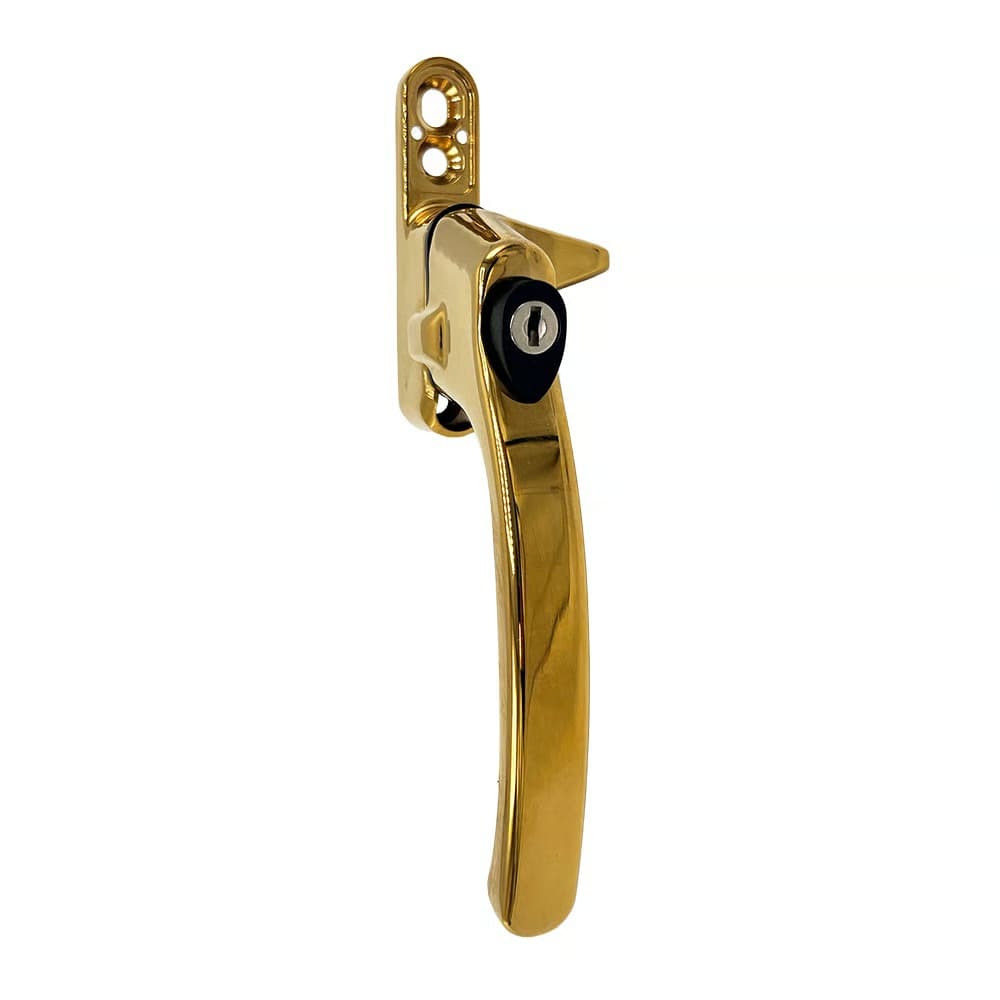
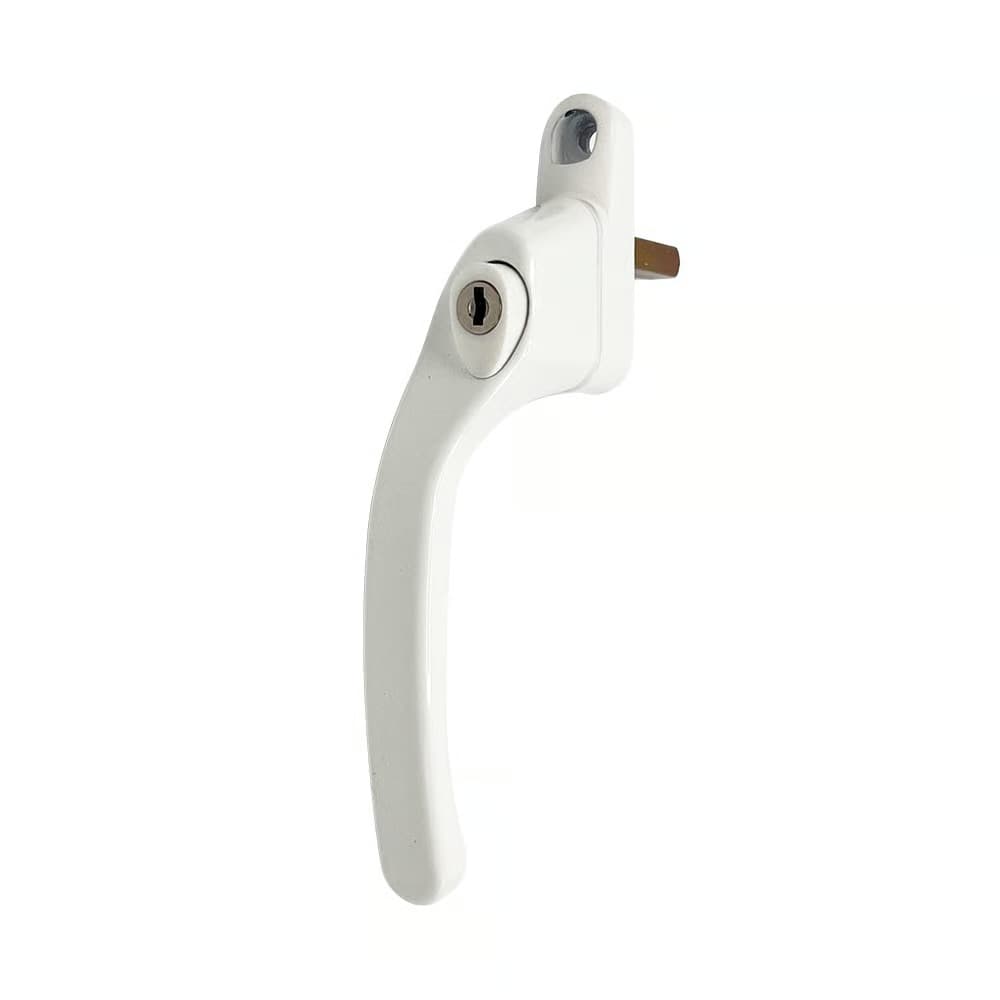
- For espag mechanisms, use a dedicated espag handle that matches the spindle size and includes the correct fixing positions. A reliable option is the TSS Cockspur Window Handles, designed for modern espagnolette gearboxes and offering improved security features.
- For older cockspur systems, choose a cockpit-specific handle to ensure the lever engages the locking studs correctly. Replace with a purpose-made unit such as the TSS Cockspur Window Handle to maintain correct operation.
- For mainstream replacement needs where traditional designs fit, the TSS Offset UPVC Window Handles is an example of a robust option with compatible fixing centres and secure locking.
Installation best practice
- Remove the old handle carefully and keep any screws, washers or shims. These may be required to match the new handle’s fit.
- Clean the mounting surface so the new backplate sits flat and even.
- Trial-fit the new handle without tightening fixings fully to check spindle engagement and rotation.
- Ensure the handle returns to the closed position and that locking engages smoothly. For locking handles, test with the window closed and under light pressure to replicate real-world conditions.
- Use thread-lock or suitable fixings for security-critical installations. Where torque affects operation, apply a mild threadlocker to screws to prevent loosening without making future removal difficult.
When a universal still makes sense
A universal handle may be acceptable when dealing with common, recent PVCu windows that conform to standardised measurements. For quick, temporary replacements or aesthetic upgrades where security is less critical, a universal option can be cost-effective. However, universal handles should be treated as a starting point; verify the fit before committing to large quantities for multiple properties.
Signs that a replacement handle is wrong
Indicators of incompatibility include stiff operation, excessive play on the spindle, the handle not fully returning to the rest position, visible gaps in the backplate, and failure to lock or unlock the mechanism. If any of these occur, stop using the handle and reassess measurements and mechanism type.
Final recommendations
Prioritise mechanism-specific handles and accurate measurements over the convenience of a universal label. Keep a small kit of common spindles and fixings for on-site adjustments. Where security and weatherproofing matter, choose recognised brands and purpose-made replacements.
For a wider overview of handle types, measurements and fitting techniques, consult the comprehensive Window Handles Guide.