Window Handles
uPVC White Window Handles: DIY Installation Steps
uPVC white window handles are a common choice for British homes because they are durable, low-maintenance and visually unobtrusive. This guide provides cle...
Window Hardware Store Team
20 February 2026
5 min read
uPVC white window handles are a common choice for British homes because they are durable, low-maintenance and visually unobtrusive. This guide provides clear, practical steps for homeowners and tradespeople to install replacement handles safely and correctly. It covers preparation, removal of old hardware, fitting different handle types and basic troubleshooting to ensure a secure, long-lasting finish.
Tools and materials required
- Phillips and flat-head screwdrivers (magnetic tips preferred)
- Allen keys (2.5mm–4mm range)
- Tape measure and pencil
- Replacement handle(s), appropriate for the locking mechanism
- Cleaning cloth and isopropyl alcohol
- Thread locker (medium strength) or 3-in-1 oil for moving parts
- Protective gloves and eye protection
- Masking tape (to protect the frame during work)
Safety and preliminary checks
Ensure the sash is closed and supported before removing handles. For heavy or high windows, a second pair of hands helps prevent accidents. Confirm the replacement handle matches the spindle size, screw spacing and locking type of the existing mechanism. Common spindle sizes are 7mm or 8mm square; standard screw centres are typically 43mm or 90mm depending on handle style. Measure and record these dimensions before ordering parts.Removing the existing uPVC handle
1. Open the window to a position that gives clear access to the handle fixing screws. 2. Locate the fixings: some handles have visible face screws, others hide fixings under a cover or cap. Use a flat-head screwdriver to gently unclip plastic covers — apply masking tape to the frame to prevent scratching. 3. Unscrew the fixings and support the handle while removing the last screw to prevent it dropping. 4. If the handle is stuck due to paint or corrosion, apply penetrating oil and allow a few minutes to work. Use gentle rocking motions rather than force to avoid stripping screws. 5. Clean the spindle and surrounding area with isopropyl alcohol to remove grease and dirt before fitting the new handle.Fitting a replacement espagnolette handle
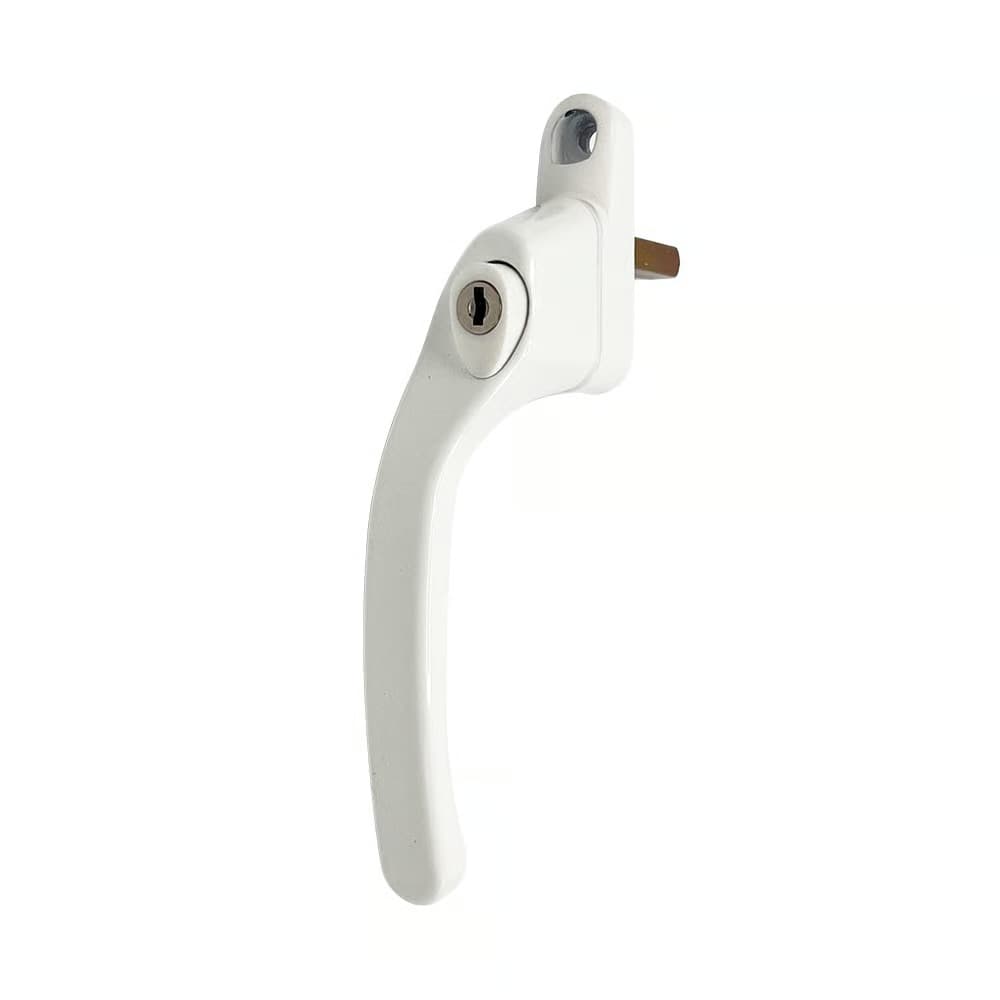
1. Confirm that the spindle fits the new handle. A new espag handle usually uses a square spindle inserted into the back of the handle; ensure correct orientation so the handle operates the locking mechanism in the expected direction. 2. Slide the handle onto the spindle, ensuring it sits flush against the frame. Check alignment so that the screw holes line up with the frame pilot holes. 3. Apply a small amount of medium-strength thread locker to the screws if the handle is prone to loosening, or a drop of oil if ease of movement is the priority. 4. Tighten screws evenly to avoid jamming the handle. Test operation: the handle should turn smoothly and operate the espagnolette rod(s) without resistance. 5. If the handle feels loose after tightening, verify the spindle length and adaptor bushes (if present). Trim or use shims as necessary to maintain correct engagement.Fitting a cockspur handle
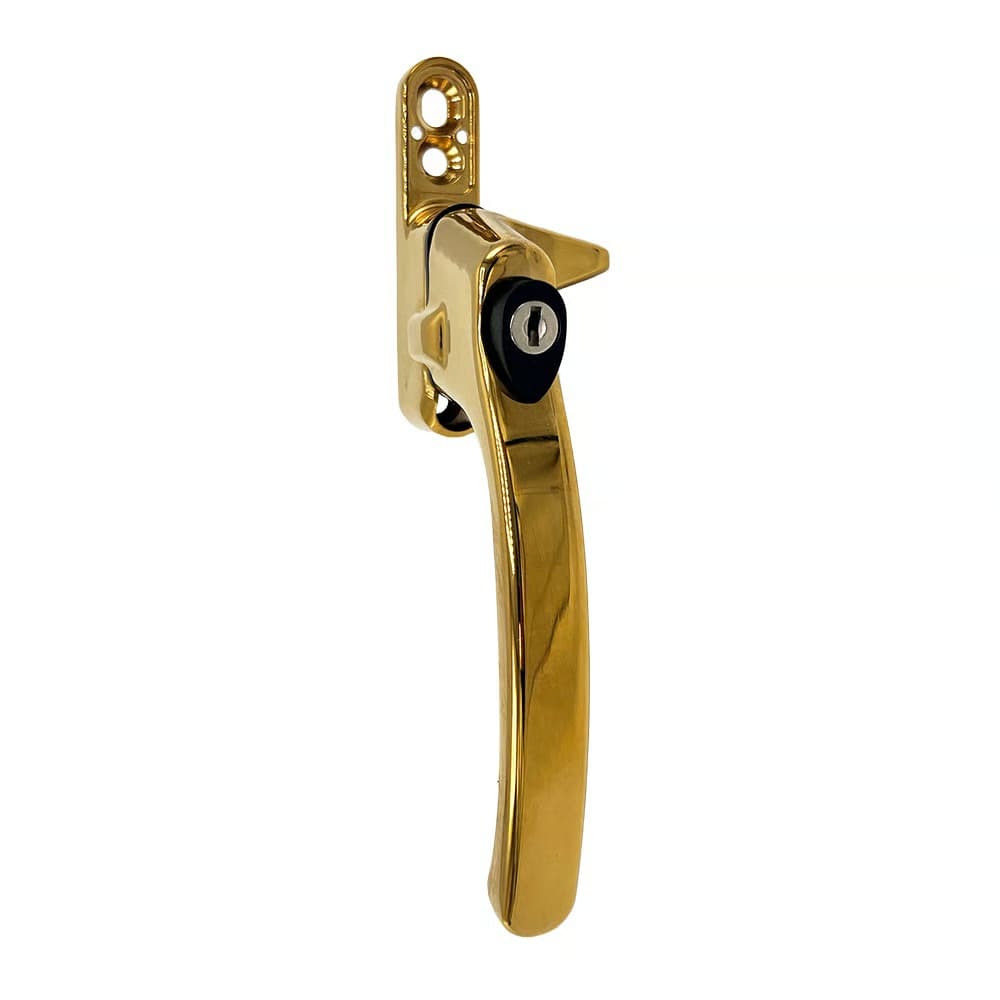
1. Cockspur handles sit on the face of the frame and engage a hooked keep. Confirm the keep is in good condition and aligns with the handle’s lip. 2. Position the new cockspur handle on the frame and mark pilot holes if required. Some models use existing screw positions. 3. Secure screws, checking that the handle closes the sash fully and the cockspur meets the keep without forcing the frame. 4. Adjust the keep if the catch does not fully engage by moving it slightly along the screw slots and re-testing.Adjustment and alignment
Proper alignment prevents premature wear and ensures a weather-tight seal. Check for the following:- Handle travel should be smooth from closed to fully open positions.
- The sash should not bind in the frame at any point during operation.
- The handle should sit parallel to the frame when closed; a crooked handle often indicates spindle misalignment or incorrect screw torque.
Common problems and remedies
- Stiff operation: Clean and lubricate the spindle and moving parts with a light oil. Avoid heavy grease that attracts dirt.
- Loose handle: Replace stripped screws and use thread locker for final fixings. Consider using slightly longer screws that engage more frame depth if safe.
- Handle wobbles but locks: Replace internal bushes or use a handle with an integrated backplate for better load distribution.
- Misaligned keeps: Shim or reposition the keep within its elongated screw holes to achieve correct engagement.
Maintenance tips
- Wipe handles with a damp cloth and mild detergent to preserve the finish.
- Annually check screw tightness, lubrication and handle operation.
- Replace corrosion-affected fixings and worn locks promptly to maintain security.
upvcwindow handlesupvc