uPVC Window Handle Screw Holes: Common Sizes and How to Check
uPVC window handles are small components that play a big role in the security, operation and appearance of modern windows. One of the most common service t...
uPVC window handles are small components that play a big role in the security, operation and appearance of modern windows. One of the most common service tasks for homeowners and tradespeople is identifying the screw hole pattern on an existing handle to find a replacement that fits correctly. This article explains common uPVC window handle screw hole sizes, how to measure them accurately, and practical tips for choosing the right replacement handle.
Common screw hole patterns and backplate types
uPVC handles typically come with two types of backplates: round rose and long backplate. The screw hole spacing — the distance between the centre of the two fixing screws — is the critical measurement when matching a replacement.
- 43 mm centre-to-centre: A commonly used spacing for espag and cockspur handles on modern uPVC windows. Many euro-profile espag handles use this measurement.
- 85 mm centre-to-centre: Frequently found on traditional long-backplate cockspur handles and some older replacement handles.
- 38–40 mm: Seen on some compact or older handles; less common but important to check on refurbished or period properties.
How to measure screw holes accurately
Accurate measurement avoids ordering the wrong part and prevents damage during installation.
1. Remove the existing handle where possible. A lot of time is saved by removing the handle to reveal the screw heads and backplate. 2. Measure with the handle removed: Use a steel rule or a digital calliper for precision. Measure from the centre of the top screw hole to the centre of the bottom screw hole. 3. When removal is not possible: Measure the visible screw centres or use a small straight edge to identify the centre points. Estimate only if necessary and double-check before ordering. 4. Record additional dimensions: Overall backplate length and width, spindle size (usually 7 mm square for most uPVC handles), and whether the spindle is offset. These can affect fit. 5. Note the hinge side and hand: Left- or right-handed orientation matters for some handle types. Mark which way the handle points when locked and when open.
Tradespeople should carry a selection of common handles and a small sample gauge to speed up on-site replacements.
Common handle types and compatibility considerations
Two popular handle types for uPVC windows are espag handles and cockspur handles. Each has different fixing needs and operates with different locking hardware.
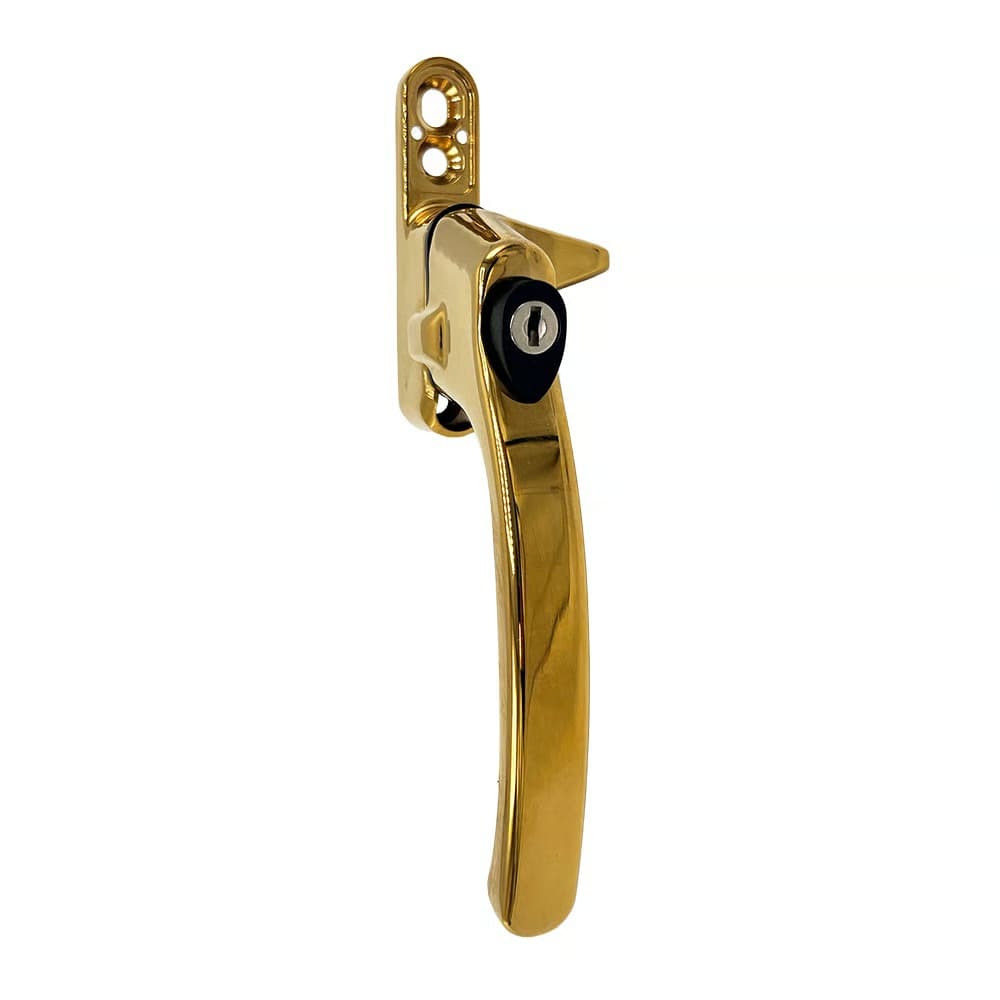
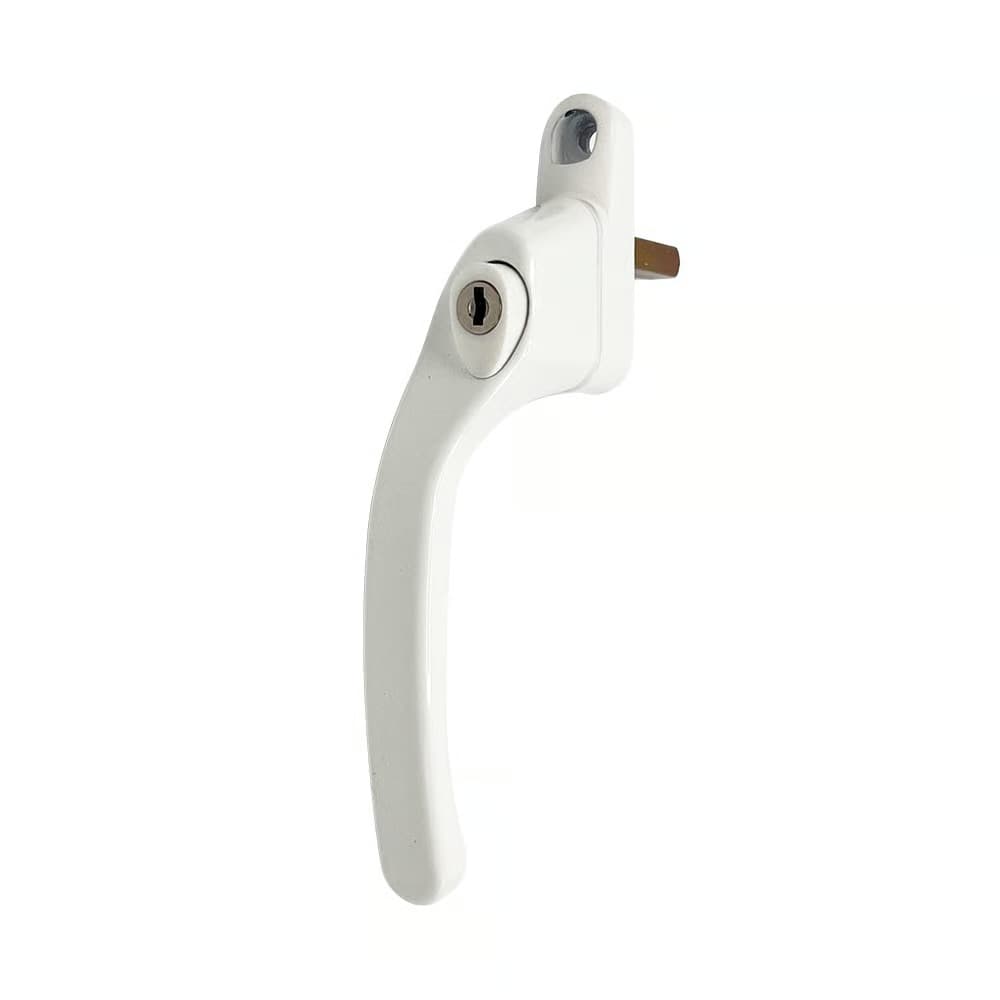
- Espag handles: Engage with a gearbox and espagnolette locking mechanism. Standard espag handles generally use 43 mm screw centres and a 7 mm square spindle. The TSS Cockspur Window Handles is an example of a modern, secure espag handle suited to many uPVC casements.
- Cockspur handles: Surface-mounted handles that push the window sash against the frame when closed. Cockspur handles often use 85 mm centres on longer backplates but can also appear with different spacings on compact versions. The TSS Cockspur Window Handle provides a robust, economical option for traditional cockspur fitments.
- Lever/locking handles: Marketed as secure options with a snib or key lock, these can differ in spindle length and screw hole placement. Always match the spindle size with the new handle.
Practical tips for a successful replacement
- Match screw centres first: The exact screw hole spacing is the most common reason a handle will not fit. Confirm this measurement before considering aesthetics.
- Confirm spindle length and profile: Spindle length determines engagement with the locking mechanism; too short and the handle will not operate the gear; too long and it may bind. Spindles are commonly 7 mm square, but some specialist windows use different profiles.
- Check the backset and offset: Some handles are offset to clear beading or glazing. Measure how far the handle projection is from the glass edge to ensure clearance.
- Retain original fixings where possible: Screws that match the original length and diameter help to secure the new handle correctly into the uPVC substrate.
- Consider security upgrades: Where possible, select handles with built-in locking or high-security fittings to improve resistance to forced entry. The TSS Offset UPVC Window Handles is an example that balances security features with straightforward replacement.
- Test operation before finishing: After installing the handle, operate the window several times to confirm smooth engagement and secure locking. Check for any rubbing, catching or unusual resistance.
- Use correct tools and avoid over-tightening: Cross-head or Pozidriv drivers and a torque-sensitive approach prevent stripping the screw heads or deforming the backplate.
When a new handle won’t solve the problem
Sometimes the issue is not the handle but the locking mechanism, espagnolette rod or internal gearbox. If replacing the handle does not restore smooth operation:
- Inspect the multi-point locking mechanism: Worn or bent strikers, rods or gearbox components require a targeted repair or replacement.
- Replace the gearbox if slippage occurs: A slipping mechanism inside the window can make a new handle ineffective.
- Consider a full mechanism upgrade: For older windows, upgrading the locking system may be more cost-effective than continual part replacements.
Sourcing the right replacement and record-keeping
Buy replacement handles from reputable suppliers that list measurements and compatibility information. Keep a record of measurements and part codes for future maintenance tasks; a simple photograph of the removed handle with a ruler alongside saves time on return visits.
Accurate measurement, understanding of handle types and attention to spindle and security features enable most homeowners and tradespeople to replace uPVC handles quickly and reliably. Matching the screw hole centres and spindle profile are the keys to success. For further guidance on selecting and fitting window hardware, consult the broader resources available at the retailer’s guide page.