uPVC Window Handles Replacement: Common Screw Centre Sizes
uPVC windows are robust and low maintenance, but handles do wear out or get damaged. Accurate measurement and the right replacement part make upvc window h...
uPVC windows are robust and low maintenance, but handles do wear out or get damaged. Accurate measurement and the right replacement part make upvc window handles replacement straightforward for homeowners and tradespeople alike. This guide explains common screw centre sizes, how to measure correctly, and practical tips for choosing and fitting replacements.
Why screw centre matters
The screw centre is the distance between the centres of the two fixing screws that secure a window handle to the frame. A mismatch in screw centres can lead to loose fittings, poor operation or an unsightly gap around the fixing plate. When carrying out upvc window handles replacement, identifying the screw centre first avoids ordering the wrong part and saves time on-site.
Common screw centre sizes to expect
Although variations exist across manufacturers and older windows, some screw centre measurements are regularly encountered:
- 38 mm — common on older cockspur and some tilt-only handles
- 43 mm — very common for espagnolette and many modern espag handles
- 45 mm — a widespread standard for many uPVC window handles and replacement ranges
- 57 mm — often used on dual-point or more substantial handle backplates
- 70 mm — found on larger backplates or specialist handles
How to measure screw centres correctly
Accurate measurement is the most important step:
1. Fully close the window and ensure the handle is in a neutral position. 2. Remove the handle cover or unscrew the handle to expose the two fixing holes (retain screws). 3. Measure from the centre of one screw hole to the centre of the other screw hole — that measurement is the screw centre. Using a digital calliper or a steel rule gives best results. 4. If the holes are slotted rather than round, measure between the mid-points of the slots. 5. Record whether the handle is left- or right-handed (facing the window from inside) and note the backset and spindle size if possible.
Avoid measuring from edge to edge of the backplate; always use the centre-to-centre rule. When in doubt, take multiple measurements and photograph the existing handle for reference.
Matching handle type as well as screw centre
Screw centre alone is not the only specification. Match the handle type to ensure compatible operation:
- Espag (espagnolette) handles operate a rod or gearbox and often require a specific spindle length and gearbox connection. The TSS Cockspur Window Handles is an example of a modern espag replacement that suits many common centres.
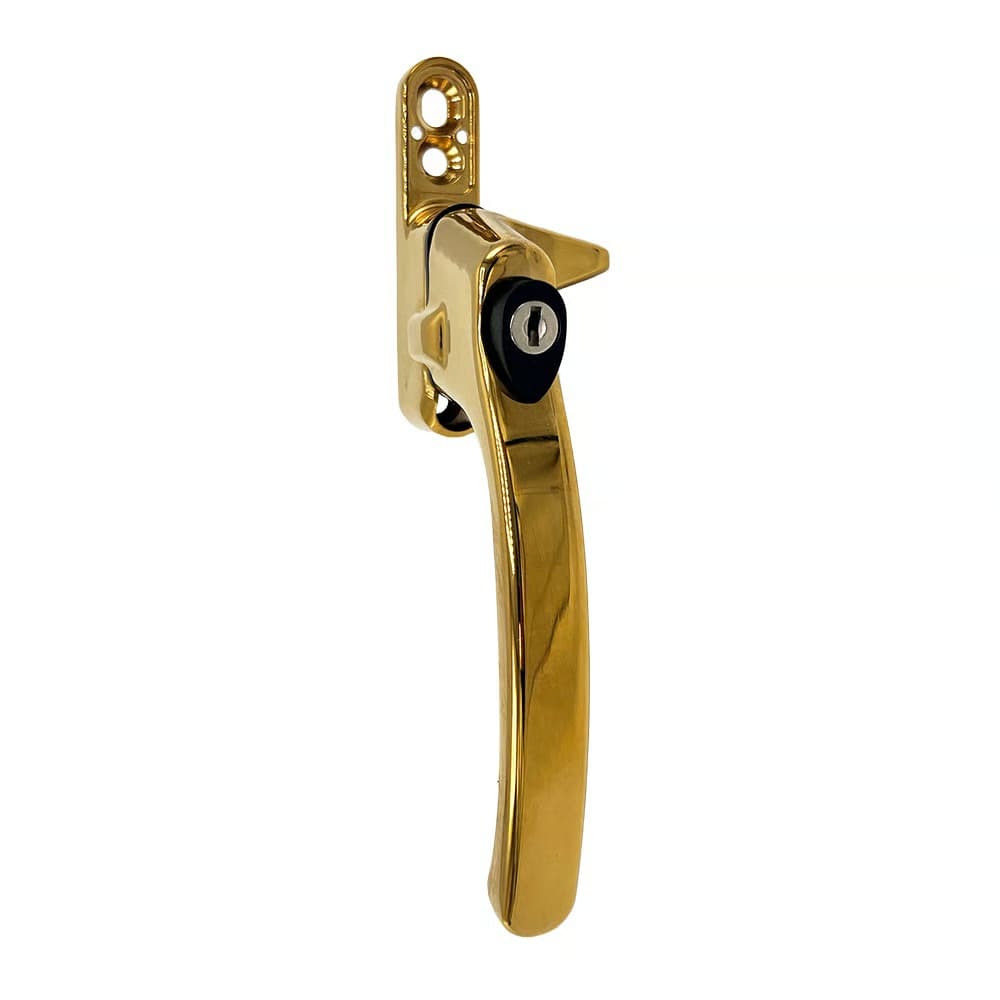
- Cockspur handles have a simple hook-shaped fixing and different screw centres; the TSS Cockspur Window Handle suits many traditional installations.
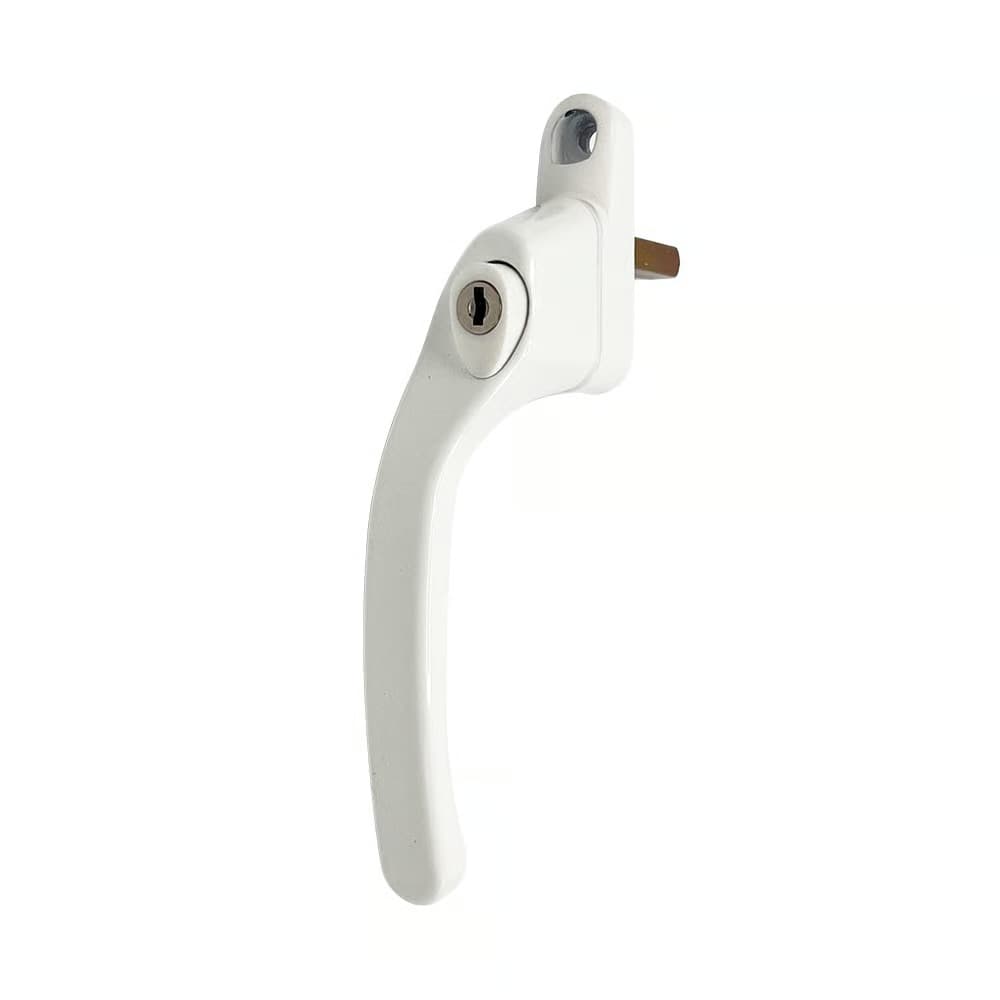
- Cranked or offset handles change clearance and may need longer spindles; the TSS Offset UPVC Window Handles is typical of contemporary designs offering ergonomic operation.
Practical fitting tips
Follow these steps for a secure replacement:
- Use correct screws: uPVC frames require pan-head or round-head screws that do not compress the frame. Stainless steel screws are recommended to avoid corrosion.
- Check screw length: Screws should penetrate at least 12–15 mm into the frame material but not protrude through. For thin frames use shorter screws; for reinforced areas use longer.
- Use packers where needed: If the fixings sit proud due to worn seals or uneven frames, small plastic packers behind the backplate help align the handle flush to the surface.
- Align the spindle: Ensure the spindle engages the gearbox squarely. Misalignment causes stiff operation and accelerated wear. Trim or replace the spindle if it’s too long.
- Test before final tightening: Operate the handle through its full movement to confirm smooth action and correct lock engagement, then tighten screws evenly.
- Replace damaged spindles and gearbox parts when necessary rather than forcing an ill-fitting handle. A new handle with the correct spindle length often solves persistent problems.
Troubleshooting common issues
- Handle loose after replacement: Check screw length and whether the screw is biting into the frame material; consider using expanding wall plugs only in masonry surrounds, not uPVC.
- Handle difficult to operate: Confirm spindle size and that the handle aligns squarely with the gearbox. Lubricate locking cam with a dry graphite spray rather than oil.
- Wrong handed handle: Re-order the opposite handed handle or use reversible designs where available. Record left/right when measuring.
Ordering and stock considerations
When ordering for multiple properties or a trade van, prioritise handles with common centres (43 mm and 45 mm) and carry a selection of spindle lengths (25 mm, 35 mm, 45 mm). Keep a small set of stainless steel screws for uPVC, plus a few packers and a torque-limited driver to avoid over-tightening.
Final checklist before fitting
- Measure centre-to-centre accurately and note left/right orientation.
- Confirm handle type (espag, cockspur, cranked, lockable).
- Check spindle length and backset compatibility.
- Use correct screw type and length; consider corrosion-resistant fastenings.
- Test operation before final tightening and finish with appropriate lubrication.