Window Handles for Double Glazed Windows: Espag vs Cockspur
Double glazed windows require hardware that balances security, ease of use and weather performance. Two of the most common handle types on UK double glazin...
Double glazed windows require hardware that balances security, ease of use and weather performance. Two of the most common handle types on UK double glazing are espagnolette (espag) handles and cockspur handles. This article compares the two, outlines when each is appropriate, and provides practical, actionable guidance on measuring, fitting and maintaining handles for double glazed windows.
Espag handles: what they are and when to use them
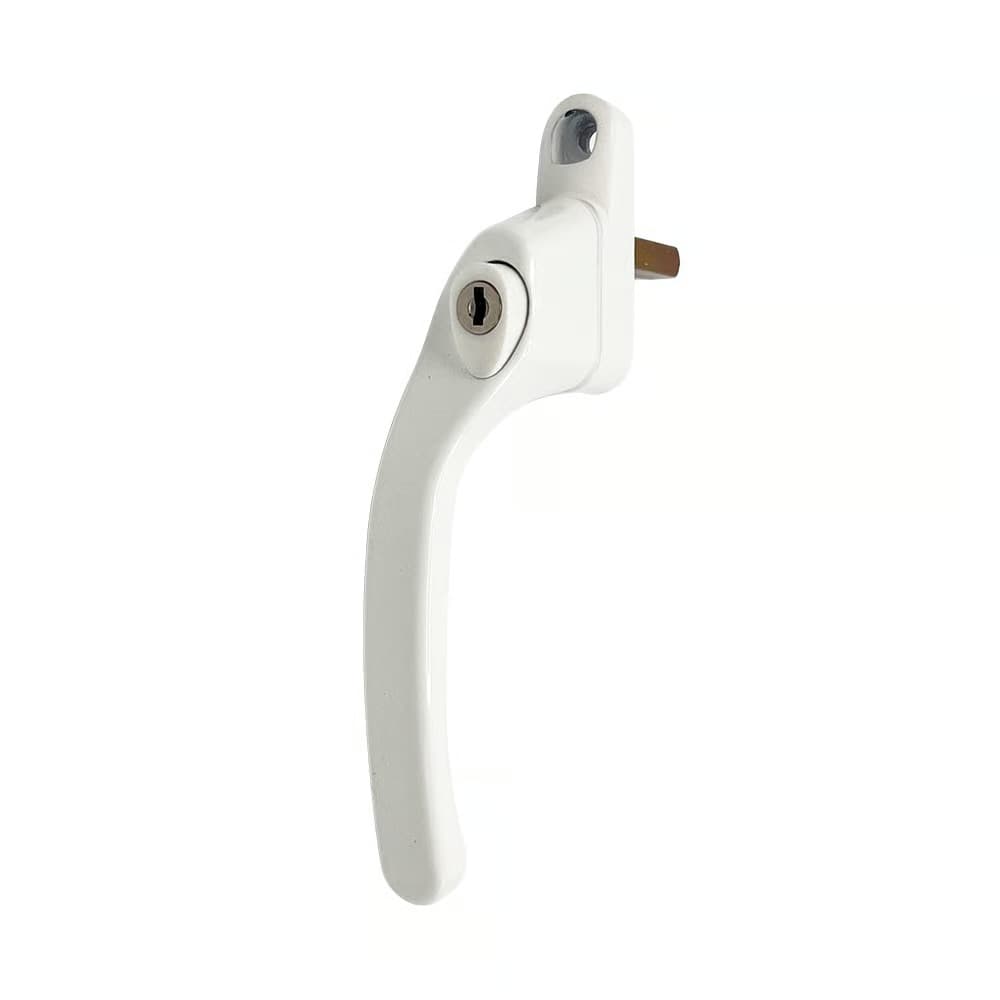
Espag handles operate a multi-point espagnolette locking mechanism inside the window frame. When turned, the handle drives a spindle which moves a series of locking points (rollers, hooks or cams) up and down the edge of the sash, giving a tight compression seal and enhanced security. Espag handles are the modern standard on many European-style PVCu casements and tilt-and-turn windows.
Advantages
- Superior security and weather-tightness due to multiple locking points.
- Good for larger sashes and for windows where draft reduction is important.
- Available with key-locking or thumb-turn locking options for child safety.
- A wide range of finishes and styles suitable for refurbishment or new installations.
- More components mean slightly more complex replacement and greater sensitivity to incorrect spindle length or gearbox alignment.
- Typically more expensive than cockspur handles.
- Identify the spindle size and length: measure the square spindle that passes through the handle and door mechanism. Common spindle sizes are 7mm or 8mm squares, but confirm before purchase.
- Check gearbox/backset dimensions: ensure the handle’s spindle aligns with the espagnolette gearbox; note the centreline height from the base of the sash.
- Replace like-for-like where possible: match the handle’s locking direction (left or right handed) and the screw centre distances to avoid additional drilling.
- Use a keyed model for ground-floor rooms where security is a priority, or choose a thumb-turn for internal rooms where quick escape may be required.
Cockspur handles: simplicity and low cost
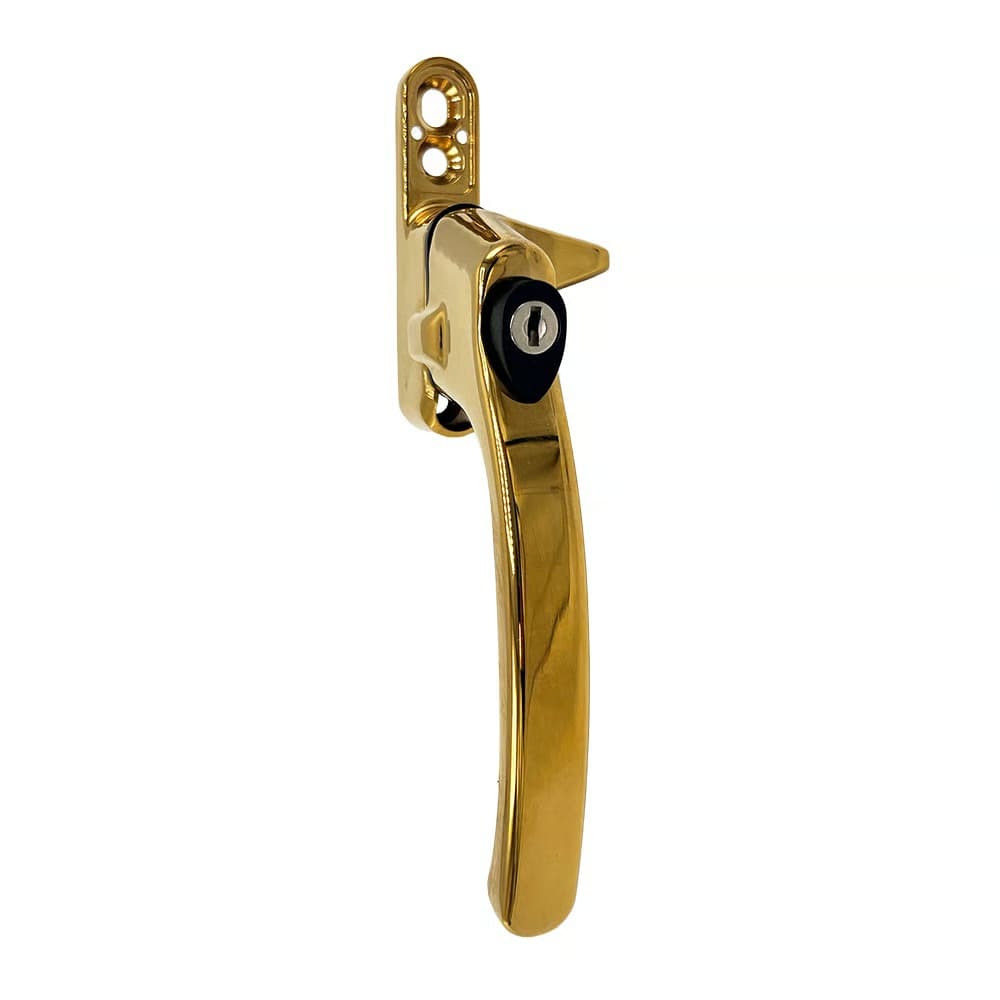
Cockspur handles are surface-mounted and operate by pulling a hook or spur into a keep on the frame. They were very popular on older PVCu and timber windows because they are inexpensive and simple to fit.
Advantages
- Low cost and straightforward to install—ideal for refurbishments where the sash does not have an espagnolette mechanism.
- Easy to replace without dismantling the window.
- Suitable for smaller sashes or windows where multi-point locking is not required.
- Provide lower security and compression compared with espag systems; not recommended for high-risk ground-floor locations.
- Can protrude outward, potentially catching on curtains or blinds.
- Less effective at maintaining an airtight seal, so not the best choice where thermal performance is a priority.
- Measure screw hole centres: cockspur handles are surface fixed with visible screws—measure between centres to ensure correct alignment.
- Check that the keep (strike plate) is present and undamaged; replace keeps when refitting a new handle.
- Use corrosion-resistant fixings for coastal locations.
- Consider using a keyed or restrictor version if child safety or additional security is needed.
Choosing between espag and cockspur for double glazed windows
Selection depends on the window’s locking mechanism and the homeowner’s priorities:
- Security and airtightness: choose an espag handle where the sash contains an espagnolette or multi-point mechanism.
- Cost and simplicity: choose a cockspur handle for older windows without an espag gearbox, or where budget constraints dominate.
- Aesthetic match: espag handles tend to offer a sleeker, more modern finish; cockspur handles suit traditional or serviceable installations.
- Trade considerations: for trade contractors replacing multiple handles during refurbishments, standardising on espag where possible reduces future maintenance and improves thermal performance.
Measuring and fitting: step-by-step checklist
1. Identify handle type currently fitted and confirm if the sash has an espagnolette gearbox. 2. Measure spindle size and length, screw centre distances and the height of the gearbox centre from the base of the sash. 3. Order the correct handed handle and finish; ensure the locking option (key or thumb-turn) matches requirements. 4. Remove the old handle: support the sash, unscrew fixing screws and withdraw the handle carefully to avoid damaging the spindle. 5. Clean the mating surfaces and check the gearbox/keep for wear; replace worn keeps or gearboxes. 6. Fit the new handle: engage the spindle into the gearbox, align screw holes and tighten fixings evenly—do not overtighten plastic parts. 7. Test operation through the full travel several times; check for secure engagement at closed position and correct sealing without binding. 8. Apply a light lubricant to moving parts annually; avoid heavy oils that attract dirt.
Maintenance and security upgrades
- Annual maintenance: tighten fixings, lubricate spindles and check keeps. Replace worn keeps promptly to prevent handle misalignment.
- Upgrade options: anti-snap, anti-bump features on keyed espag handles improve security. Consider hinge-side security bolts and reinforced keep plates for added resistance against forced entry.
- Child safety: use restrictor catches or lockable handles on windows in rooms with small children.
Summary
Choosing the right window handles for double glazed windows hinges on the locking mechanism present and the balance between security, thermal performance and cost. Espag handles provide superior security and sealing for modern double-glazed windows, while cockspur handles remain a low-cost, straightforward option for older frames. Accurate measurement, correct handing and regular maintenance ensure long-term reliable operation and preserve the performance of double glazing.