Best Cockspur Handles for Replacement: 2026 Picks
Replacing a worn or dated cockspur handle is one of the quickest upgrades to improve security, operation and appearance of windows. Whether you are a professional fitter or a DIY enthusiast, choosing ...
Replacing a worn or dated cockspur handle is one of the quickest upgrades to improve security, operation and appearance of windows. Whether you are a professional fitter or a DIY enthusiast, choosing the right cockspur handle for your job saves time on site and reduces call-backs. This guide covers the best cockspur handles for replacement in 2026, focusing on materials, locking options, sizes, fitting tips and maintenance advice to help you make the right choice.
Why choose a cockspur handle: common uses and benefits
A cockspur handle is a simple, low-profile window handle designed for casement windows that secure by hooking the spur behind the frame. They are commonly used on aluminium, timber and uPVC windows. Key benefits include:
- Cost-effective replacement for older handles
- Low profile that avoids projecting into walkways
- Quick to fit with basic tools; ideal for trade jobs needing fast turnarounds
- Available with non-locking and locking variants for enhanced security
- Wide range of finishes to match window furniture and hardware
When specifying a cockspur handle for replacement, consider the operating side, lock type and backplate size to ensure compatibility with the existing window.
Materials and finishes: what to specify for durability
Selecting the right material for a cockspur handle affects longevity and client satisfaction. Popular options include:
- Aluminium: lightweight and corrosion-resistant; suitable for contemporary aluminium frames
- Zinc alloy: durable and economical; commonly used for trade replacement handles
- Stainless steel: high resistance to corrosion; recommended for coastal or high-humidity locations
- Polymer/UPVC: cost effective, but may wear faster in heavy-use installations
Finishes should match the project aesthetic while providing weather resistance. Common trade finishes are white, black, satin silver, bronze and polished chrome. For installations near the coast, specify stainless or marine-grade finishes to prevent seizing.
Locking options and security considerations
Security is a primary concern for many clients. The term cockspur handle covers both non-locking and locking types. When choosing a cockspur handle consider:
- Non-locking cockspur handle: suitable for internal rooms or secondary windows; quick release and inexpensive
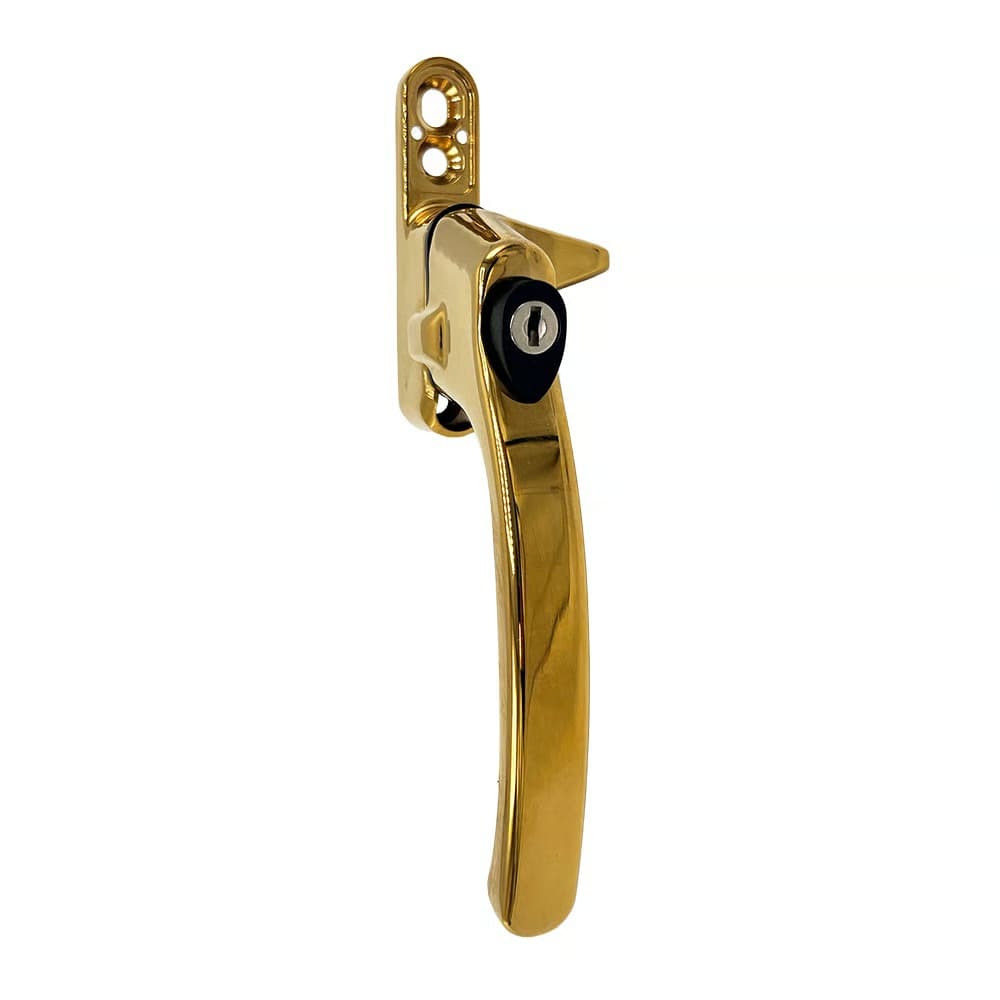
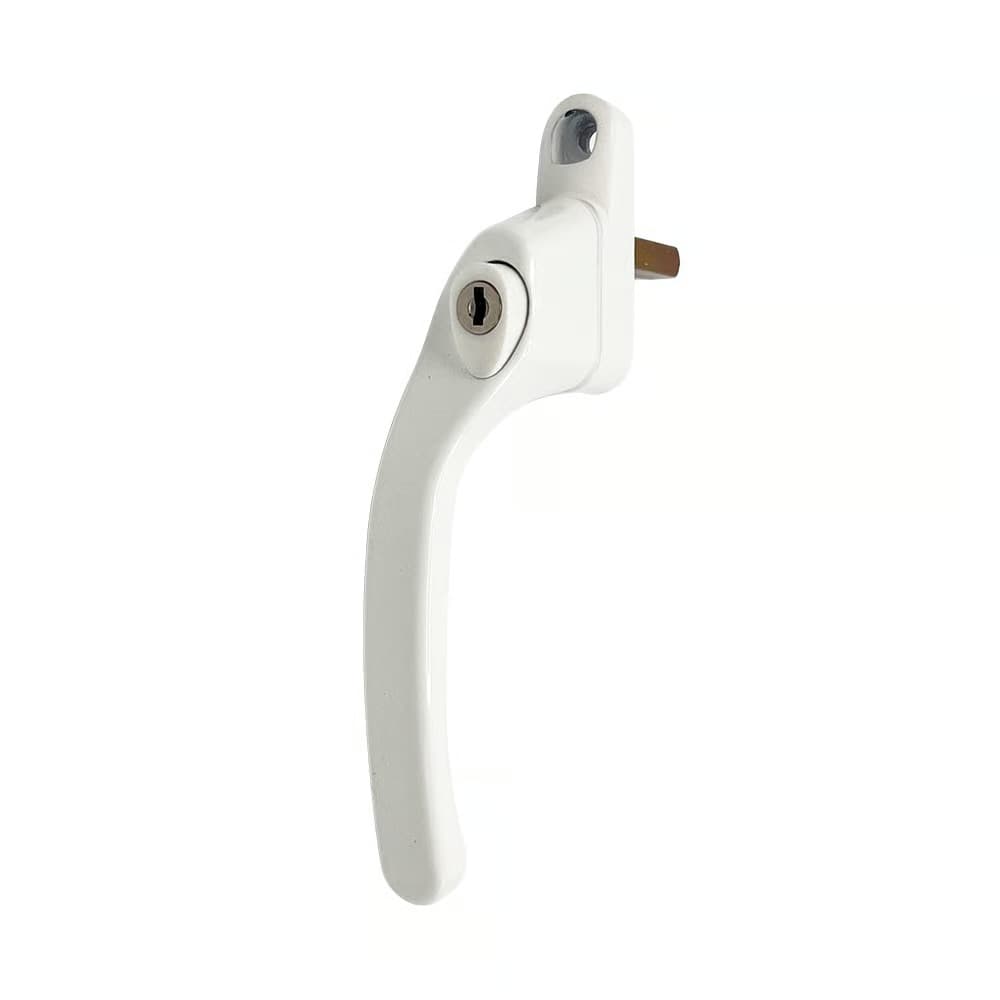
- Key-locking cockspur handle: provides additional theft deterrent; lock cylinder integrated into the handle
- Push-button locking: convenient for frequent use; can be operated without a key from inside
- Compliance: ensure locking handles meet local building regulations and insurance requirements where applicable
For ground-floor windows or vulnerable locations, a key-locking cockspur handle is often the minimum recommended option to satisfy insurers and clients.
Sizing and compatibility: measuring for a perfect fit
Accurate measurement avoids returns and refitting. When replacing a cockspur handle, measure the following:
- Fixing hole centres: measure distance between screw centres on the backplate; common sizes include 32mm and 43mm
- Backplate length and width: ensure new handle covers old fixing holes or select a longer backplate to conceal them
- Spur length and orientation: the spur must engage the window frame correctly; note whether you need a left-hand or right-hand handle
- Spindle and boss location: check whether the handle engages a boss or a spindle; some modern cockspur handles replace direct-spindle types
Bring a sample of the old cockspur handle or take clear photos when ordering replacements to reduce the risk of mismatch. Tradespeople should carry a small selection of common sizes to handle on-site replacements quickly.
Installation tips for tradespeople and DIYers
Fitting a cockspur handle is straightforward but attention to detail prevents problems later on. Follow these steps:
- Remove the old handle: unscrew the backplate fixings and extract the handle; retain any old spindles or bosses for reference
- Clean and prepare the surface: remove paint build-up and debris that could stop the backplate sitting flush
- Fit the new handle: align fixing holes, ensure the spur engages the frame correctly and tighten screws evenly
- Test operation: open and close the window several times to confirm smooth action and full engagement
- Apply a light lubricant: use a silicone spray on moving parts for long-term smoothness; avoid heavy oils that attract dirt
If the new cockspur handle does not line up, check for warped frames or paint obstructions before forcing fixings; fitting to an out-of-square frame will reduce lifespan.
Maintenance and troubleshooting
Regular maintenance extends the life of a cockspur handle and reduces service visits. Recommended tasks include:
- Quarterly checks: inspect handles, spurs and fixings for wear or corrosion
- Lubrication: apply silicone spray annually or in damp environments
- Tightening: re-tighten fixings after seasonal movement of frames
- Replacement signs: handle wobble, seized action or rust indicate the need for prompt replacement
For locking handles, keep keys labelled and spare keys available for clients. If a key becomes stiff, lubricate the lock cylinder with graphite rather than oil for long-term reliability.
Choosing the best cockspur handle for replacement in 2026 depends on the project: specify durable materials for external and coastal sites, pick appropriate locking types for security, and measure accurately to avoid delays. Tradespeople should stock common sizes and finishes to complete jobs quickly, while DIYers can perform most replacements with basic tools and the right measurements. For more guidance on window handles, see our pillar guide on window handles and hardware to compare other handle types and fittings.
Conclusion: a well-chosen cockspur handle improves security, function and aesthetics with minimal cost and disruption. Consider material, locking option and correct sizing, follow simple installation and maintenance steps, and you will deliver reliable, professional results on every replacement job.
Recommended Products
Based on this article, you may find these products helpful:
Part of our guide:
Complete Guide to Window Handles