Best Lever Door Handles for External Doors: Security Picks
Choosing the best lever door handle for external doors is a frequent question from tradespeople and keen DIYers. A lever door handle is more than a finishing touch: it affects security, usability and ...
Choosing the best lever door handle for external doors is a frequent question from tradespeople and keen DIYers. A lever door handle is more than a finishing touch: it affects security, usability and durability in exposed conditions. This guide explains what to look for when specifying or fitting a lever door handle for external use, with practical tips for installers and helpful advice for homeowners.
Why the right lever door handle matters for external doors
External doors face weather, heavy use and the highest security risk. A correctly specified lever door handle not only complements the lock but also resists corrosion, prevents lever sag and reduces the chance of break-in. For tradespeople, choosing the right lever door handle can reduce callbacks and improve client satisfaction; for homeowners, it provides peace of mind and a longer-lasting installation.
Security features to prioritise
When selecting a lever door handle for an external door, consider the following security items:
- Compatible locking: Ensure the lever door handle suits the lock case and cylinder type; for example, a lever for a multipoint lock differs from one for a rim or mortice lock.
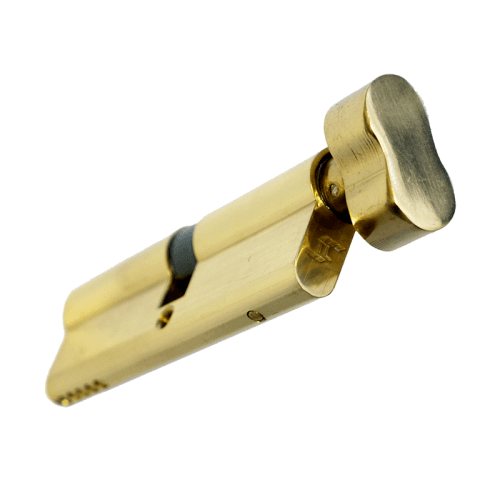
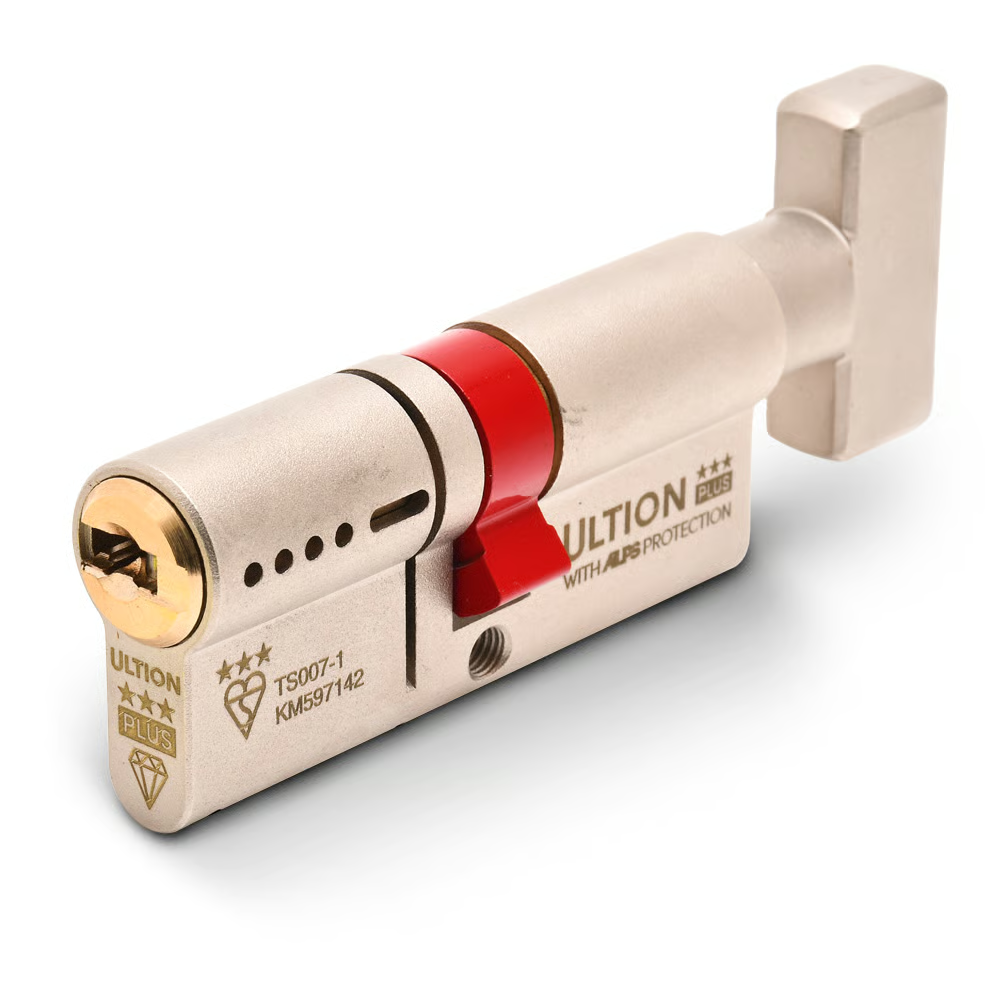
- Euro cylinder protection: Use anti-snap, anti-drill and anti-pick cylinders; fit a cylinder guard or reinforced escutcheon with the lever door handle to protect the cylinder.
- BS and PAS standards: Specify hardware that supports BS3621 locks and PAS 24 certified doors where required; a compliant lever door handle should not compromise the certified assembly.
- Spindle and fixing strength: Choose lever door handle designs with robust spindles and through-bolts for high torque resistance; poor spindles lead to lever droop and easier forced entry.
- Fire and escape requirements: For doors on escape routes, use lever door handle furniture that meets relevant fire door and emergency egress regulations.
Materials, finishes and suitability for external conditions
External lever door handles must resist rain, salt air and temperature changes. Typical materials and considerations include:
- Stainless steel: Highly corrosion resistant; ideal for coastal locations and heavy-use doors; available in satin, polished and duplex finishes.
- Solid brass: Durable and traditional; lacquered brass can tarnish if the coating fails, so consider unlacquered finishes where appropriate.
- Aluminium and zinc alloys: Lightweight and cost-effective; select high-grade alloys with protective coatings for external use.
- Surface treatments: Powder coating, PVD and specialist outdoor-grade coatings improve longevity; verify UV resistance for coloured finishes.
Types of lever door handle and where to use them
Understand the common styles so you can choose the correct lever door handle for the door type:
- Lever on rose: Compact and modern; suitable for doors where a slim aesthetic is required; ensure the rose diameter allows secure fixings through the door material.
- Lever on backplate: Traditional and robust; backplates provide additional protection for the lock and help conceal multipoint fixings; choose weatherproof backplates for exteriors.
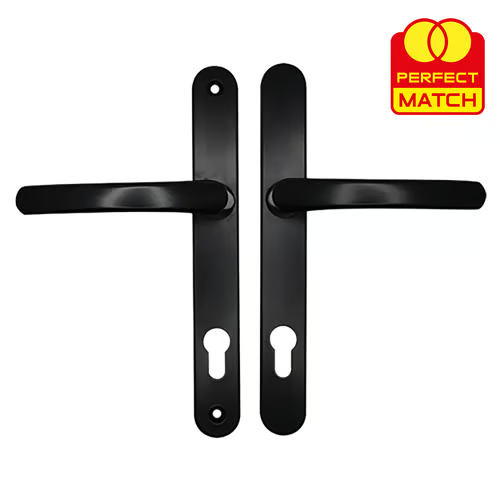
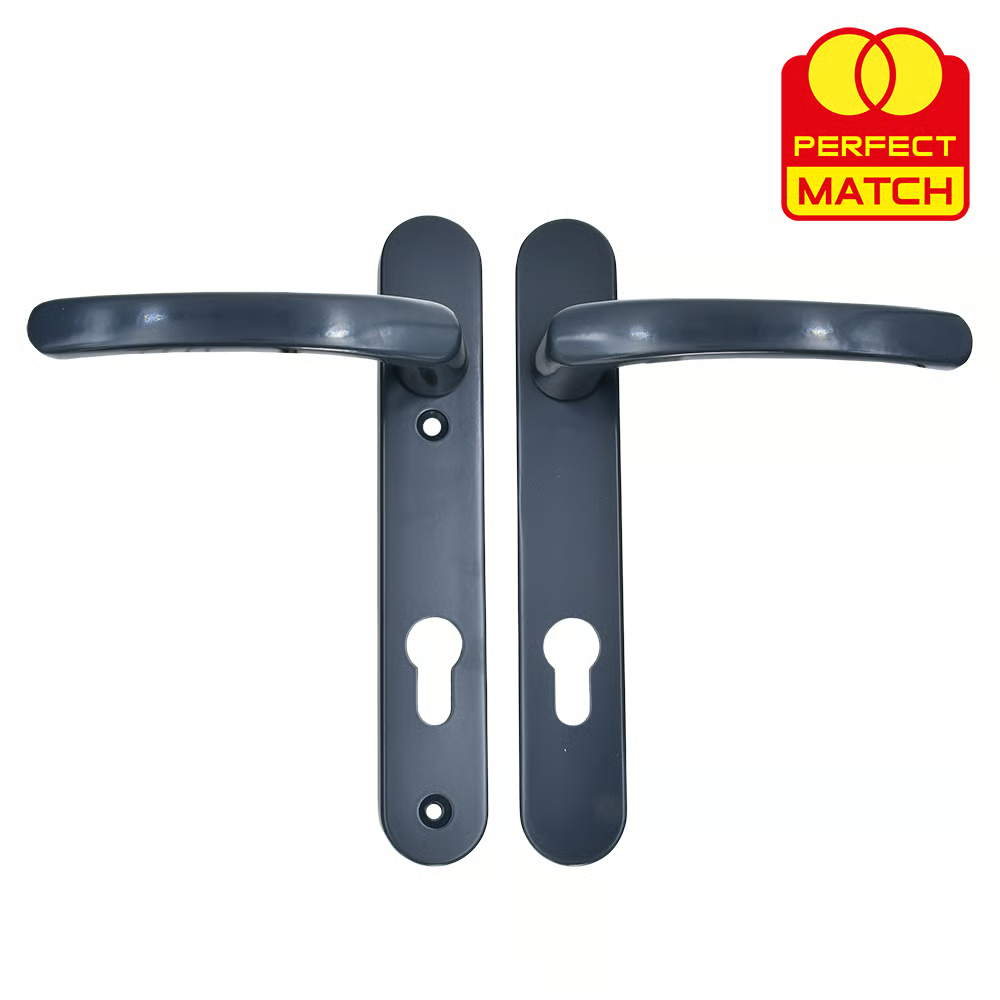
- Lever/lever pairs: Used for doors with a latch or multipoint lock; pick sprung returns for internal doors and unsprung levers where lever return is not required by the lock.
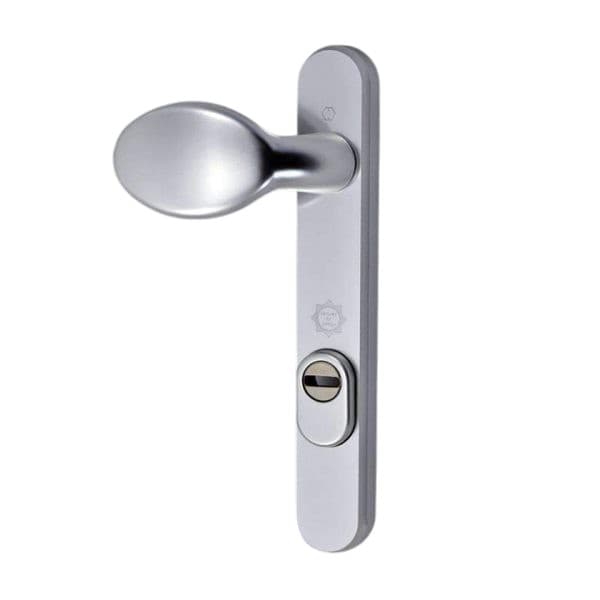
- Lever with keyed escutcheon: Offers integrated cylinder protection and key access; ideal for front doors where cylinder security is paramount.
Practical installation tips for tradespeople and DIYers
Correct installation is as important as the product choice. Follow these practical tips when fitting a lever door handle to an external door:
- Check backset and spindle length: Confirm the lock case backset and choose a lever door handle with a matching spindle length; cut or replace spindles only when specified by the manufacturer.
- Use the right fixings: External doors may need longer screws and security bolts; use stainless steel fixings for coastal or damp environments.
- Seal around backplates and roses: A small silicone bead behind external backplates prevents water ingress and timber swelling; do not block drainage holes in metal doors.
- Torque and alignment: Tighten fixings to firm, not crushing, torque; ensure the lever action is smooth and the latch fully retracts before final tightening.
- Test the whole assembly: With the door fitted, test the key, lever action and multipoint engagement across the full operating range; check for binding at hinges and strikes.
- Record and advise: For trade installations, supply maintenance advice for the homeowner: lubrication schedules, how to tighten fixings and when to replace cylinders or weather seals.
Common pitfalls and how to avoid them
Awareness of typical mistakes prevents future issues. Watch for these when specifying or fitting a lever door handle:
- Mismatched furniture and lock centre: Always match the handle centre to the lock centre; incorrect centres result in poor operation and client dissatisfaction.
- Incorrect spindle type: Square spindles are common, but some locks use splined or tubular spindles; verify before ordering the lever door handle.
- Poor corrosion protection: Avoid interior-only levers on external doors; check warranty and suitability for external installations.
- Over-tightening: Excessive force damages roses and compresses seals; tighten evenly and retest operation.
Conclusion: A well-chosen and properly fitted lever door handle significantly improves the security, function and appearance of an external door. For tradespeople, specifying robust materials, compatible security features and correct fixings reduces call-backs and ensures compliance; for homeowners, the right lever door handle delivers long-term performance and peace of mind. Use this guide as a checklist when choosing lever door handle options for external doors, and always follow manufacturer instructions for best results.
Recommended Products
Based on this article, you may find these products helpful:
Part of our guide:
Complete Guide to Door Handles