Egress Hinge Opening Angles: Meeting the 90 Degree Rule
Egress Hinge Opening Angles: Meeting the 90 Degree Rule An egress hinge is a specialised hinge designed to allow a window or door to open wide enough for s...
Egress Hinge Opening Angles: Meeting the 90 Degree Rule
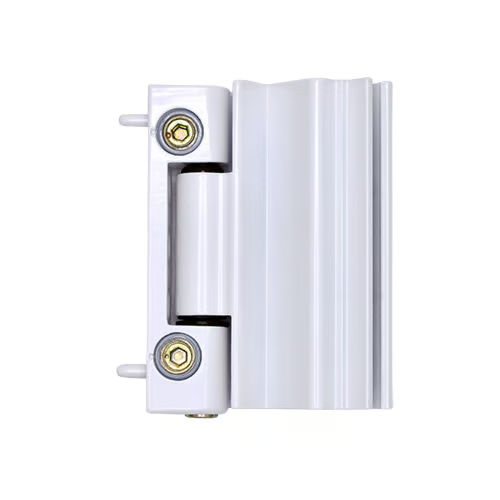
An egress hinge is a specialised hinge designed to allow a window or door to open wide enough for safe escape. For homeowners and tradespeople installing or specifying escape routes, understanding opening angles, clearances and practical installation details is vital. This article explains what the 90 degree rule means in practice, offers trade advice for selecting the right hinge, and gives DIY checks for compliance and safe operation.
Why opening angle matters for egress hinges
Opening angle determines how much of the sash clears the frame and surrounding reveal. If a window will be used as an emergency exit, the hinge must allow the sash to swing far enough to create an unobstructed aperture; a common acceptance criterion is that the sash must reach at least 90 degrees from the closed position. If the sash cannot reach that angle because of a restricting frame, handle or internal trim, the effective escape opening will be reduced even if the visible aperture looks large.
Types of egress hinge and how they affect angle
There are several hinge types used where egress is required; each behaves differently at full travel:
- Friction hinges: commonly used on casement windows; some friction hinges offer full 90 degree or greater opening but friction settings can limit travel. For egress use, specify friction hinges that allow full travel or can be overridden for emergency operation.
- Offset and projecting egress hinges: these increase the clear opening by moving the sash away from the frame as it opens; useful where the reveal or sill would otherwise obstruct at 90 degrees.
- Butt hinges with egress pivots: used on doors and some windows; when paired with a wider throwing pivot they can provide the required swing but need correct clearance planning.
- Quick-release or emergency hinges: allow the sash to be removed quickly for escape; these are appropriate where regular full opening is impractical but occasional removal is acceptable.
Practical trade advice: specifying the right hinge
When specifying an egress hinge for a project follow these practical steps:
- Check manufacturer datasheets: use the hinge’s recommended maximum sash weight and the stated maximum opening angle. Do not assume all hinges will reach 90 degrees.
- Account for sash weight and wind load: heavier sashes generally need more robust hinges and additional hinges to maintain alignment and safe operation.
- Consider hinge spacing: on larger sashes use three or more hinges; typical layouts increase load distribution and reduce wear. Confirm exact spacing with the hinge manufacturer and the window system supplier.
- Choose suitable materials and finishes: stainless steel or corrosion-resistant coatings are recommended for coastal locations or where maintenance may be infrequent.
- Specify offset hinges if the reveal or internal trim obstructs the sash at 90 degrees: offsets give extra clearance without excessive frame alteration.
- Confirm handle and restrictor compatibility: some restrictors limit opening to less than 90 degrees; for escape routes remove or replace restrictors with compliant alternatives.
DIY checks and installation tips for homeowners
If you are retrofitting an egress hinge or checking a newly installed window use these practical checks:
- Measure full travel: open the sash and check that it reaches 90 degrees. Use a simple angle finder or smartphone app to confirm; if the sash stops short, look for obstructions such as beading, architrave, or external cill overhang.
- Inspect handle clearance: ensure the handle clears the frame and does not prevent the sash reaching the required angle. A handle in the wrong position can reduce the effective opening.
- Check reveal and plaster: sometimes plaster, beading or secondary trims were added during decoration and restrict opening. Small trimming of non-structural trims can solve the issue; consult a professional if unsure.
- Test in windy conditions: weather can significantly change how a sash behaves. If a window is expected to be used in an emergency, make sure it can be operated safely when ajar in normal weather loads.
- Confirm quick-release operation if fitted: practice releasing the sash so the action is straightforward and can be performed in low light or by a non-technical user.
- Lubricate and torque adjust: hinges should be lubricated and fixing screws checked for correct torque; loose fixings reduce opening reliability and can affect the maximum angle achieved.
Compliance and safety considerations
Doors and windows used as escape routes may be subject to building control and fire safety requirements; these vary with use and building type. The 90 degree rule is a practical minimum for many egress situations; however, always confirm the specific requirements relevant to your project with your local building control or fire safety officer. Where life safety depends on an escape opening, select hardware with a margin above 90 degrees; specifying a hinge with a 100 degree or greater maximum travel will cover unknown site tolerances.
Common problems and solutions
Tradespeople and DIYers frequently encounter the same issues when meeting the 90 degree rule:
- Problem: sash stops at 75–85 degrees because of internal trim. Solution: replace or trim non-structural trim, or use an offset hinge to gain clearance.
- Problem: restrictor prevents full opening. Solution: fit an egress-compliant restrictor or a quick-release restrictor that allows complete opening in an emergency.
- Problem: heavy sash needs multiple hinges but frame depth is limited. Solution: use high-capacity egress hinges or specialist pintle systems, and consult the window system supplier for reinforcement options.
Reference resources and where to buy
For detailed product specifications consult manufacturer technical sheets and the pillar resource on our site at /guides/window-hinges. When buying, choose hardware that clearly states opening angle, load rating and maintenance instructions; purchase through a reputable trade supplier to ensure access to technical support and warranty backing.
Recommended Products
Based on this article, you may find these products helpful:
- Top-Hung Window Hinge - Standard
- Side-Hung Window Hinge - Standard
- Top Hung Friction Stay - 12"
- Flag Door Hinge - Stainless Steel
- ERA Challenger 3D Rebated Hinge
Conclusion and next steps
Meeting the 90 degree rule for egress hinges is about more than selecting a hinge; it requires thinking about sash geometry, handle position, reveals and long-term maintenance. For tradespeople: always verify manufacturer data, allow margin above 90 degrees where safety is concerned, and plan hinge layout to suit sash weight. For homeowners: perform simple angle checks, remove non-structural obstructions and consult a professional where structural alteration is needed. If you need specific product recommendations or technical support for a project, contact our trade desk or visit the window hinge section of our website to compare egress hinge options and datasheets.