How to Measure a Composite Door Handle for Replacement
Replacing a composite door handle is one of the quickest ways to refresh a front or back door and restore function after wear or damage. Whether you are a trade professional fitting dozens of doors a ...
Replacing a composite door handle is one of the quickest ways to refresh a front or back door and restore function after wear or damage. Whether you are a trade professional fitting dozens of doors a week or a DIY enthusiast tackling a single replacement, accurate measurement is essential. This guide explains how to measure a composite door handle for replacement, what measurements matter, and how to avoid common pitfalls when working with composite door hardware.
Why correct measurement matters for a composite door handle
A correct measurement ensures the new composite door handle aligns with existing fixings, the spindle operates the latch smoothly, and the aesthetics match the door's proportions. Incorrect sizing can lead to the handle not fitting the backset, holes misaligned with the lock or unsightly gaps around the roses; all of which can extend labour time and create avoidable callbacks.
Tools and preparation
Before you start measuring, gather the right tools and prepare the door: you will save time and reduce mistakes.
- Tools: tape measure (metric), vernier caliper or digital callipers, spirit level, pencil, masking tape.
- Hardware: keep the existing composite door handle in place until you have recorded all measurements; photograph the door and handle from both sides for reference.
- Safety: prop the door securely if it swings freely; work at a comfortable height to avoid inaccurate measurements.
Essential measurements for a composite door handle
There are five measurements you must record for a successful replacement. Take each measurement to the nearest millimetre and note any variations between the internal and external handle sets.
- Overall handle length: Measure the total length of the lever or pull from end to end. For lever handles, this affects leverage and appearance; for pull handles, it affects grip space.
- Rose or backplate size: Measure the height and width of the rose or backplate, and the distance between the fixing centres vertically. Composite doors commonly use round roses or long backplates; record the shape and dimensions.
- Fixing centres: Measure the distance between the centres of the screw holes that secure the handle to the door. This is critical if you want to re-use existing fixings; record both vertical and horizontal distances if applicable.
- Spindle size and type: Measure the spindle length that sits between the handles and the spindle thickness. Composite door handles commonly use a 7mm square spindle, but 8mm and 9mm sizes exist. Also note whether the spindle is split or unsprung.
- Backset and lock alignment: Measure the distance from the face of the door to the centre of the keyhole or euro cylinder; this is the backset. Note whether the handle operates a thumbturn, lever latch or multipoint lock; this affects spindle positioning and backplate cut-outs.
How to measure the spindle and ensure compatibility
Spindle issues are a leading cause of poor operation when fitting a new composite door handle. To measure the spindle accurately:
- Remove the handle set if necessary to access the spindle; mark the position before removing to keep alignment.
- Measure the spindle thickness across the flats for square spindles, or measure diameter for round spindles, using callipers.
- Measure the projection each side of the door when the handles are in place. Many composite door handles have a 36mm projection either side; confirm to avoid a handle that sits too proud or too recessed.
- Check for sprung spindles: a sprung spindle contains a spring to maintain handle position. Note whether each side of your composite door handle set uses sprung or rigid spindles.
Accounting for door thickness, cylinder and multipoint locks
Composite doors are typically thicker than standard timber doors; confirm the door thickness and how it affects handle and cylinder selection:
- Measure door thickness in millimetres. Some handle sets are supplied with longer through-bolts or adjustable fixings suitable for thicker composite doors.
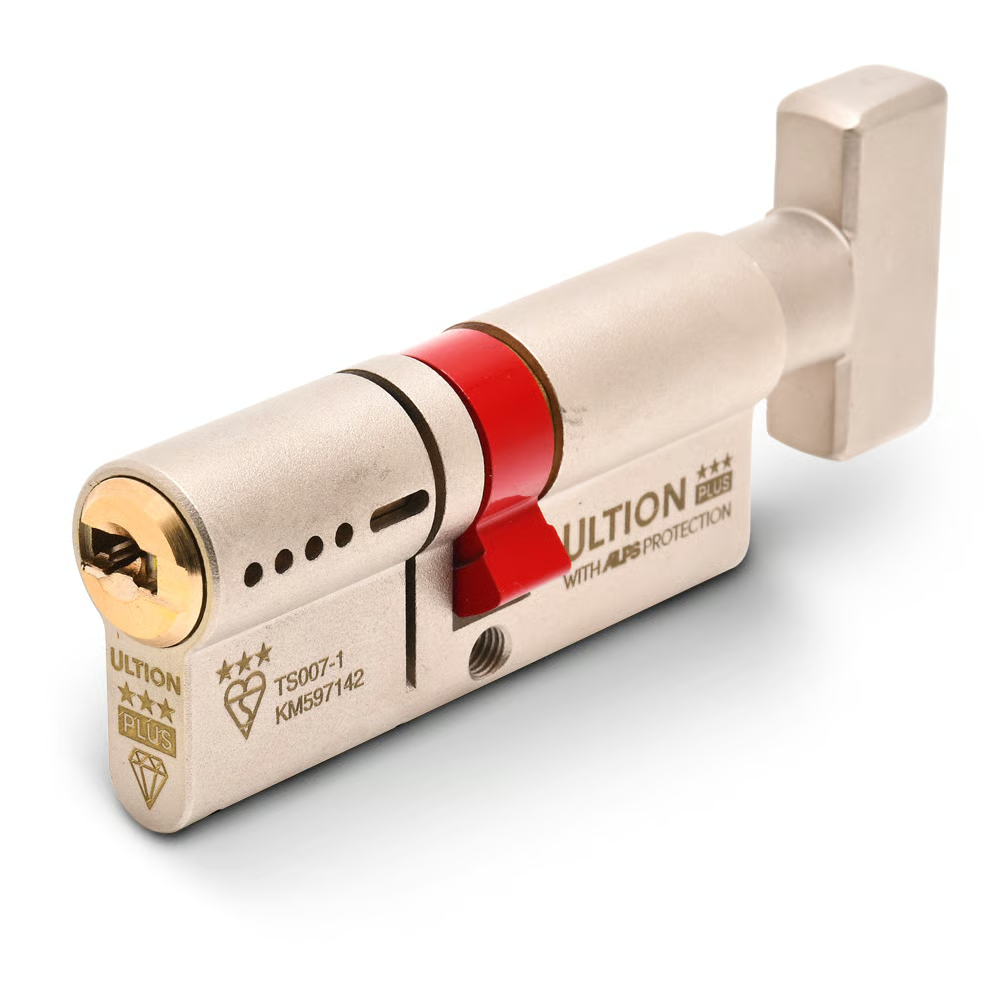
- Measure the euro cylinder length if you intend to re-use the cylinder. Record the internal and external projection separately; mismatched cylinders can be a security risk.
- If the door has a multipoint lock, note the centre distance between the handle spindle and the lock case centre; this ensures the new composite door handle operates the locking mechanism correctly.
Checking the finish, handedness and style
While measurements ensure mechanical fit, finish and style matter for visual harmony and functionality. Record these details:
- Finish: satin chrome, polished chrome, brushed nickel, black or white; ensure the finish suits the door’s colour and hardware scheme.
- Handing: composite doors may be left-handed or right-handed; check whether the lever curves towards or away from the hinge and note the handing for replacement lever handles.
- Style of rose or backplate: some replacements require specific screw positions or recesses; measure recess depth when replacing a handle with a long backplate.
Common pitfalls and trade tips
Tradespeople and experienced DIYers follow a few simple practices to avoid repeat visits:
- Always double-check measurements: measure twice, order once.
- Match spindle type as well as size: a 7mm square sprung spindle is not interchangeable with a 7mm rigid spindle without affecting operation.
- Keep an old handle set as a template: if unsure, bring the existing composite door handle to a supplier for comparison.
- Consider adjustable or universal handle sets for composite doors: they can save time when door thickness or fixings vary.
Replacing a composite door handle is straightforward when you take the time to measure correctly and note the details of the lock and cylinder. Accurate measurements for handle length, rose or backplate size, fixing centres, spindle specification and backset will ensure the new handle fits and functions as intended.
Conclusion: With the right tools and a methodical approach you can confidently measure any composite door handle for replacement. Record all dimensions in millimetres, photograph the existing set, and match spindle type, handing and finish. These steps save time on site and help you achieve a professional result every time.
Recommended Products
Based on this article, you may find these products helpful:
Part of our guide:
Complete Guide to Door Handles