
Telescopic Letterbox vs Standard Letterbox: When to Choose Telescopic
Telescopic Letterbox vs Standard Letterbox: When to Choose Telescopic Choosing the right letterbox for a front door is a tradeoff between simplicity, secur...
Telescopic Letterbox vs Standard Letterbox: When to Choose Telescopic
Choosing the right letterbox for a front door is a tradeoff between simplicity, security and weather performance. For homeowners and installers working on timber, composite, uPVC or aluminium doors, the telescopic letterbox has become a popular option; however a standard letterbox still suits many situations. This article explains the technical differences, practical applications and hands-on fitting advice so you can decide when to fit a telescopic letterbox.
What is a telescopic letterbox?
A telescopic letterbox is a two-part system: an external flap and an internal plate connected by an adjustable back box that extends through the door thickness. The telescopic section slides to form a continuous sleeve between the outside and inside faces; this eliminates gaps, improves insulation and prevents drafts. Many models include brush seals, foam strips or integrated inner flaps to reduce draughts and noise.
Standard letterbox: design and limitations
Standard letterboxes are single fixed plates fitted into the outer face of the door with a simple back plate or small internal collector. They work well on thin timber doors and traditional setups where door thickness and internal reveal are predictable. Limitations include:
- Gaps and thermal leakage if door thickness exceeds the back box depth;
- Poor draught-proofing unless additional internals are fitted;
- Security vulnerabilities and risk of fishing through the aperture unless anti-fishing measures are used;
- Difficulty fitting to modern composite or aluminium doors that are thicker or have insulating cores.
When to choose a telescopic letterbox: practical scenarios
Telescopic letterboxes are not always necessary, but they are the right choice in several common scenarios:
- Thick doors: Composite and modern timber doors commonly range from 44mm to 70mm or more. Telescopic units accommodate a wide range of thicknesses without custom fabrication.
- High-performance doors: If thermal performance and draught control matter, telescopic boxes with seals improve U-values and reduce heat loss compared with shallow back boxes.
- Retrofit where internal finish must be neat: Telescopic sleeves provide a neat internal plate and eliminate the need to build a separate internal collector.
- Aluminium frames and narrow profiles: These often lack the internal depth for a fixed back box; telescopic units bridge the gap.
- Coastal or exposed sites: Choose telescopic models in marine-grade stainless steel and with robust seals for longevity in salty air.
- Security-conscious properties: The continuous sleeve makes it harder to fish letters or access the lock; for high-security requirements consider additional anti-fishing plates and internal mail catchers.
Trade tips: specifying the correct component
For trade professionals specifying a telescopic letterbox, check these items before ordering:
- Measure door thickness accurately at the installation height and allow for any cladding or trims.
- Confirm internal reveal depth and whether an inner trim plate is required to cover the edge of the aperture.
- Select a model with the correct aperture width if you need to accept large envelopes; if C4 or small parcels must pass through, choose a wider flange and flap.
- For fire doors: only fit letterboxes that are certified for use with fire doors; most standard telescopic boxes are not suitable unless specifically fire-rated and fitted with intumescent seals.
- Specify finish: stainless steel, brass, powder-coated aluminium; use marine-grade finishes for coastal properties.
DIY fitting guidance: step-by-step
Fitting a telescopic letterbox is straightforward for competent DIYers but requires accurate work. Typical procedure:
- Prepare tools: pencil, spirit level, tape measure, drill with appropriate bits, jigsaw or router for the aperture, chisels, silicone sealant, screwdriver, clamps and appropriate fixings.
- Position: choose a comfortable height; many installers set the centre of the aperture between 900mm and 1,100mm from the finished floor but match existing openings when replacing.
- Mark and cut aperture: centre horizontally, mark the aperture dimensions from the chosen product template. Cut the outer and inner faces carefully; use a router for clean edges on timber or jigsaw for careful control on composite doors.
- Dry-fit the telescopic sleeve: extend to the door thickness and check that the outer flap closes freely and the inner plate sits flush. Trim excess if the unit allows.
- Seal and fix: apply a run of neutral-cure silicone to the contact faces to prevent water ingress and vibration noise. Use stainless fixings matched to substrate; for uPVC make sure to use fixings that do not distort the frame. Do not over-torque.
- Test: check operation of external flap, internal seals and mail delivery into the collector. Add internal mail catcher if required.
Security, weatherproofing and maintenance
Security and weatherproofing are key considerations for both homeowners and trade pros:
- Anti-fishing: add an internal anti-fishing plate or cage for properties at risk; some telescopic models include integrated anti-fishing features.
- Seals: replace brush strips and foam seals as they wear; check for rattles and refit silicone where gaps appear.
- Maintenance: stainless steel finishes should be wiped down periodically; brass will require polishing if a bright finish is desired.
- Insulation: if condensation appears around the aperture, check that the telescopic box is fully compressed and seals are intact; add closed-cell foam strips where necessary.
Materials and finishes: what to choose
Material selection affects longevity and appearance. Stainless steel is the most durable and low-maintenance option; brass is traditional and decorative but needs polishing; powder-coated finishes allow colour matching to doors. For coastal homes choose 316 stainless steel rather than 304 for better corrosion resistance. Where matching to other hardware is required, confirm colour and finish samples before ordering for larger projects.
Recommended Products
Based on this article, you may find these products helpful:
- E-Type Gasket - Black 5m Roll
- E-Type Gasket - Black (Per Metre)
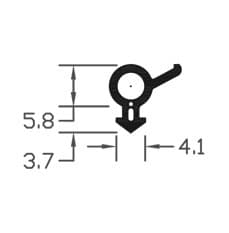
- B003 Bubble Gasket
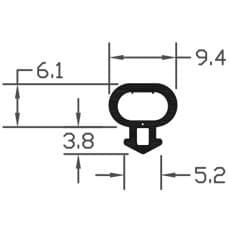
- B004 Bubble Gasket
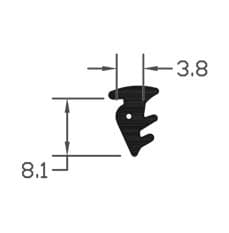
- SYS2 Wedge Gasket
Conclusion and next steps
For most modern doors, especially composites, aluminium and thick timber doors, a telescopic letterbox provides a cleaner finish, better insulation and enhanced security compared with a simple fixed plate. Standard letterboxes remain appropriate for thin older doors or where a low-cost replacement is needed. Before buying, measure door thickness, decide on aperture width for the mail types you expect to receive and check fire-door compatibility if relevant.
Next steps: measure the door and internal reveal, decide on finish and security extras, and consult your local trade supplier or our detailed resources for recommended models. For further reading on letterbox selection and fitting, see our pillar page: /guides/letterboxes, or contact Window Hardware Store for product advice and trade pricing.
Products mentioned in this article
Related articles
Internal vs External Letterbox Draught Excluders: Which Works Better?
Internal vs External Letterbox Draught Excluders: Which Works Better? A letterbox is a small opening that can let in a disproportionate amount of cold air,...
How to Retrofit an Anti Arson Letterbox to an Existing Door
How to Retrofit an Anti Arson Letterbox to an Existing Door What is an anti arson letterbox and why retrofit one? An anti arson letterbox is a specialist l...
Letterbox Draught Excluder for Security: Added Protection
Letterbox Draught Excluder for Security: Added Protection A well-chosen letterbox draught excluder reduces heat loss and noise while contributing to a stro...