What Is a Composite Door Handle? Complete Guide
Introduction: whether you are fitting a new door for a customer or replacing hardware on a home, understanding a composite door handle is essential. Composite doors are a popular choice for external d...
Introduction: whether you are fitting a new door for a customer or replacing hardware on a home, understanding a composite door handle is essential. Composite doors are a popular choice for external doors in the UK because they combine insulation, security and visual appeal. A composite door handle not only contributes to the look of the door; it is also an important component of the locking system and overall performance. This guide explains what a composite door handle is, the types available, materials and finishes, fitting considerations, and maintenance tips aimed at tradespeople and competent DIY enthusiasts.
What is a composite door handle?
A composite door handle is a lever or pull fitted to a composite door; it is designed specifically to work with the thickness, construction and locking mechanisms of composite doors. Unlike handles intended for timber or uPVC only, composite door handles need to accommodate multi-point locks, reinforced backplates and often a thicker door leaf. The term covers a range of styles: lever/lever, lever/pad, knocker combinations and pull-only handles for sliding or stable doors.
Types and styles of composite door handle
Choosing the right composite door handle depends on the door style and the lock type. Common options include:
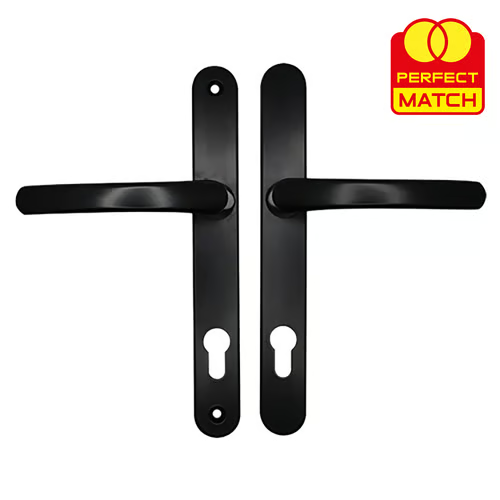
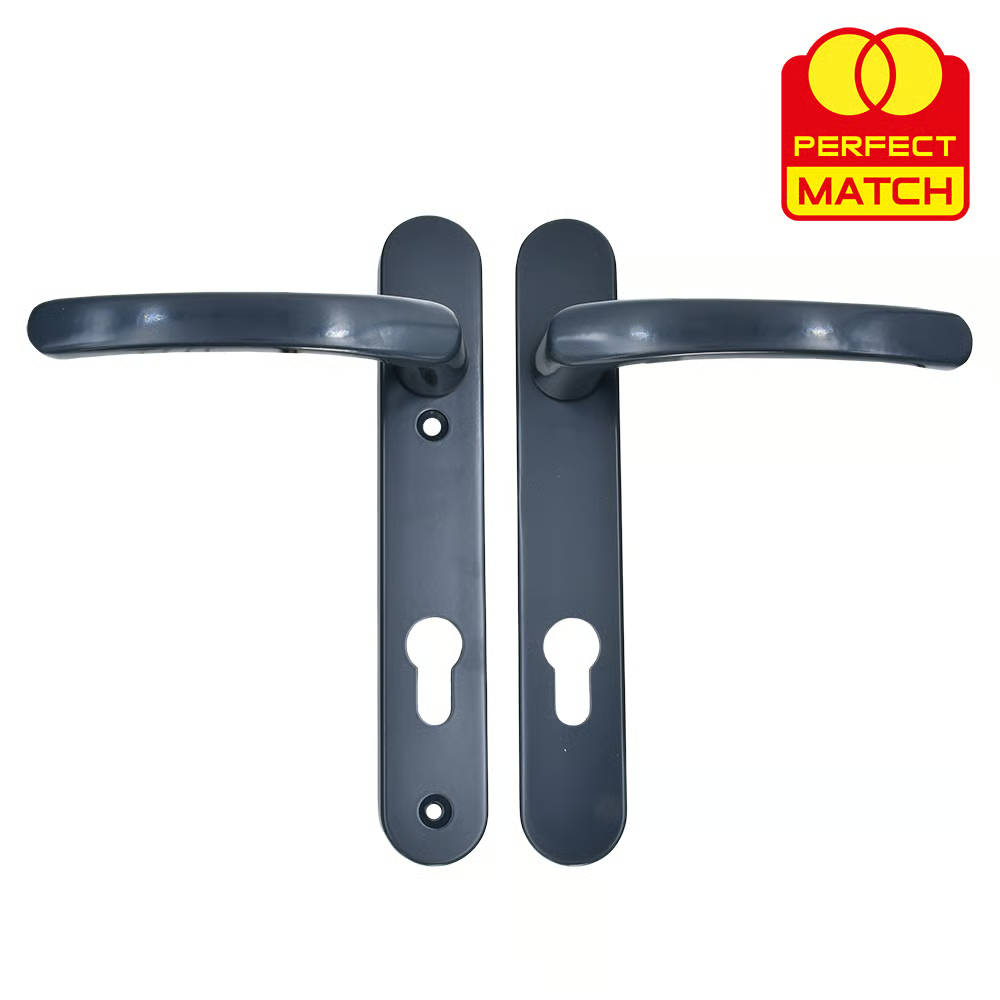
- Lever/lever handles: standard for many front doors; used with multi-point mortice locks.
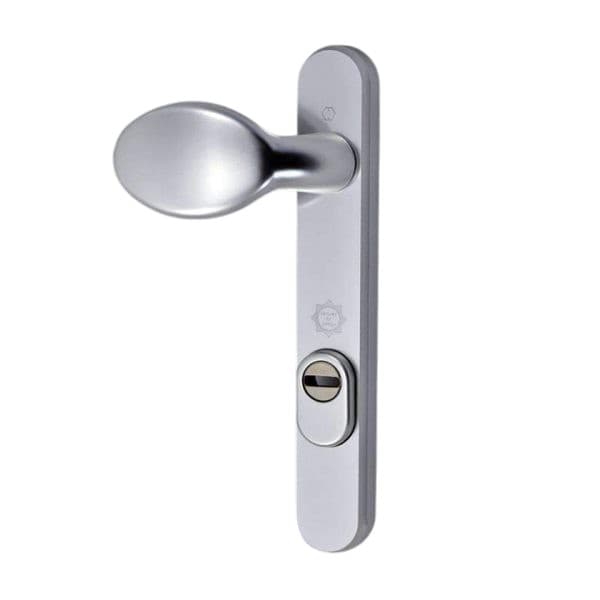
- Lever/pad or lever/escutcheon: lever on the inside, decorative pad or key escutcheon on the outside to protect the cylinder.
- Pull handles: vertical bars or D-handles used on modern designs; often combined with a separate key cylinder.
- Combined handle and knocker: traditional look for period-style composite doors; integrates the knocker above or within the handle backplate.
- Offset handles: designed for rebated doors or where furniture must clear panels, glazing or door furniture.
Consider the backset, spindle length and rose or backplate size when specifying a composite door handle. Tradespeople should check the door manufacturer’s recommended handle centres and fixing positions to ensure compatibility.
Materials, finishes and durability
Composite door handles are available in a variety of materials and finishes, each affecting durability, maintenance and aesthetics:
- Stainless steel: highly durable and corrosion resistant; suitable for coastal locations or high use.
- Aluminium: lightweight and cost-effective; often powder-coated for improved weather resistance.
- Brass and bronze: traditional finishes; may be lacquered to reduce patina formation.
- Zinc alloys: versatile and economical; typically plated for finish and corrosion resistance.
- Painted or powder-coated finishes: available in many colours to match the door.
When specifying handles for trade projects, consider the finish warranty and salt-spray test results where available. A composite door handle with a solid stainless steel or robust plated finish will resist wear in high-traffic situations and reduce callbacks.
Compatibility and measuring for installation
Before ordering a composite door handle, confirm the following measurements and compatibility points:
- Door thickness: composite doors can be thicker than standard internal doors; check spindle length and screw fixings.
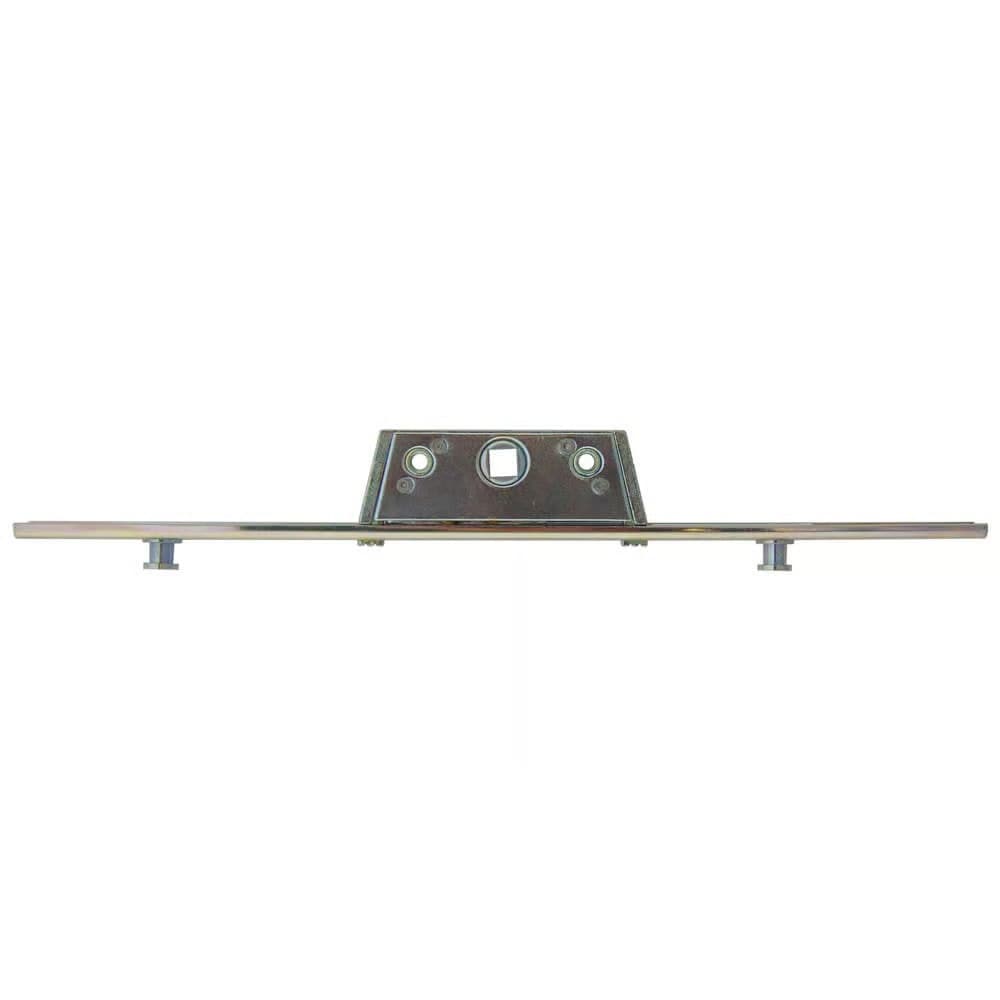
- Backset and case size: ensure the handle works with the multi-point lock centre and spindle location.
- Centres for lever/lever or lever/escutcheon: measure from spindle centre to keyhole or thumbturn centre.
- Fixing method: threaded bolts through the door or surface-mounted screw centres; choose handles that match the door’s reinforcement zones.
- Weather seals and gasket requirements: select handles with appropriate rubber or foam gaskets to prevent water ingress through fixing holes.
Tradespeople should always use a template where provided and torque fixings to the manufacturer’s recommendations. Over-tightening can distort the door face or strip fixings; under-tightening causes loose furniture and early wear.
Security considerations
A composite door handle plays a role in overall security, though the lock cylinder and multi-point mechanism are the primary defence. Key security points to discuss with customers include:
- Use of anti-snap, anti-drill and anti-bump cylinders with the handle escutcheon.
- Handles that incorporate reinforced backplates to resist levering attacks.
- Thumbturn options for quick internal operation without compromising external security.
- Compliance with Secured by Design where required for social housing or commercial projects.
When fitting a composite door handle, check that the handle does not allow easy manipulation of the cylinder from the outside and that it aligns with the door’s security specification.
Maintenance and troubleshooting
Regular care extends the life of a composite door handle and maintains smooth operation:
- Clean with a mild detergent and soft cloth; avoid abrasive cleaners that damage finishes.
- Lubricate the spindle and lock mechanism annually with a dry PTFE spray; avoid oil-based lubricants that attract dust.
- Check fixings and tighten if the handle becomes loose; replace stripped screws or worn bushes promptly.
- Inspect seals around fixings to prevent water ingress and swelling of the door edge.
If the handle wobbles or the latch sticks, remove the handle and inspect the spindle, set screws and backplate. Replacing a worn composite door handle is straightforward for a competent tradesperson and often faster than repairing lock components.
Conclusion: a composite door handle is a small but crucial element of a composite door system. Correct specification, matching materials and finishes, secure fitting and regular maintenance ensure long-term performance. For trade installers and confident DIYers, paying attention to door thickness, backset, fixation method and security features will prevent common problems and deliver a professional finish. If you are unsure which composite door handle suits a particular door, consult the door manufacturer’s guidance and the handle supplier’s technical data to avoid incompatible combinations.
Recommended Products
Based on this article, you may find these products helpful:
Part of our guide:
Complete Guide to Door Handles