What Is a Door Handle Backplate? Purpose and Types
When fitting or replacing door hardware, the term door handle backplate will come up frequently. For both tradespeople and DIY enthusiasts, understanding what a door handle backplate is, why it matter...
When fitting or replacing door hardware, the term door handle backplate will come up frequently. For both tradespeople and DIY enthusiasts, understanding what a door handle backplate is, why it matters and which type to choose is essential for a professional finish. This guide explains the purpose of a door handle backplate, the common types available, selection criteria and practical installation tips tailored to UK doors and trade requirements.
What is a door handle backplate?
A door handle backplate is the flat or shaped plate that sits behind a lever or knob and attaches to the face of the door. It provides the fixing points for the handle spindle and screws, covers cut-outs or damaged areas around the handle, and often houses the key or lock mechanism. A backplate can be purely decorative, purely functional, or both; its design and dimensions vary depending on the handle style, door thickness and lock type.
Main purposes of a door handle backplate
Understanding the primary functions will help you specify the correct part for a job:
- Fixing and alignment: the backplate secures the handle to the door and keeps the spindle central to the latch or mortice lock.
- Protection: it shields the door surface from wear, impact and moisture around the handle area.
- Coverage: covers imperfect or enlarged cut-outs, especially when replacing old hardware; this can save time re-routing or re-boring the door.
- Security: some backplates are reinforced to resist lever snapping or wrenching; they can integrate with escutcheons to protect the cylinder.
- Aesthetics: provides a finished look and matches the architectural style or finish of the property.
Common types of door handle backplate
There are several designs used in residential and commercial projects. Choosing the right type affects both appearance and function.
- Plain rectangular backplates: simple and versatile; suitable for contemporary applications and ease of fitting.
- Round rose backplates: circular plates often used with modern knobs or levers; smaller than full-length plates and popular on internal doors.
- Long backplates: extend above and below the handle; useful for covering larger cut-outs or to create a period look.
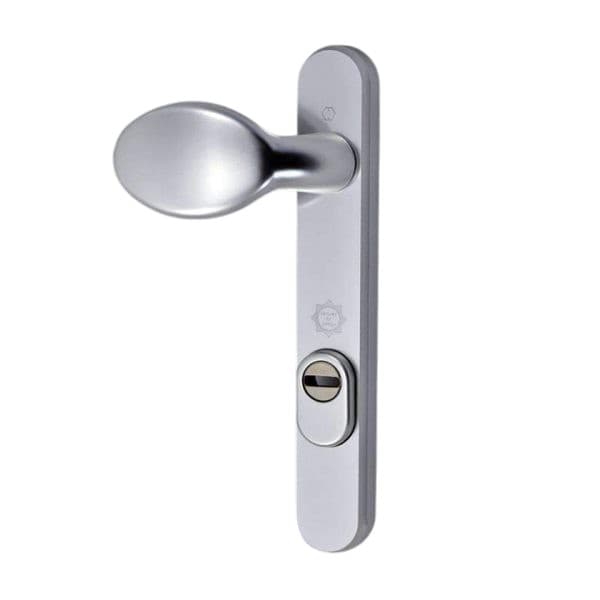
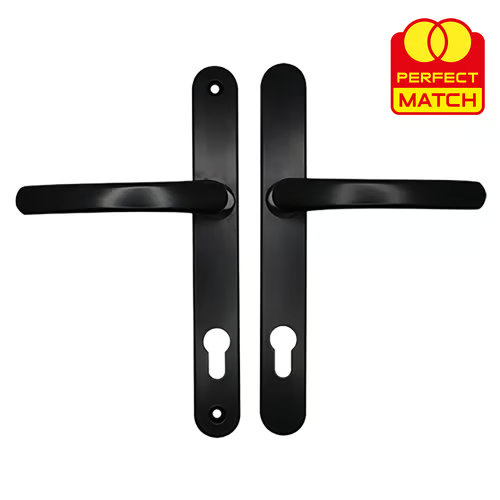
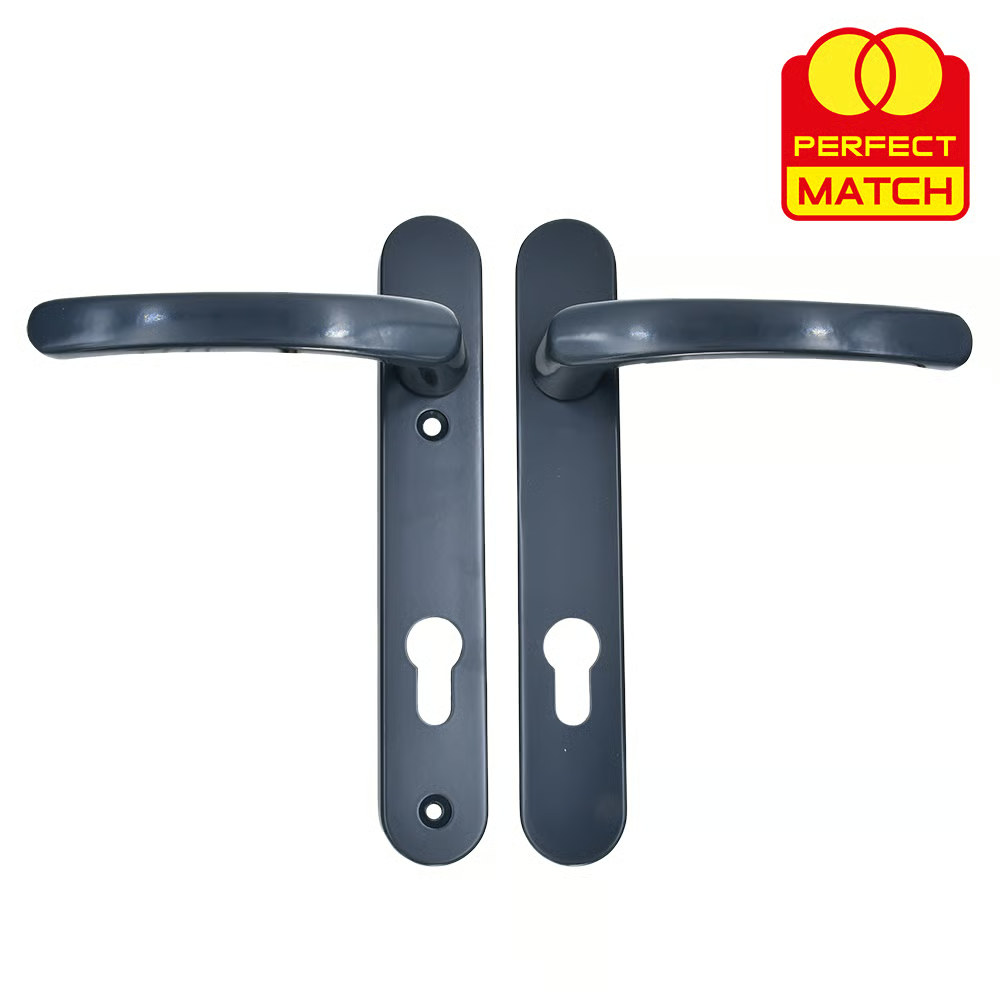
- Escutcheon backplates: include a cut-out for a keyhole or euro profile cylinder; available as keyhole, oval or profile escutcheon designs.
- Backplates with integrated cylinder protection: reinforced around the keyway to resist forced entry; common in external doors.
- Offset backplates: have raised centres or stepped profiles to accommodate handle movement or decorative detailing.
Materials, finishes and trade considerations
The choice of material and finish impacts durability, cost and compatibility with locks. Consider these factors on site:
- Materials: brass, stainless steel, zinc alloy and aluminium are typical. Brass and stainless steel offer the best corrosion resistance for external use.
- Finishes: polished chrome, satin nickel, antique brass and powder-coated colours are common. Match finish to other ironmongery for consistency.
- Durability: for commercial or high-traffic doors choose robust materials and wear-resistant finishes; look for corrosion ratings where applicable.
- Standards: ensure compatibility with British Standards and, where required, check fire door approvals and escape-route hardware specifications.
How to select the right door handle backplate
Follow a practical checklist to get the correct backplate first time:
- Identify the lock type: rim latch, tubular latch, mortice lock or euro profile cylinder – this determines spindle position and keyway cut-outs required by the backplate.
- Measure accurately: backplate hole centres, handle spindle height from the floor, and door thickness. Note screw spacing and countersink requirements.
- Match the handle: ensure the backplate is compatible with the handle brand or spindle size; some handles require specific backplate thicknesses.
- Consider door condition: if the door has previous damage, choose a longer backplate to conceal imperfections rather than cutting or reboring the door.
- Security needs: for external doors select reinforced or cylinder-protecting backplates and check for anticorrosion finishes.
Practical installation and maintenance tips
Proper fitting ensures longevity and performance. These trade-focused tips help avoid common problems:
- Pre-fit the backplate: position and mark all fixing points before drilling; use a suitable template if provided.
- Monitor spindle alignment: ensure the spindle runs freely through the lock; any binding will cause premature wear.
- Use correct fixings: countersunk woodscrews for timber doors; tamperproof or longer screws for external or high-security applications.
- Seal external fixings: apply a small bead of silicone or mastics around the backplate edge on external doors to prevent moisture ingress.
- Maintenance: tighten fixings periodically, lubricate moving parts and touch up exposed edges of finishes to prevent corrosion.
Choosing and fitting the correct door handle backplate improves function, security and appearance. For tradespeople, specifying the right material, profile and compatibility with the lock reduces site rework and ensures a professional finish. For DIYers, understanding the types and installation basics makes replacement straightforward and cost-effective.
If you need guidance on matching backplates to specific locks or door types, consult your supplier's technical sheets or contact a trade counter for exact measurements and compatibility information. A well selected door handle backplate will make the difference between a temporary fix and a lasting, secure installation.
Recommended Products
Based on this article, you may find these products helpful:
Part of our guide:
Complete Guide to Door Handles