Best Tilt and Turn Handles for European Style Windows
Choosing the right tilt and turn handle is essential for the performance, security and longevity of European style windows. Whether you are a glazier, joiner or a DIY enthusiast fitting windows for th...
Choosing the right tilt and turn handle is essential for the performance, security and longevity of European style windows. Whether you are a glazier, joiner or a DIY enthusiast fitting windows for the first time, understanding the differences in mechanism, material and fixing types will save time on site and reduce call-backs. This guide explains what to look for, common standards, installation tips and recommended features when specifying a tilt and turn handle for any project.
Why the right tilt and turn handle matters
The handle is not just a cosmetic finishing touch: it is the interface between the user and the hardware. A durable tilt and turn handle ensures smooth operation for both the tilt and full-turn functions; it helps maintain an airtight seal; and it contributes to security when paired with the correct locking system. Poorly chosen handles can lead to wobble, premature wear or failure to engage multipoint locks properly.
Key features to consider
When selecting a tilt and turn handle you should consider the following technical and practical factors:
- Material and finish: aluminium, zinc alloy or stainless steel work best in high-use or coastal environments; powder-coated finishes and anodised aluminium improve corrosion resistance.
- Spindle length and thickness: confirm the spindle size and thread length match the window gearbox – incorrect spindles will cause poor engagement or damage.
- Fixing centres: common fixing centres include 43mm and 92mm; check existing furniture or the handle packaging for compatibility.
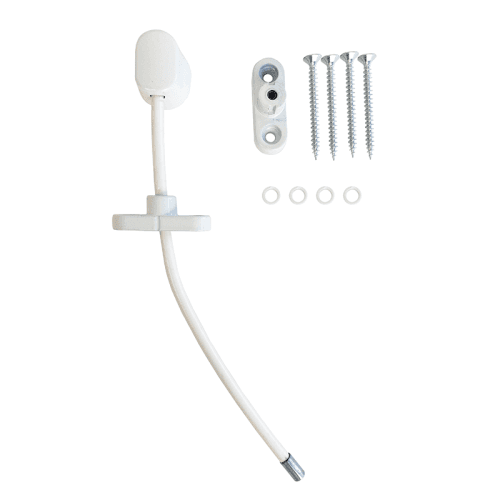
- Child safety and tilt restrictors: options include push-button handles, key-lockable handles and handles with an integrated tilt restrictor for controlled ventilation.
- Fire escape and emergency egress: specify easy-turn or emergency egress handles where required for upper-floor windows.
- Standards and certification: look for handle compliance with BS EN 13126-3 and Secured by Design where applicable.
Types of tilt and turn handles
Understanding the available types helps you match the handle to the application:
- Standard lever handles: simple, cost-effective and used in most domestic installations; available with and without locking cylinder.
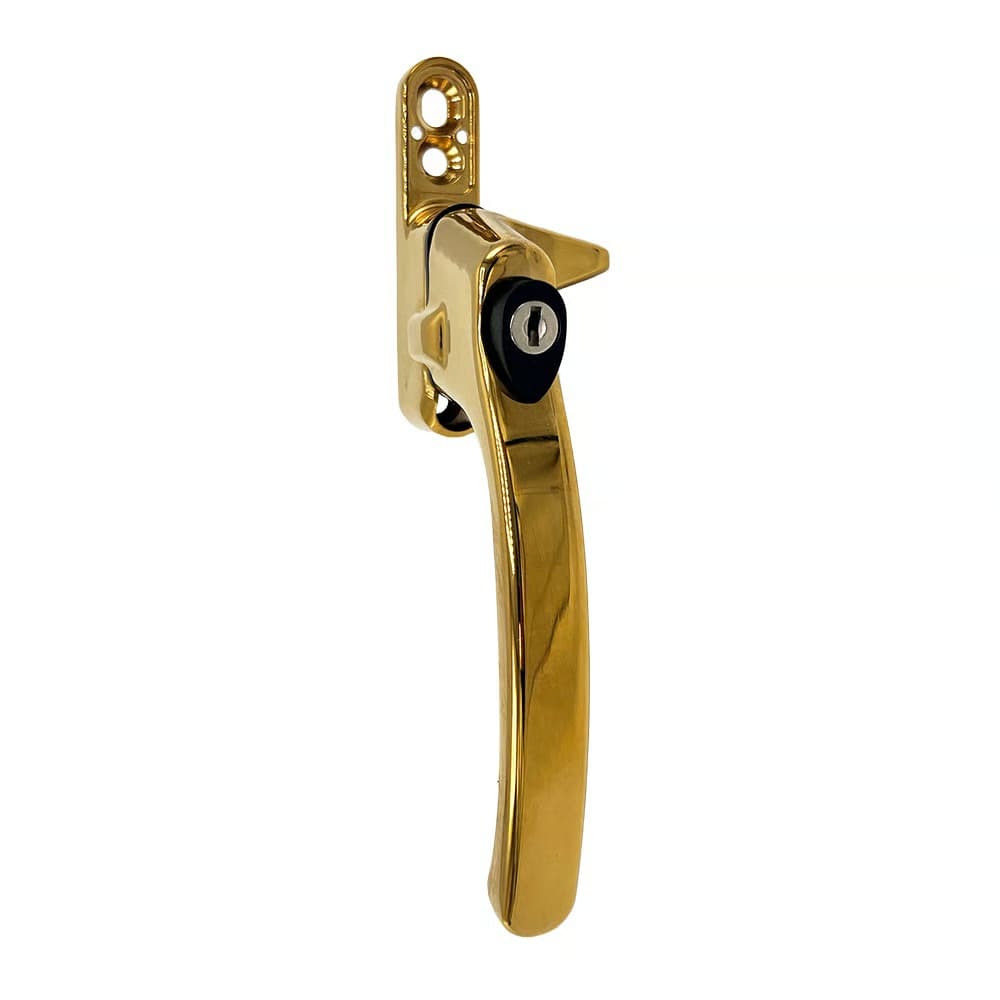
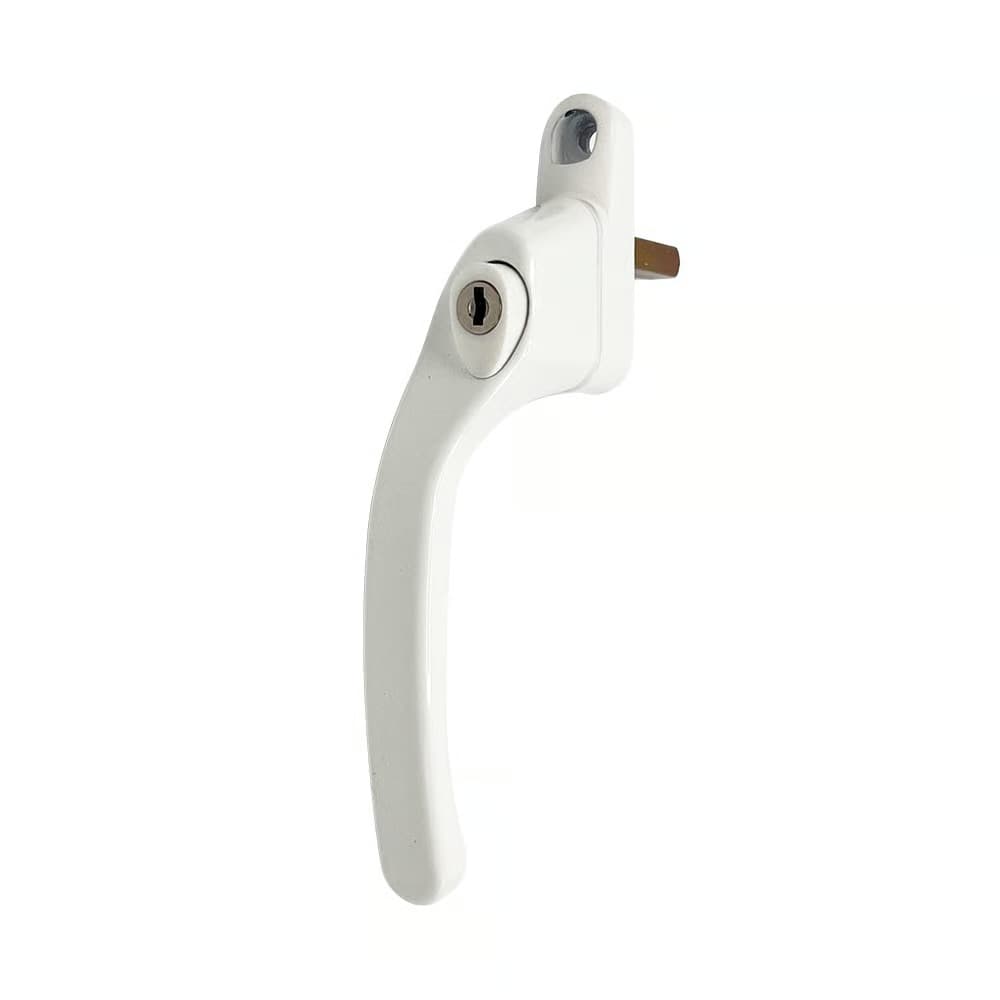
- Key-lockable handles: provide enhanced security for ground-floor windows or vulnerable locations; useful for letting trades access inside while keeping windows secure.
- Push-button handles: offer child safety without the need for a key; the button must be depressed to operate the handle from closed positions.
- Cranked or offset handles: designed for frames where the handle must clear the sill, radiator or curtain rail; available in various offsets to suit site conditions.
- Fold-down handles: reduce projection into a room, preventing handle impact on furniture or curtains; useful in tight spaces.
Installation and servicing tips for tradespeople
Correct installation ensures reliable operation and reduces call-backs. Follow these practical tips on site:
- Check compatibility before fitting: verify spindle size, screw centres and backset against the gearbox or existing handle.
- Lubrication: apply a light machine oil to the spindle and gearbox during installation to aid smooth movement; avoid heavy greases that attract dust.
- Torque: do not overtighten mounting screws; the handle should be secure but still able to rotate freely. Over-tightening can bind the mechanism.
- Alignment: ensure the handle is set to the neutral closed position when fixing; misalignment can prevent full engagement of the locking points.
- Security checks: after fitting, test operation in both tilt and turn modes and ensure multipoint locks engage fully. Fit handles with breakaway spindles if required for emergency escape compliance.
- Maintenance schedule: recommend an annual inspection to customers; clean, lubricate and check fixings to prolong handle life.
Specifying handles for different environments
Different sites demand different specifications. Consider these scenarios when choosing a tilt and turn handle:
- Coastal properties: select stainless steel or marine-grade finishes to resist salt corrosion; zinc alloy handles can pit quickly in these conditions.
- Commercial and high-traffic buildings: heavy-duty handles with reinforced spindles and return-to-centre springs withstand frequent use.
- Listed or heritage windows: choose historically sympathetic handle designs in brass or bronze finishes, while ensuring modern locking performance.
- Passive house or airtight builds: handles with accurate positioning and minimal backlash help preserve seals and reduce air leakage.
Choosing a supplier and warranties
For tradespeople it is important to source handles from reputable suppliers who can provide technical data, spares and warranty cover. Look for suppliers who offer:
- Technical datasheets with spindle, fixing and torque specifications.
- Availability of matching keeps, striking plates and replacement spindles.
- Clear warranty terms and support for returns or defective items.
- Range depth: having multiple finishes, offsets and security options simplifies on-site choices.
When ordering, keep job sheets with handle type, spindle length and fixing centre for each window; this reduces errors when buying multiple units.
Recommended Products
Based on this article, you may find these products helpful:
- TSS Cockspur Window Handles
- TSS Offset UPVC Window Handles
- ERA Universal Inline Window Handle
- In-Line Window Handle - White
- UAP Keyless Window Restrictor
Conclusion
Specifying the right tilt and turn handle improves window functionality, security and customer satisfaction. For tradespeople the key is to match spindle and fixing dimensions, choose materials suitable for the environment and consider safety features such as key locks or tilt restrictors. With correct installation and simple maintenance, a good tilt and turn handle will perform reliably for many years. If you need further help choosing handles for a specific project, check our guides on window handles or speak to a technical adviser for exact part matching and on-site tips.
Part of our guide:
Complete Guide to Window Handles