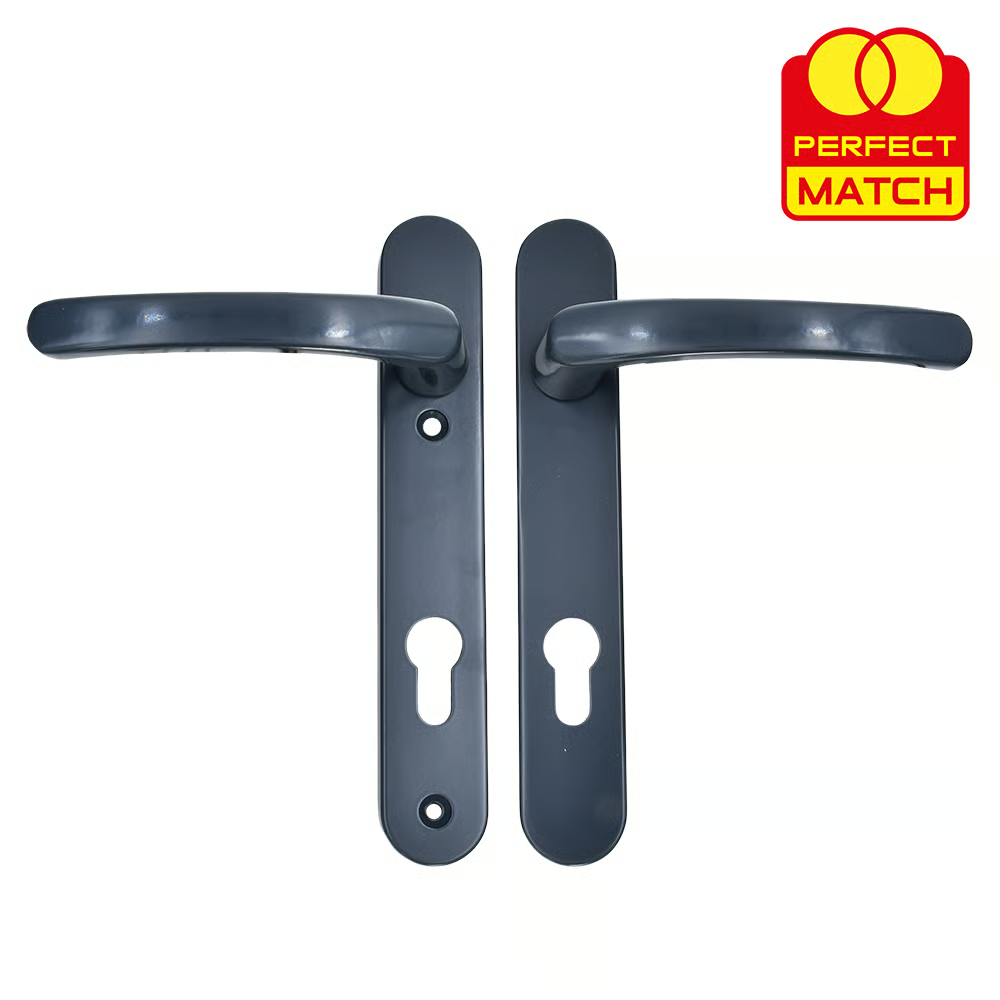
Fitting a Composite Door Handle: Trade Tips
Fitting a composite door handle is a common task for joiners, installers and confident DIY enthusiasts. Composite doors are heavier and thicker than standard uPVC doors, so the approach to a composite...
Fitting a composite door handle is a common task for joiners, installers and confident DIY enthusiasts. Composite doors are heavier and thicker than standard uPVC doors, so the approach to a composite door handle must be precise; poor fitting can lead to wear, rattles and security vulnerabilities. This guide covers selection, preparation, fitting and final checks so you can fit a composite door handle correctly first time.
Choosing the right composite door handle
Selecting the correct composite door handle requires knowing the door type, the handle's fixing method and the lock/gearbox arrangement. Check these points before ordering parts:
- Door thickness and edge construction: composite doors are commonly 44mm to 48mm thick; confirm exact thickness to choose spindle length and bolt length.
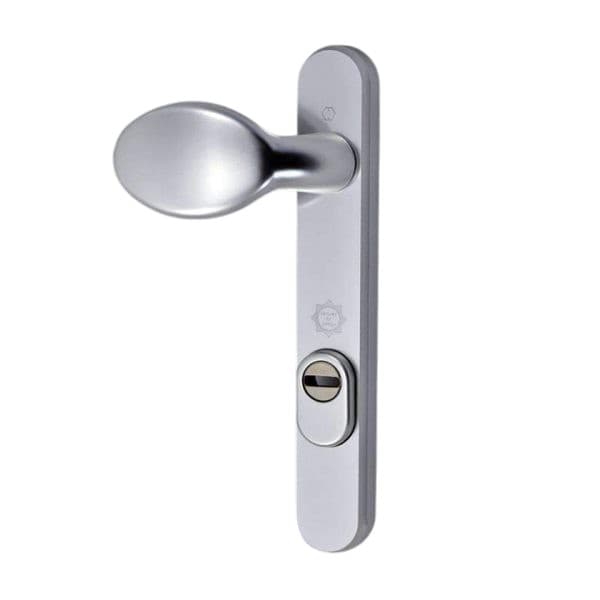
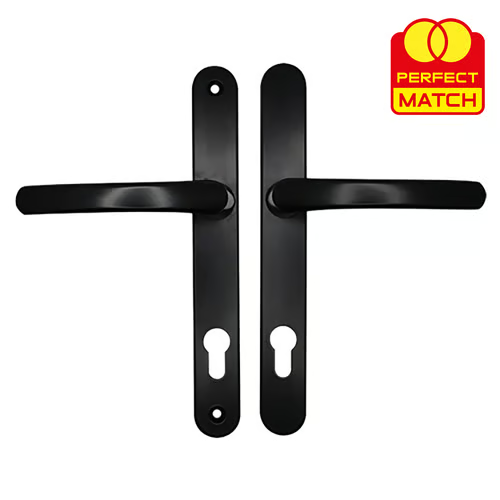
- Handle type: choose from lever/lever, lever/pad, or pull handles depending on the door design and homeowner preference.
- Fixing style: through-bolts with bolt dog bolts are preferred on composite doors; choose handles designed for composite door handle installation rather than uPVC-specified fittings.
- Centres and spindle size: verify the distance from handle spindle centre to keyhole if fitting a furniture set; many composite door handles use 92mm or 62mm PZ centres.
- Finish and corrosion resistance: specify finishes suitable for coastal properties; stainless or marine-grade coatings extend life.
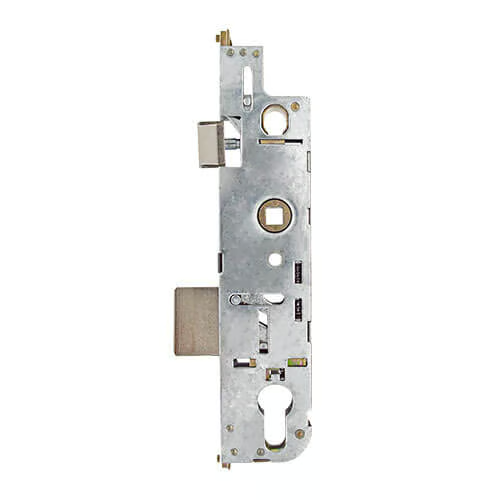
Choosing a composite door handle that matches the lock case and keeps the handle clear of the multi-point gear is essential for smooth operation and valid guarantees.
Preparing the door and workspace
Preparation reduces rework and damage. Before drilling or fitting a composite door handle follow these trade steps:
- Remove any factory-fitted trims if present and lay the door flat on soft supports to avoid marking the face.
- Mark the centre line for handle height: common trade height is 1070mm from finished floor level; confirm with homeowner or site drawings.
- Check for pre-formed reinforcement or packers inside the door edge; feel for solid areas where dog bolts will seat.
- Use suitable drill bits: metal cutting bits for steel reinforcement, wood bits for laminates and progressively larger sizes for clean holes.
- Have silicone sealant and appropriate packing shims to maintain compression and weather seal after fitting the handle plate.
Step-by-step fitting guide
Follow these practical steps to fit a composite door handle correctly. This process assumes you have the matching spindle and fixings for a composite door handle set.
- Mark positions: transfer the handle centreline to the edge of the door to align spindle and lock case.
- Drill the spindle hole through the door face to the required diameter; using a low speed reduces tear-out on the face laminate; check the spindle passes freely.
- Drill through-bolt holes: composite door handles rely on bolts passing through the door and tightening into the external plate or rose; use a drill stop to avoid over-penetration.
- Test-fit: insert spindle and both handles to check alignment and that the handle operates the latch without binding; adjust spindle length or use a longer spindle if necessary for thicker doors.
- Fit the external rose or backplate first, feeding the spindle and fixings through; apply a dab of silicone to the recess to maintain weather seal if the plate is exposed.
- Tighten through-bolts gradually and alternately; composite doors require even compression to avoid warping the face or breaking the laminate.
- Fit the internal plate or rose, ensuring the spindle engages correctly; fit any sprung bushes or washers supplied to hold the handle horizontal.
- Check security screws and dog bolts are fully engaged with the internal reinforcement; loose dog bolts are a common failure on badly fitted composite door handles.
Common issues and trade fixes
Even experienced fitters encounter recurring problems when installing a composite door handle. Here are practical fixes:
- Handle binding: usually caused by misaligned spindle or incorrect spindle length; swap to a longer spindle or file the spindle end slightly to ease engagement.
- Rattles: often due to loose dog bolts or incorrect packers; remove the handle, fit proper packers and tighten the through-bolts to the manufacturer's torque.
- Water ingress at the external rose: add a thin bead of neutral cure silicone around the outer edge and press the rose flat; do not overtighten as this can distort the face.
- Paint or laminate damage: protect the door face with soft pads and use low-speed drilling; touch up with a matching paint where necessary.
Final checks and handover
Before completing the job, perform these checks and handover steps to ensure client satisfaction and reduce call-backs:
- Operate the handle and lock multiple times to ensure smooth action and that the multi-point engages fully.
- Check the handle returns to horizontal when released; adjust spring washers if needed.
- Confirm there are no visible gaps at the roses and that silicone beads are neat; explain any weather-sealing visible to the client.
- Provide maintenance advice: lubricate moving parts annually and check dog bolts after heavy use; include the composite door handle care instructions in the handover pack.
Fitting a composite door handle is straightforward for trained tradespeople when the right components and techniques are used. Use fixings designed for composite doors; double-check spindle lengths and reinforcement locations; and carry out the final checks to leave a secure, professional finish.
Whether you are a fitter on site or a DIY homeowner tackling your first upgrade, attention to detail at each stage will ensure the composite door handle performs well for years. For more comprehensive guidance on door hardware, visit our pillar guide on door handles and consult manufacturer's instructions for specific products.
Recommended Products
Based on this article, you may find these products helpful:
Part of our guide:
Complete Guide to Door Handles