
How to Measure Door Thickness for Telescopic Letterboxes
How to Measure Door Thickness for Telescopic Letterboxes: fitting a telescopic letterbox correctly begins with an accurate measurement of the door thicknes...
How to Measure Door Thickness for Telescopic Letterboxes: fitting a telescopic letterbox correctly begins with an accurate measurement of the door thickness. Whether you are a trade fitter or a DIY homeowner replacing an old letterplate, getting this measurement right avoids poor fit, rattling, draughts and security issues. This post explains practical methods, tools and trade tips for measuring different door types so you choose the correct telescopic unit.
Why accurate door thickness matters
Telescopic letterboxes are designed to span the full thickness of a door leaf by using an inner and outer tube that slide to suit the door depth. If the unit is too short it will not pass through the door; if it is too long the internal or external faceplate will not sit flush. Incorrect sizing can compromise weatherproofing and security; on fire doors it can also invalidate the rating. Correct measurement ensures the telescopic tube adjustment sits comfortably within the product range and allows tidy finishing with seals and fixings.
Tools and parts you will need
- Tape measure (metric) with a rigid blade for accuracy
- Digital calliper for precise readings if available
- Straight edge or spirit level to find true faces on bevelled doors
- Marker or low-tack masking tape to note measurement points
- Manufacturer cut-out template or product data sheet
- Torch for checking internal cavities where applicable
Step-by-step measuring procedure
Follow these steps to obtain an accurate thickness measurement for a telescopic letterbox:
- Identify the exact door face positions: measure from the outside face of the external finish to the inside face of the internal finish at the location where the letterbox will sit. This includes any applied cladding, laminates or PVC trims that will remain after installation.
- Measure at the position of the letterbox aperture: doors can be tapered or rebated so measure where the flap will sit, typically midway between top and bottom of the intended aperture. Use a straight edge to ensure you measure perpendicular to the face if the door has a bevel.
- Take at least two measurements: measure top and bottom of the aperture and average them if there is a small variance. If variance is significant check for warped door or inconsistent cladding.
- Record the exact dimension in millimetres. Telescopic letterboxes are supplied with adjustable ranges; you will need a unit whose adjustable length covers your measured thickness.
- If replacing an existing telescopic unit, remove it and measure the effective tube length from face to face. Compare with the new product specification.
What else to measure: aperture, backset and height
While thickness is central, a few other measurements are important for a smooth installation:
- Aperture width and height: many telescopic letterboxes require a specific cut-out size. Use the manufacturer template; do not assume all products fit the same slot.
- Backset: the distance from the leading edge of the door to the centre line of the aperture; important for alignment with handles and internal furniture.
- Height from finished floor: typically between 900mm and 1100mm for a standard fit, but confirm with customer requirements and accessibility considerations.
Special cases and trade advice
Different door constructions need different attention:
- Composite doors: include the timber or foam core plus any facing panels and aluminium trims. Measure the full sandwich of materials; the telescopic tube must bridge from outer trim face to inner face of the internal skin.
- uPVC doors: these often have a steel reinforcement or multilayer skins. Measure the full external to internal face; the reinforcement position is irrelevant because the letterbox passes through all layers.
- Aluminium doors: measure from external aluminium face to internal face; consider any applied trims that may increase thickness.
- Rebated or beaded doors: measure the thickness at the true door leaf not including frame rebates or beads that do not form part of the leaf.
- Fire doors: only fit letterboxes that are fire-rated or supplied with intumescent liners where required; measure thickness and check the product is certified for that door construction and rating.
Trade tip: carry commonly used telescopic ranges on site. Typical spans include 35–55mm, 45–70mm and 70–110mm. For marginal measurements choose the next size up to allow for finishes and seal thickness.
Installation and fitment checks
Before fixing the telescopic letterbox confirm:
- The product’s adjustable range includes your measured thickness; the tube can be extended or retracted to sit flush.
- The cut-out matches the manufacturer’s template and the faceplates cover the aperture adequately without excessive overhang.
- Sealing: plan for weatherproofing with foam sealing strips or silicone where specified. On external doors use compressible seals to avoid draughts.
- Security: consider internal security plates or anti-fishing devices supplied with the unit; verify the internal flap does not obstruct hardware such as mail restrictors or letter cages.
- Function test: prior to final fixing, temporarily fit the letterbox, check the flap opens freely and that items can pass without contacting the inner face of the door or handles.
Common measurement mistakes to avoid
- Measuring only the timber core and ignoring applied finishes or trims.
- Assuming door thickness is uniform; always measure at the actual aperture position.
- Not checking manufacturer tolerances and cut-out requirements; different telescopic products vary in faceplate profile and tube diameter.
- For fire doors, fitting a non-rated product and not accounting for intumescent materials.
Recommended Products
Based on this article, you may find these products helpful:
- E-Type Gasket - Black 5m Roll
- E-Type Gasket - Black (Per Metre)
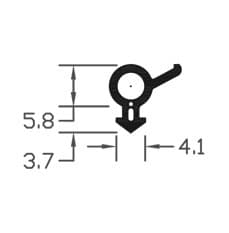
- B003 Bubble Gasket
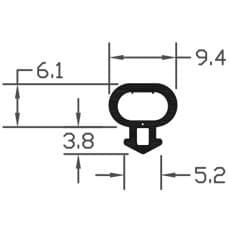
- B004 Bubble Gasket
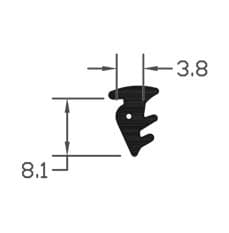
- SYS2 Wedge Gasket
Conclusion and next steps
Accurate door thickness measurement is the foundation of a tidy, secure and weatherproof telescopic letterbox fit. Always measure the finished face-to-face thickness at the aperture, check manufacturer ranges and templates, and allow for finishes and seals. For trade professionals: stock common adjustable ranges and carry templates to speed up installs. For homeowners: if in doubt take multiple measurements and consult product data or speak to a supplier.
Need product guidance or templates? Visit our pillar page for more on letterboxes: /guides/letterboxes, or contact Window Hardware Store’s trade support for technical advice and custom lengths.
Products mentioned in this article
Related articles
Internal vs External Letterbox Draught Excluders: Which Works Better?
Internal vs External Letterbox Draught Excluders: Which Works Better? A letterbox is a small opening that can let in a disproportionate amount of cold air,...
How to Retrofit an Anti Arson Letterbox to an Existing Door
How to Retrofit an Anti Arson Letterbox to an Existing Door What is an anti arson letterbox and why retrofit one? An anti arson letterbox is a specialist l...
Letterbox Draught Excluder for Security: Added Protection
Letterbox Draught Excluder for Security: Added Protection A well-chosen letterbox draught excluder reduces heat loss and noise while contributing to a stro...