
Internal vs External Letterbox Draught Excluders: Which Works Better?
Internal vs External Letterbox Draught Excluders: Which Works Better? A letterbox is a small opening that can let in a disproportionate amount of cold air,...
Internal vs External Letterbox Draught Excluders: Which Works Better?
A letterbox is a small opening that can let in a disproportionate amount of cold air, rain splash and road noise. Choosing the right letterbox draught excluder will improve thermal comfort, reduce heating bills and help with acoustic performance. This article compares internal and external solutions, gives trade-level pointers and DIY guidance for UK homeowners and installers.
How draughts and water enter through a letterbox
Letterboxes allow air movement through the door leaf; small gaps around the flap and the aperture itself create convective draughts. On windy or rainy days, wind-driven rain can be pushed under the flap and down the inner face of the door. Noise transmission is also increased because sound travels through the open cavity. Understanding these mechanisms helps when selecting an excluder: block the air path, provide a weather barrier, and avoid compromising door operation or fire certification.
Common types of letterbox draught excluders
- Internal brush liners: brush strips fixed to the inside of the letterplate or fitted into the aperture to restrict airflow while allowing post to pass.
- Internal foam or rubber baffles: soft seals attached around the aperture to close gaps and reduce draughts; often low cost and quick to fit.
- External weatherproof letterplates: plates with integrated seals and drips that deflect rain and close tightly against the flap.
- Magnetic or sponge-lined flaps: retrofitted flaps that seal when closed, commonly used externally to improve weather resistance.
- Letterbox draught excluder boxes: internal box units that capture letters, fitted inside the door to create an insulated barrier between the flap and the house.
Internal excluders: benefits and limitations
Internal letterbox draught excluders are fitted on the room side of the door. Typical products include brush liners, foam seals and internal letterbox boxes. The main benefits are:
- Better thermal and acoustic insulation: internal brushes and boxes interrupt the airflow path and reduce sound transmission into the room.
- Easy installation: most internal units are surface mounted with adhesive or screws and can be retrofitted in ten to 30 minutes.
- Letter retention: an internal box catches mail, preventing letters from falling onto the floor.
Limitations to note:
- They do not prevent wind-driven rain entering the doorway; moisture can still travel under the flap and wet the internal unit.
- Some internal fittings can be visually intrusive or restrict large envelopes if not sized correctly.
- Fire door considerations: internal additions must not compromise certification; remove or replace with compliant alternatives on fire doors.
External excluders: benefits and limitations
External letterbox draught excluders include weatherproof letterplates and sealed flaps fitted to the outside face of the door. Their strengths are:
- Superior weather protection: external plates with drips and tight seals deflect rain and reduce water ingress.
- They reduce heat loss at the first point of contact with the elements, which can be efficient for thermal control.
- Often more robust: external units are typically made from metal or reinforced uPVC and suited to exposed doors.
Downsides to consider:
- External fittings can be targeted by intruders if poorly installed; choose high-quality units and ensure secure fixings.
- They may be less effective for acoustic reduction compared with internal boxes and brushes, because they do not interrupt the internal cavity.
- Retrofit can be more involved if the existing aperture and door face are not compatible; careful measurement is essential.
Trade advice: selecting and fitting the right solution
For trade professionals, selection depends on door type and site conditions. Key considerations:
- Door material: timber, composite and PVCu doors require different fixings and may expand with temperature; use corrosion-resistant screws for external fittings.
- Weather exposure: on exposed coastal or windy sites, favour external weatherproof plates with a drip lip and stainless steel fixings.
- Security: ensure external plates sit flush and use anti-tamper screws where required; consider fitting an internal brush or box as a secondary barrier.
- Fire doors: do not fit non-approved internal boxes or intumescent strips without checking certification; work with the door manufacturer or supplier for compliant solutions.
- Compatibility with multipoint locks and panels: measure depth and clearances; some letterbox liners will foul the locking mechanism if the aperture is close to the lock stile.
DIY fitting: practical steps for homeowners
Simple DIY measures can improve performance quickly. Typical steps for an internal brush or foam seal:
- Measure the aperture: width, height and depth, and note the door material.
- Choose a product that matches the size and method of fixing; many kits include self-adhesive or screw-on options.
- Prepare the area: clean and degrease the door surface; on painted surfaces, score gently if using adhesive to improve bond.
- Fit per manufacturer instructions; for screw fixings, pre-drill pilot holes to avoid splitting timber doors.
- Test the flap to ensure post still drops smoothly and that the seal does not impede operation.
For external plates, ensure you use a bead of appropriate exterior-grade sealant around the perimeter where necessary; avoid sealing so tightly that moisture is trapped in an existing opening.
Maintenance and performance checks
Regular maintenance keeps excluders effective: brush strips should be cleaned of debris; rubber seals can be treated with silicone spray to keep flexible; check fixings annually and re-tighten or replace corroded screws. After severe storms, check for water ingress and replace any saturated internal boxes to prevent mould.
Which works better: internal or external?
There is no single answer: each approach targets different problems. For weather and water protection, an external weatherproof letterplate is superior. For thermal and acoustic performance inside the home, an internal brush or letterbox box performs better. The best practice is a combined approach: a robust external plate to stop rain and reduce heat loss at source, plus an internal brush or insulated box to cut down draughts and noise while retaining mail.
Recommended Products
Based on this article, you may find these products helpful:
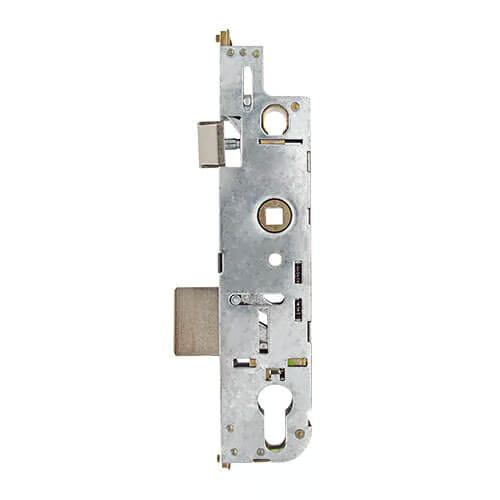
- Multipoint Gearbox GU Old Style
- In-Line Window Mechanism
- Offset Window Mechanism
- E-Type Gasket - Black 5m Roll
- E-Type Gasket - Black (Per Metre)
Conclusion and next steps
If you are a tradesperson specifying for clients: assess door type, exposure and any fire door constraints; consider combined external and internal solutions; source quality hardware with appropriate fixings. If you are a homeowner: start by measuring your aperture and deciding whether weather, draughts or noise is the priority; for most doors, fit an external weatherproof plate and add an internal brush or box for optimum results.
For product options and technical specifications, see our detailed resources at /guides/letterboxes or contact Window Hardware Store for trade advice and sample kits. Choosing the right letterbox draught excluder will make the doorway more comfortable and secure, and reduce energy waste.
Products mentioned in this article
Related articles
How to Retrofit an Anti Arson Letterbox to an Existing Door
How to Retrofit an Anti Arson Letterbox to an Existing Door What is an anti arson letterbox and why retrofit one? An anti arson letterbox is a specialist l...
Letterbox Draught Excluder for Security: Added Protection
Letterbox Draught Excluder for Security: Added Protection A well-chosen letterbox draught excluder reduces heat loss and noise while contributing to a stro...