How to Replace Window Handles for uPVC Windows: What to Measure
Replacing a window handle on uPVC windows is a straightforward task when the correct measurements are taken and the right replacement type is chosen. Accur...
Replacing a window handle on uPVC windows is a straightforward task when the correct measurements are taken and the right replacement type is chosen. Accurate measuring avoids ordering the wrong part, saves time, and ensures the new handle operates smoothly with the existing locking mechanism. This guide explains what to measure, how to identify common handle types, and provides practical steps for fitting replacements for both homeowners and tradespeople.
Identify the handle type
There are several common uPVC window handle types; identifying the type informs which measurements matter most. The most frequent types are espagnolette (espag) handles, cockspur handles, and lever/tilt handles.
- Espag handles connect to an internal espagnolette locking mechanism via a square spindle and are common on modern uPVC windows.
- Cockspur handles have a hooked arm that mounts onto the frame surface and are often found on older or secondary-glazed windows.
- Lever/tilt handles are used for windows with friction hinges or tilt-and-turn mechanisms.
Remove the old handle carefully
Before measuring, remove the existing handle so couching measurements are accurate and any obscured fasteners are visible.
1. Close the window fully and set the handle to the neutral position (if applicable). 2. Locate and remove the mounting screws—usually located on the rose or backplate. Use the correct screwdriver to avoid stripping heads. 3. For espag handles, slide off the handle to reveal the spindle; for cockspur, detach the arm from the frame; keep all screws and parts for reference. 4. Inspect the locking mechanism and ensure no broken components remain in the frame.
Recording the existing handle’s orientation and the position of grub screws can be useful for fitting the replacement.
Measure the spindle and screw centres
Accurate measurement of the spindle and screw centre distances is essential, particularly for espagnolette handles.
- Spindle size: Measure the width and length of the square spindle. Common spindle widths are 7mm, 8mm, or 9mm. Measure the visible spindle length from the face of the rose/backplate to the end of the spindle when the handle is removed. Standard spindle lengths are typically 25mm, 35mm, or 45mm.
- Screw centres: Measure the distance between the centres of the fixing screws on the handle’s backplate or rose. This is usually 43mm, 45mm, 57mm or 70mm depending on model. Measure centre-to-centre rather than edge-to-edge.
- Backplate dimensions: Note the height and width of the backplate if the aesthetic fit matters. This is important when replacing a long plate handle or matching a set across multiple windows.
Check for handedness and spindle direction
Determine whether the handle is left- or right-handed, particularly for espag and lever handles. Handedness affects the direction the handle rotates and the orientation of the spindle.
- Stand inside the building facing the window. If the handle is on the left, the handle may be described as left-handed and will require a compatible spindle orientation.
- Note the spindle offset: some handles have an offset or stepped spindle which needs to match the gearbox.
Measure the espagnolette gearbox length (if replacing the gearbox)
When the espagnolette rod or gearbox needs replacement, measure the distance from the top of the gearbox to the bottom of the rod or the centre line of the locking points. Record the position of locking cams or keeps on the frame. Tradespeople should check for multi-point locking distances and the type of cams used.
Consider locking and security features
Replacement opportunities are a chance to improve security. Check whether the handle has a built-in lock or requires a separate one.
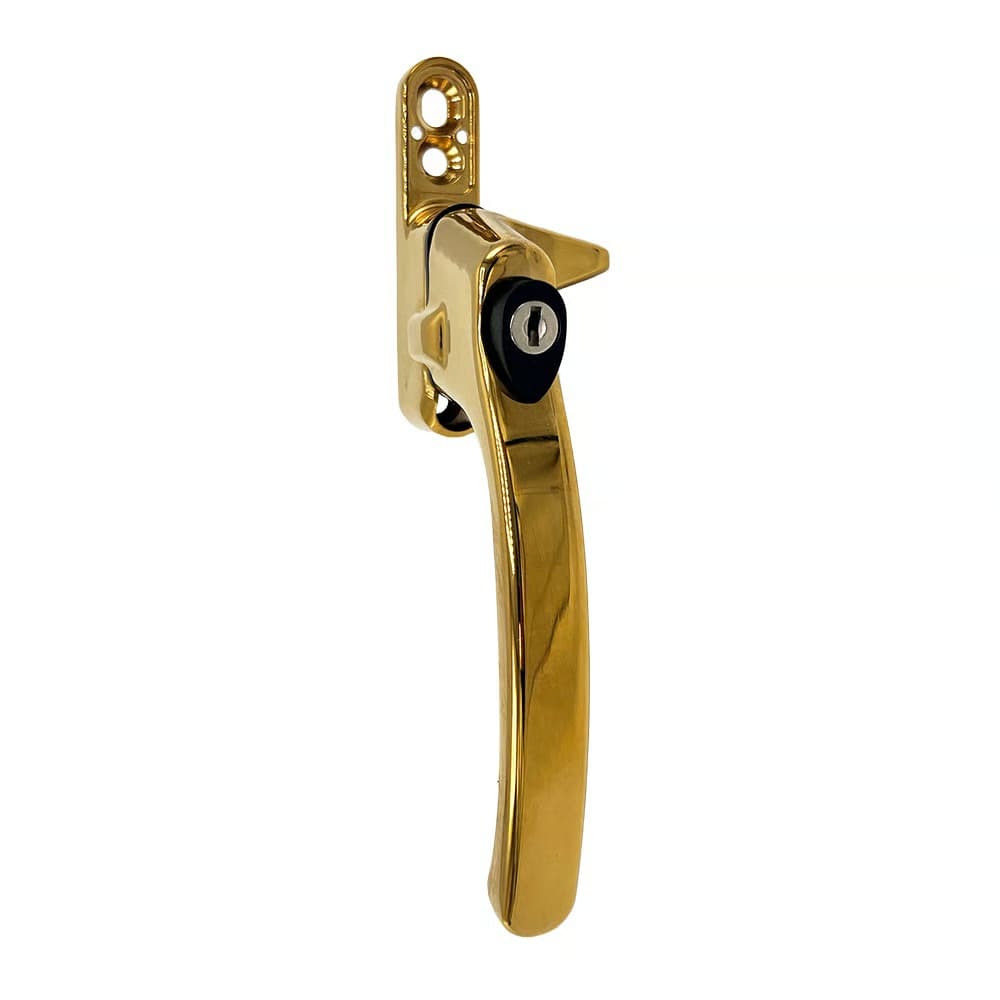
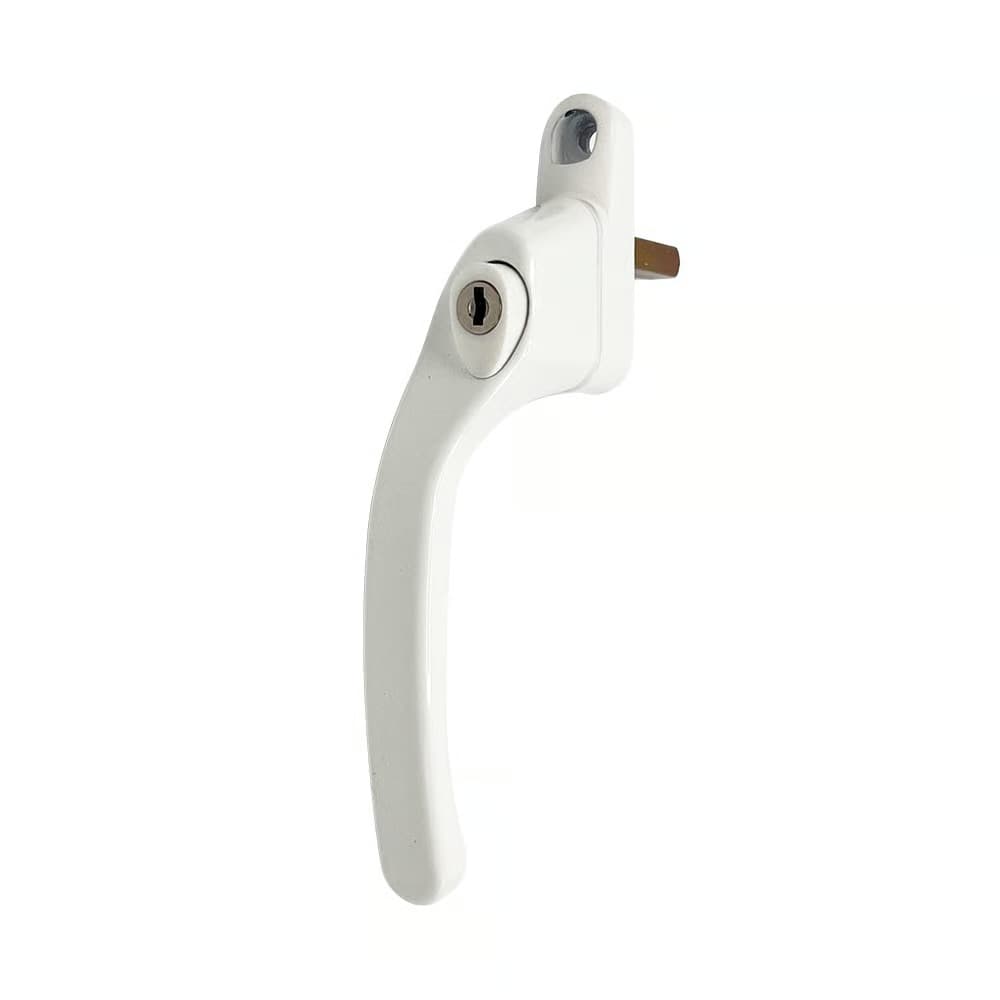
- Key-locking handles add security on ground-floor windows and are available in different keying options. Verify if the gearbox requires a locking cylinder or if the handle itself has an integrated lock.
- Consider upgrading to a handle with a security mechanism compatible with existing espag gearbox sizes.
Choose the correct finish and material
uPVC windows present a limited range of finishes that match the frame. Common finishes include white, black, gold, silver, and chrome. Measure and visually confirm the finish required to maintain a consistent appearance across the property.
Durable materials like die-cast zinc with corrosion-resistant coatings are recommended for longevity, especially in coastal areas.
Practical fitting tips
- Use the correct replacement screws supplied with the new handle rather than reusing old worn fasteners; this ensures a firm fit.
- Apply a small amount of grease to the spindle for smoother operation, avoiding contact with paint or seals.
- When fitting espag handles, ensure the spindle engages fully into the gearbox before tightening screws. Tightening the handle with the spindle misaligned can damage the mechanism.
- When replacing cockspur handles, align the hook arm with the frame striker and check operation through the full open and closed positions.
- Test the lock and handle operation several times after fitting. If the handle feels stiff or the window does not lock securely, remove and recheck spindle alignment and screw tightness.
Common measurement pitfalls to avoid
- Measuring edge-to-edge for screw centres instead of centre-to-centre leads to ordering incorrect plates.
- Assuming spindle width without measuring can result in a handle that will not fit the gearbox.
- Ignoring handle handedness and spindle offset can cause handles to operate in the opposite direction or not at all.
- Reusing corroded screws can strip the handle or frame; always use appropriate stainless steel or zinc-plated replacements.
Final checks before ordering
Confirm the three critical dimensions: spindle size and length, screw centre distance, and whether a keyed or non-keyed handle is required. Cross-reference these details with product specifications to ensure compatibility. Where uncertainty remains, tradespeople should carry a selection of common sizes to site.
Replacing window handles for uPVC windows requires attention to measurement detail rather than specialist tools. Accurate spindle, screw centre and backplate measurements coupled with the correct handle type increases the likelihood of a first-time correct fit and long-lasting operation. For more detailed information and a wider selection of handles, consult the full Window Handles Guide.
Related Reading
Explore more guides on related topics:
Part of our guide:
Complete Guide to Window Handles