
Insurance Requirements for 3 Star Cylinders
Insurance Requirements for 3 Star Cylinders Why insurers care about cylinder security Insurance underwriters want to reduce the chance of burglary and atte...
Insurance Requirements for 3 Star Cylinders
Why insurers care about cylinder security
Insurance underwriters want to reduce the chance of burglary and attempted entry. Euro cylinders that are easy to snap, pick, bump or drill make a property more vulnerable; claims for theft or damage are therefore more likely. Many UK insurers reference specific lock standards as part of their terms and conditions. Fitting an appropriate 3 star cylinder can be the difference between a valid claim and one that is refused due to inadequate security.
What a 3 star cylinder actually means
The term 3 star cylinder usually refers to a euro cylinder tested under the TS007 scheme and awarded the three-star rating. This rating indicates high resistance to common attack methods: snapping, picking, bumping and drilling. Manufacturers achieve this by using hardened steel inserts, sacrificial anti-snap sections and reinforced cams. The result is a cylinder that, when fitted correctly, will slow or prevent forced entry by these methods.
Common insurance policy requirements
- Specified rating: Many policies require external doors fitted with euro cylinders to have TS007 3 star or equivalent certification; check your policy wording for the exact phrase used.
- Correct installation: Insurers often expect locks to be professionally fitted; DIY installation may be acceptable if done correctly and you can provide evidence such as receipts or dated photos.
- Minimum projection: Some insurers stipulate that the cylinder should not protrude beyond the handle or door furniture; excessive projection increases vulnerability and can affect cover.
- Whole-door standards: For new doors or replacements, insurers may require the door to meet PAS 24 or Secured by Design standards; a 3 star cylinder complements these requirements but is not a substitute for an overall secure door.
- Key control and master-key systems: Policies can include clauses about restricted key control or registration for master-key systems; uncontrolled key duplication may be discouraged.
Practical trade advice for installers and specifiers
For glaziers, locksmiths and installers specifying or fitting 3 star cylinders, follow these practical steps to keep the installation compliant with insurance expectations:
- Measure accurately: Measure the cylinder from the screw hole centre to each end; common sizes are 35/35, 30/35 etc. Order the correct length so the cylinder does not protrude unduly.
- Check certification: Keep product paperwork and batch numbers for the specific cylinder fitted; record that the cylinder is TS007 3 star rated and retain supplier invoices.
- Use the correct fixing screw torque: Ensure the fixing screw is tightened to the manufacturer’s specification; too loose and the cylinder can move, too tight and it may distort the door or cam.
- Fit compatible furniture: Choose handles and escutcheons that cover the cylinder and reduce access; anti-snap cylinders work best when paired with robust door furniture and reinforced strike plates.
- Test operation: With the door open and closed verify key operation, multi-point locking engagement and that there is no binding caused by cylinder length or door misalignment.
- Advise the client: Explain how the cylinder works, advise against leaving keys in the lock on exposed sides and provide guidance on registering any security key systems if applicable.
DIY guidance for homeowners
Homeowners can replace or upgrade a cylinder themselves if they are competent with basic tools; however, incorrect fitting can invalidate insurance. Follow these DIY pointers:
- Check your policy first: Contact your insurer to confirm they accept a TS007 3 star cylinder for your situation and ask about any additional requirements such as professional fitting.
- Measure twice: Remove the existing cylinder and measure from the centre screw to each end; order a matching or slightly shorter cylinder so it does not protrude beyond the face of the door furniture.
- Remove and fit safely: Remove the fixing screw while the key is in a neutral position, withdraw the cylinder and replace as per instructions. Ensure the cam lines up when tightening the fixing screw.
- Avoid lubricants that attract dirt: Use a dry graphite or PTFE-based lubricant sparingly; do not use penetrating oils that can collect dust and compromise smooth operation.
- Keep proof: Retain the invoice, product packaging and any certification. Photograph the fitted cylinder showing minimal projection as evidence for your insurer if required.
- Know when to call a locksmith: If the cylinder is seized, the door is misaligned or you lack confidence, use a qualified locksmith; a poor DIY job may be more costly in the long run.
Evidence and paperwork insurers commonly expect
When making a claim, insurers may ask for evidence that the property was secured with the specified hardware at the time of theft or damage. Useful documentation includes:
- Purchase invoice showing the make, model and TS007 3 star designation.
- Installer’s receipt if a tradesperson fitted the cylinder; include trade body membership where applicable.
- Photographs of the fitted cylinder and door furniture showing the cylinder projection.
- Any manufacturer’s certificate, key registration forms or warranty paperwork that confirms the product’s security features.
Recommended Products
Based on this article, you may find these products helpful:
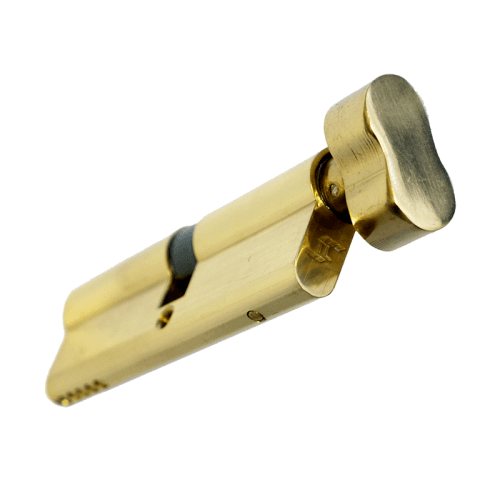
- TL Thumb Turn Euro Cylinder
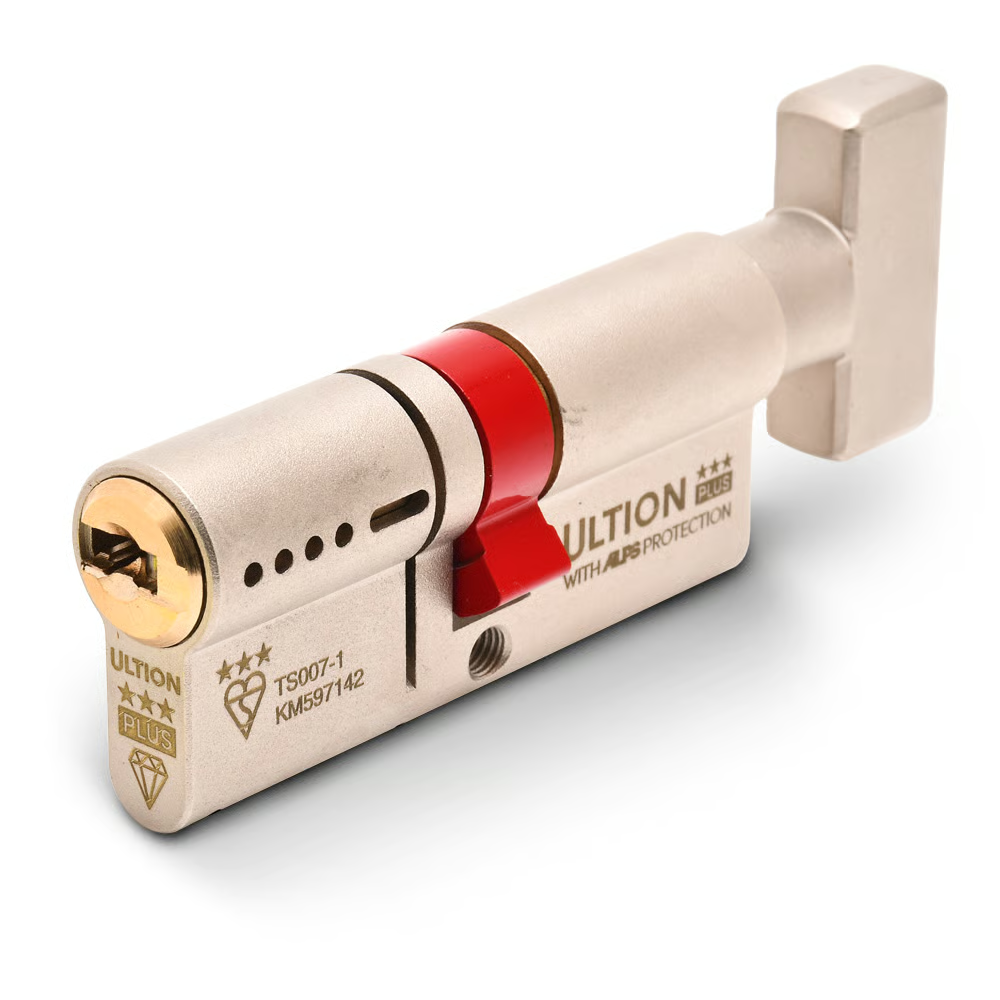
- Ultion Plus TS007 3* Kitemarked Euro Key & Turn Cylinder
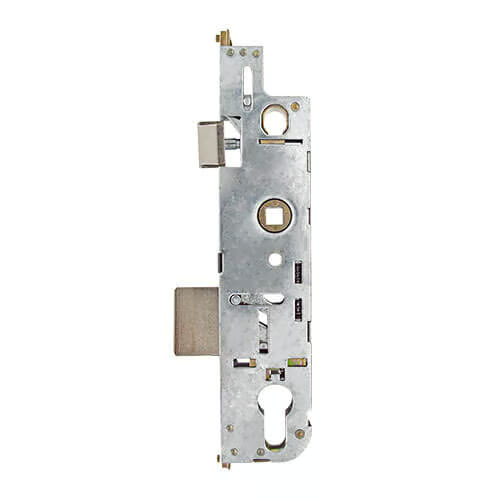
- Multipoint Gearbox GU Old Style
Conclusion and next steps
Fitting a legitimate 3 star cylinder is often a straightforward way to improve security and meet many insurers’ requirements for accessible external doors. Before you buy or fit anything: check your insurance policy and contact your insurer for confirmation; measure the cylinder accurately; keep all receipts and certification. Tradespeople should document every installation and advise clients about complementary measures such as reinforced handles, multipoint locks and door staff plates.
For technical details on euro cylinders and compatible hardware, see our pillar resource: /c/locks-security. If you need help selecting the right cylinder or arranging professional fitting, contact a qualified locksmith or your local trade supplier.
Products mentioned in this article
Related articles
What Is a Thumb Turn Cylinder? Convenience vs Security
What Is a Thumb Turn Cylinder? Convenience vs Security What is a thumb turn cylinder? A thumb turn cylinder is a type of euro-profile lock cylinder that ha...
Thumb Turn Cylinder vs Panic Bar: Exit Options Compared
Thumb Turn Cylinder vs Panic Bar: Exit Options Compared examines two very different approaches to door egress and security. The thumb turn cylinder is a co...
Thumb Turn Cylinder Sizes: Finding the Right Length
Thumb Turn Cylinder Sizes: Finding the Right Length Choosing the correct thumb turn cylinder is vital for security, smooth operation and a neat finish on d...