
What Is a Thumb Turn Cylinder? Convenience vs Security
What Is a Thumb Turn Cylinder? Convenience vs Security What is a thumb turn cylinder? A thumb turn cylinder is a type of euro-profile lock cylinder that ha...
What Is a Thumb Turn Cylinder? Convenience vs Security
What is a thumb turn cylinder?
A thumb turn cylinder is a type of euro-profile lock cylinder that has a manual thumb-operated knob on the inside of the door and a keyed entry on the outside. It allows occupants to lock and unlock the door from the inside without a key; externally the cylinder operates as a normal key-operated euro cylinder. Thumb turn cylinders are common on residential doors and some French doors or patio doors where quick internal operation is desirable.
Common types and where they are used
In the UK trade and DIY market you will normally see these cylinder variants:
- Double cylinder: keyed on both sides; no thumb turn.
- Thumb turn cylinder: key on the outside; thumb turn on the inside.
- Single cylinder: key on one side only with the other side blank or fixed; less common on external doors.
Thumb turn cylinders are popular for front and back doors, where fast exit or entry from the inside is required, and for properties with elderly or disabled occupants who find operating a key difficult. They are also used on doors within flats and on French doors that need a convenient internal mechanism.
Convenience: when a thumb turn is the right choice
Advantages of a thumb turn cylinder include:
- Quick egress: turn the thumb turn and the door is unlocked without searching for a key; useful in an emergency or to meet basic fire egress needs.
- User friendly: easier for children, elderly people and those with limited dexterity compared with key operation.
- No key to misplace inside the property: visitors or residents do not need to leave a key on a hook or table for quick exits.
- Compatibility: fits standard euro-profile multipoint locks used on uPVC, composite and timber doors.
Security: risks and mitigations
Thumb turn cylinders create a potential vulnerability if the thumb turn can be reached from outside. Typical risk scenarios are: low-level glazing or a reachable letterplate close to the lock; small gaps allowing an intruder to reach in and operate the thumb turn after breaking or removing a pane. To manage these risks, consider the following:
- Choose a high-security cylinder: look for TS007 three-star accredited cylinders and products tested to EN 1303. These often include anti-snap, anti-bump, anti-drill and anti-pick features.
- Fit laminated or reinforced glazing and use security escutcheons or cylinder guards; these make it harder to access a thumb turn from a broken window.
- Consider an internal thumb turn with a collapsible or protected design for doors with nearby glazing; some solutions minimise the ability to turn the mechanism if an external attack is underway.
- Ensure the cylinder does not protrude beyond the faceplate; a protruding cylinder is easier to snap. Aim for a flush or slightly recessed fit with minimal external projection.
Practical trade advice for specifying thumb turn cylinders
When ordering cylinders for installation on domestic doors, take account of these trade considerations:
- Measure correctly: measure from the centre of the fixing hole (the cam) to each end of the cylinder in millimetres; common sizes include 45/45 (90mm), 35/35 (70mm) and asymmetric sizes such as 30/50. Always match the size to the door thickness and handle set back.
- Security rating: specify TS007 three-star or equivalent for external doors where insurance or PAS 24 compliance is required; for higher security installations consider Sold Secure accredited products as appropriate.
- Material and finish: choose corrosion-resistant finishes for coastal locations; brass and nickel-plated options are common and durable.
- Compatibility with multipoint locks: ensure the cam aligns with the multipoint locking mechanism; changing cylinder type may require reprogramming of certain electronic locks or replacement of centre case parts.
- Keep spare keys and record key numbers; for restricted or master-keyed systems maintain secure documentation for replacements.
DIY removal and replacement: step-by-step guidance
Replacing a thumb turn cylinder is straightforward for an experienced DIYer. If unsure, hire a qualified locksmith. Basic steps:
- With the door open, unlock the cylinder and turn the key or thumb turn so the cam lines up with the body; this alignment allows the cylinder to slide out.
- Remove the retaining screw located on the edge of the door at the level of the cylinder; there is normally one screw holding the cylinder in place.
- Insert the key (or use the thumb turn) and turn slightly as you pull the cylinder out from the door; it will slide free once aligned and the retaining screw removed.
- Measure the old cylinder to confirm length; order the matching size and security specification.
- To fit the new cylinder, insert it with the cam aligned, secure the retaining screw and test operation from both sides several times to ensure the multipoint mechanism engages correctly.
Trade tips: if the cylinder is tight, try turning the key slightly as you pull; if the cam is stuck, check the multipoint latch is disengaged. Always operate the multipoint lock to confirm correct cam rotation after fitting. For uPVC doors you may need to remove handles first to access the fixing screw; consult manufacturer guidance for specific doorgear.
Balancing convenience and security: recommended approach
Assess the door location and glazing before fitting a thumb turn cylinder. If the lock is within reach of a broken window consider a double-cylinder with restricted key control or a high-security thumb turn solution combined with laminated glazing and a cylinder guard. Where rapid internal egress is a priority and glazing is not easily reachable, a thumb turn cylinder is often the best practical choice.
Recommended Products
Based on this article, you may find these products helpful:
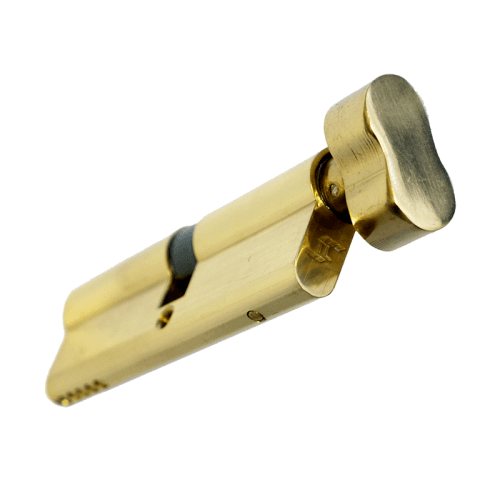
- TL Thumb Turn Euro Cylinder
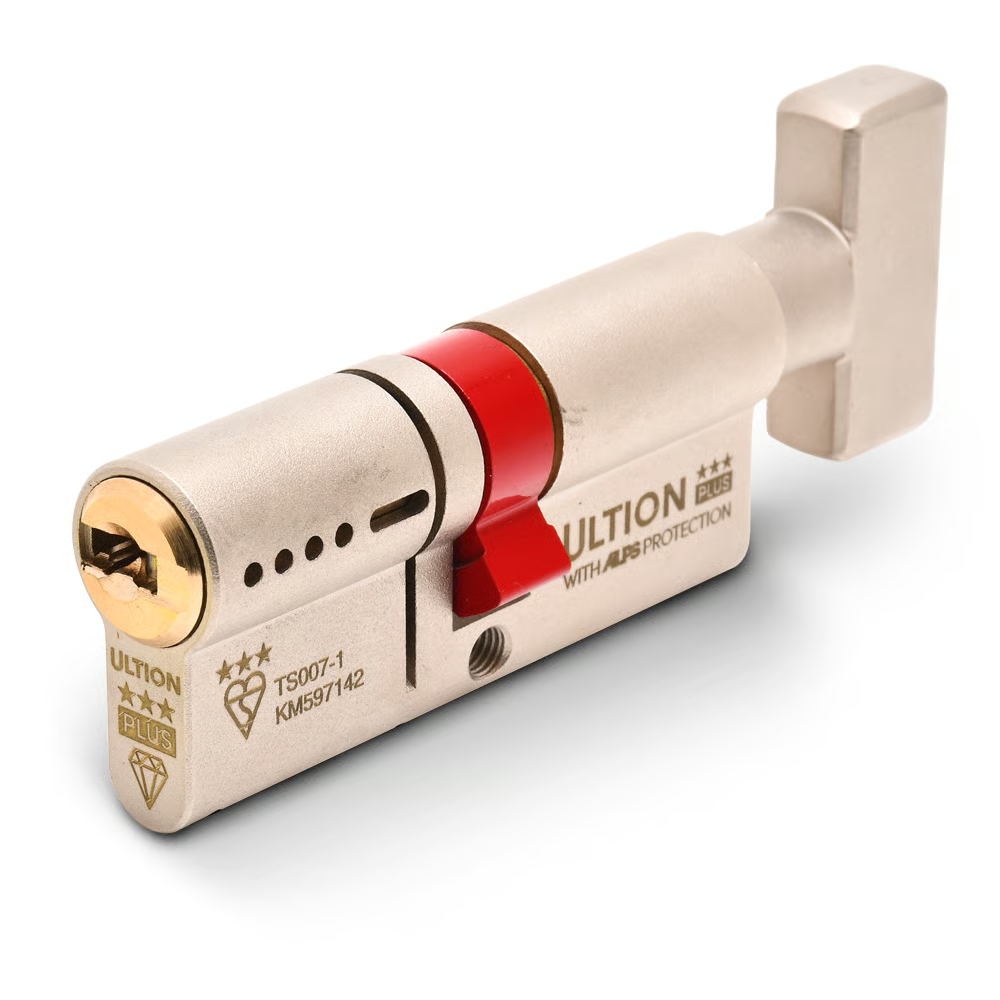
- Ultion Plus TS007 3* Kitemarked Euro Key & Turn Cylinder
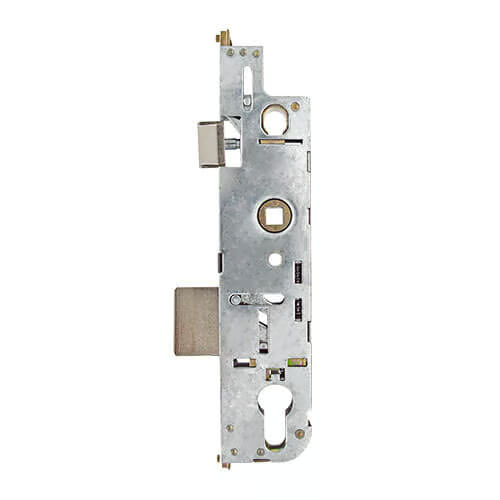
- Multipoint Gearbox GU Old Style
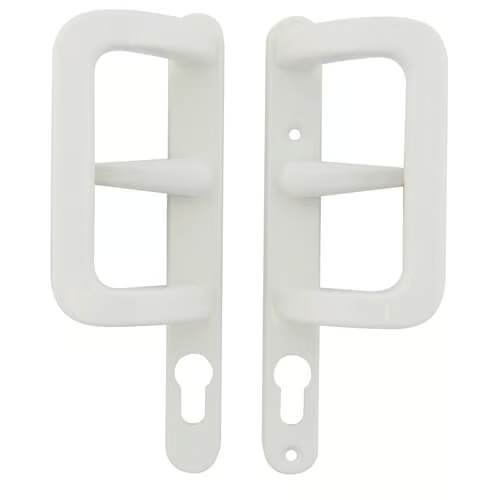
- Patio Door Handle Set - 92PZ White
- Winlock Patio Door Handle Set
Conclusion and next steps
Thumb turn cylinders offer a useful balance of convenience and security when specified and installed correctly. For trade professionals, always check measurements and security ratings such as TS007 and EN 1303. For homeowners, review nearby glazing and consider anti-snap and anti-drill options before choosing a thumb turn. If you need tailored advice, technical specifications or supply for specific door systems visit our pillar page on euro cylinders at /c/locks-security or contact Window Hardware Store for product recommendations and fitting support.
Related articles
Thumb Turn Cylinder vs Panic Bar: Exit Options Compared
Thumb Turn Cylinder vs Panic Bar: Exit Options Compared examines two very different approaches to door egress and security. The thumb turn cylinder is a co...
Thumb Turn Cylinder Sizes: Finding the Right Length
Thumb Turn Cylinder Sizes: Finding the Right Length Choosing the correct thumb turn cylinder is vital for security, smooth operation and a neat finish on d...
How to Replace a Euro Cylinder: Step-by-Step Instructions
How to Replace a Euro Cylinder: Step-by-Step Instructions Why replace a euro cylinder lock? Euro cylinder locks are the most common locking mechanism on UK...