uPVC Replacement Window Handles: Handing Explained
uPVC replacement window handles are a small component with disproportionate importance: they affect security, operation and appearance. Correctly identifyi...
uPVC replacement window handles are a small component with disproportionate importance: they affect security, operation and appearance. Correctly identifying handing — and fitting the appropriate handle — prevents ill-fitting parts, wasted time and weakened locking. This article explains what handing means for common uPVC window handle types, how to measure and choose the right replacement, and practical steps for a smooth swap.
What "handing" means for uPVC window handles
Handing describes the orientation of a handle relative to the window hinges and locking mechanism. For casement and top-hung windows the main handing points are:
- Hinge side: whether the hinges are on the left or right when the window is viewed from the outside.
- Handle position when closed: whether the handle sits on the left or right side of the opening.
- For espagnolette (espag) handles, handing can also relate to the locking rod direction when the handle is in the closed position.
Identifying handing — simple checks
A reliable routine for checking handing: 1. View the window from the exterior/main access side (often the outside for casement windows). This exterior viewpoint is the standard used by most manufacturers. 2. Note the hinge position: hinges on the left indicate a left-hand window, hinges on the right indicate a right-hand window. 3. Observe the handle when the window is closed: a right-hand window will typically have the handle to the right of the opening when viewed from the exterior. 4. For espagnolette systems, look inside the handle mechanism for the direction of the locking rod or the orientation of the gearbox; product fittings sometimes show left or right-handed part numbers.
Document the hinge side and sketch or photograph the handle orientation before ordering. Many common replacement designs list handedness in the product details, so matching that to the observed orientation avoids returns.
Handle types and their handing characteristics
- Espag (espagnolette) handles: These connect to internal locking rods and are commonly handed. The mechanism inside the handle or the gearbox orientation dictates whether it is left- or right-handed. Consider the TSS Cockspur Window Handles for a quality espag replacement; check the product spec for handed options and the spindle/gearbox orientation before ordering.
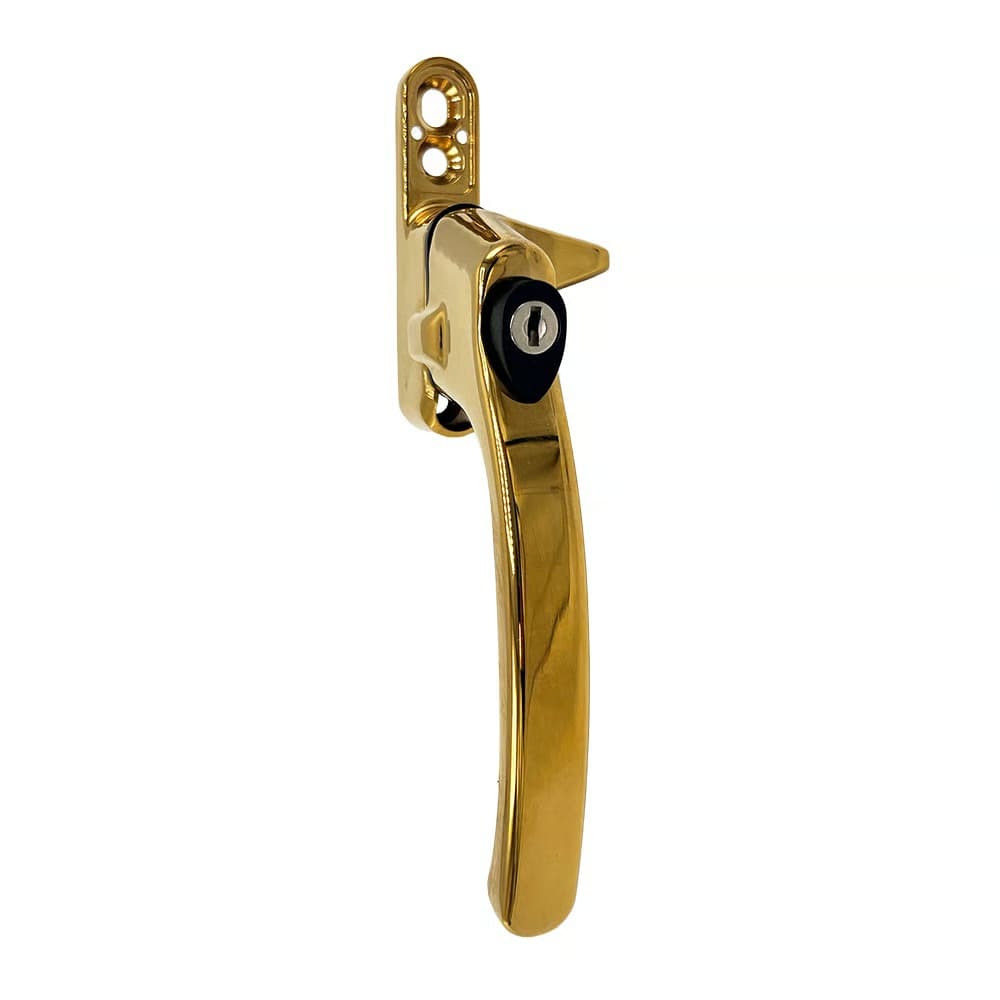
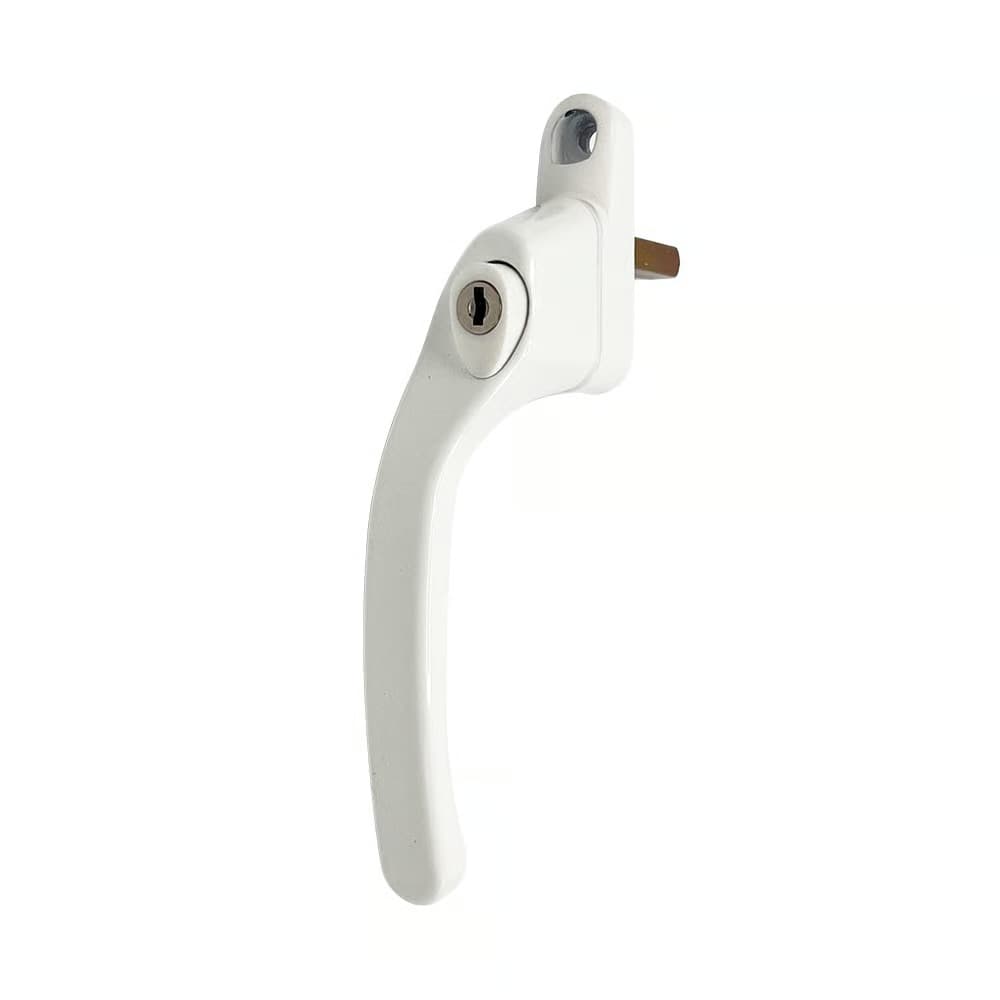
- Cockspur handles: Typically a reversible design that clamps to the frame and does not require a long spindle or gearbox — ideal for some older uPVC systems. The TSS Cockspur Window Handle is a common reversible option, useful where handedness is not required.
- Keyed/locking handles: These may be available in both handed and non-handed forms. Locking versions with cylinders sometimes require additional attention to key position and aesthetics. The TSS Offset UPVC Window Handles offers a familiar keyed option; confirm whether the chosen variation is handed or reversible.
Measuring for the correct replacement
Accurate measurement prevents ill-fitting parts. Essential measurements:
- Spindle length and size: Remove the old handle and measure the square spindle from the centre of the gearbox out to the end. Common sizes are 7mm square or 8mm square; confirm size with a calliper or rule.
- Screw centres (fixing hole spacing): Measure centre-to-centre distance of the two fixing screws on the backplate. Typical values include 43mm or 90mm, but confirm before ordering.
- Backplate dimensions: Measure height and width of the backplate to ensure it covers old screw holes or seals neatly.
- Projection and clearance: Check how far the handle projects when in use, and ensure room for full operation without the handle hitting the frame or adjacent units.
- Lock barrel position (for keyed handles): Measure the distance between screw centres and the cylinder centre, often described as the PZ or Euro cylinder centre measurement.
Practical fitting tips
- Remove the old handle carefully: open the window, place it in the service position (if applicable), and undo the two fixing screws. Keep original screws as spares in case they match the new handle.
- Check spindle orientation: ensure the spindle is fully seated in the gearbox before replacing the handle. A misaligned spindle causes sloppy operation.
- Use the correct fixing screws: some replacements supply new screws; if not, use stainless or zinc-plated screws of appropriate length to avoid stressing the plastic frame.
- Test locking functions: cycle the handle through all positions and check the locking rods or keep engagement. For keyed handles, test locking and unlocking with the key before finishing.
- Seal and finish: if old screw holes are exposed or the backplate does not cover them, use a small amount of decorator’s caulk or a tidy escutcheon to maintain weather performance and appearance.
Choosing reversible vs handed replacements
When speed and simplicity are priorities, reversible designs such as cockspur handles often allow a direct swap independent of handedness. Where security and mechanics require a specific orientation — especially in espagnolette systems — selecting a handed espag handle that matches the existing gearbox and rod direction is essential. Tradespeople fitting multiple units may prefer stocked pairs of left and right-handed espags plus some reversible cockspurs to cover the spectrum of jobs efficiently.
Final checks and maintenance
After installation, ensure handles operate smoothly and locks engage without forcing. Lubricate moving parts with a light lubricant formulated for window hardware; avoid heavy grease on plastic components. Replace any worn keep plates or locking rods that show corrosion or play. Periodic checks of handle torque and screw tightness prevent future faults.
For a wider overview of handle choices, measurements and compatibility diagrams, consult the comprehensive Window Handles Guide.
Related Reading
Explore more guides on related topics:
Part of our guide:
Complete Guide to Window Handles