
What Is a Window Stay? Traditional vs Modern Options
What Is a Window Stay? Traditional vs Modern Options examines the small but vital pieces of hardware that control how a casement or side-hung window opens ...
What Is a Window Stay? Traditional vs Modern Options examines the small but vital pieces of hardware that control how a casement or side-hung window opens and secures. The phrase window stay covers a range of fittings from simple pegged bars to precision friction arms; choosing the right type affects security, weather performance, maintenance and compliance with escape-route requirements.
What is a window stay and why it matters
A window stay is the component that holds a window sash at a chosen opening position or restricts its travel. On timber and metal casements you will commonly see peg stays or monkey-tail stays; on modern timber, aluminium and PVC-U installations you will see friction stays or articulated hinge-stay assemblies. The stay must cope with sash weight, wind loads and regular use while providing required security and, where necessary, means-of-escape functionality.
Traditional options: peg stays and decorative stays
Traditional stays remain popular for period properties and lightweight casements. Common traditional types include:
- Peg stay: A metal stay bar with notches that rests on a peg fixed to the frame; allows several fixed opening positions.
- Monkey-tail and scrolled stays: Decorative peg stays cast in traditional shapes; used on heritage restorations to match period hardware.
- Chain stay: A short chain instead of a fixed bar; less common now but still used in some conservation work.
Advantages of traditional stays include simple maintenance, easy replacement, and sympathetic appearance for listed buildings. Limitations include fewer opening positions compared with modern friction systems and less control under wind loads; they can rattle if pegs wear. For security, peg stays can be vulnerable if the peg or screws are weak; upgrade to security screws or a reinforced peg plate where required.
Modern options: friction stays and articulated arms
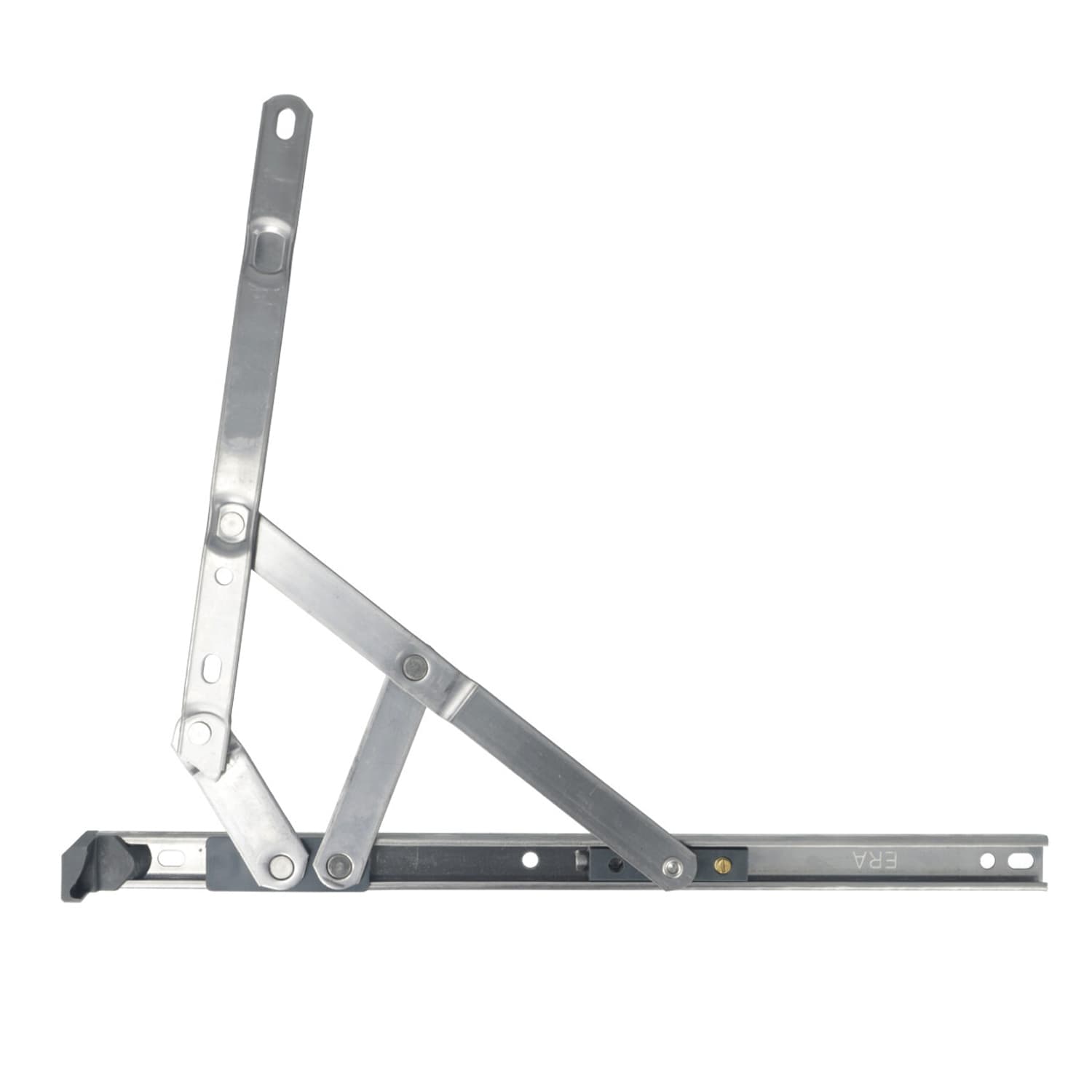
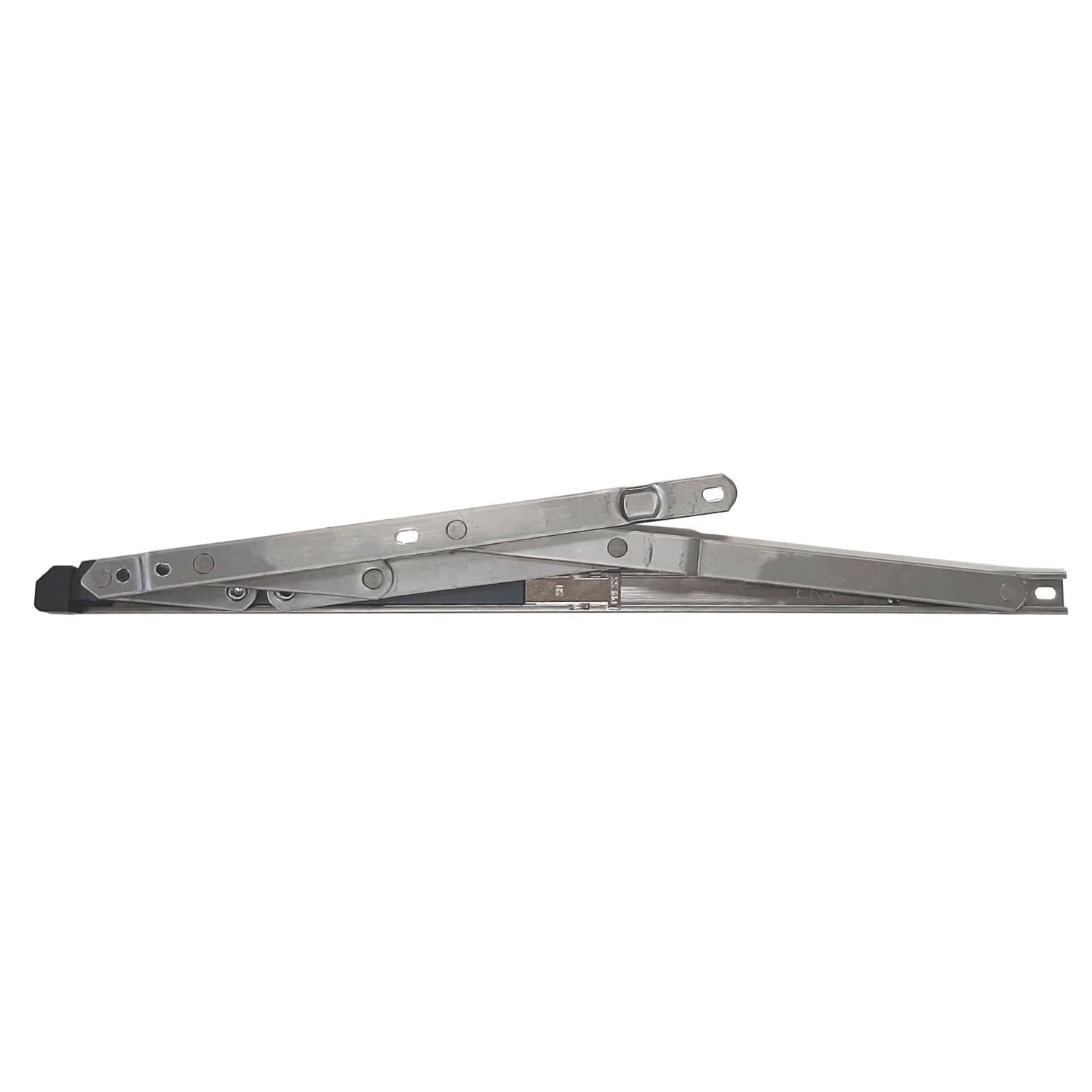
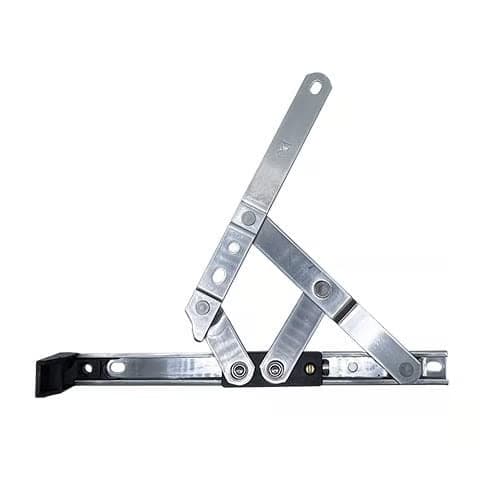
Modern window stays are typically integrated into the hinge assembly: friction stays are stainless steel arms with a friction mechanism that holds the sash at any angle within the design range. Other modern devices include multi-link articulated arms, telescopic stays and built-in restrictors for child safety.
- Friction stay: Smooth, continuous positioning; common on PVC-U and aluminium casements; available in different lengths and load ratings.
- Multi-point articulated stay: Used on larger sashes; combines hinge and stay functions for better weather sealing and security.
- Restrictor stays and night-vent options: Allow limited opening for ventilation or safe night-time air flow; many are quick-release to allow full opening in an emergency.
Benefits include finer control, higher load capacity, better sealing performance and corrosion resistance when specified in stainless steel. Friction stays also allow installation of features such as restrictors that comply with Building Regulations for ventilation and escape.
Key selection criteria for homeowners and tradespeople
When choosing a window stay consider the following factors:
- Window type: side-hung, top-hung, tilt-and-turn and roof windows each require different stay/hinge types.
- Sash weight and size: match the stay's rated load; oversize sashes need heavy-duty friction stays or multi-link hinges.
- Desired opening angle: peg stays give fixed stops; friction stays give infinite adjustment within the travel. Check manufacturer specs for maximum opening.
- Security: for ground-floor openings choose stays with secure fixing plates, anti-lift features and, where relevant, restrictors that can be overridden without tools for escape.
- Corrosion resistance: select stainless steel or high-grade coatings for coastal locations; check EN 1670 corrosion classification where available.
- Aesthetics and heritage requirements: choose matching finishes and styles for listed or conservation properties.
Installation and DIY guidance
Tradespeople will be familiar with stay fitment; DIYers can fit many types safely if they follow basic steps. General guidance:
- Prepare tools and materials: tape measure, spirit level, pencil, appropriate drill bits, screwdriver or drill driver, screws supplied with the stay, and rust-resistant fixings for external work.
- Check compatibility: confirm the stay length and hinge pattern suit the sash dimensions and reveal. For friction stays ensure the hinge position is correct to avoid handle collision.
- Mark and pre-drill: always mark fixing positions, then pre-drill pilot holes sized to the screw core; this avoids splitting timber and stresses on uPVC frames. For softwoods use a countersink where screws finish flush.
- Use correct fixings: timber screws for timber frames; self-tapping screws supplied with uPVC hardware; M6 machine screws where plates are designed for through-bolting.
- Align and test: fit one end loosely, align the sash and frame, then tighten fixings progressively. Operate the window through its full range to check for binding, contact with handles and secure stopping positions.
- Sealing: where fixings penetrate exterior frames, use a small bead of silicone to prevent water ingress; avoid over-application which could restrict movement.
Maintenance and troubleshooting
Good maintenance extends service life and avoids premature replacement. Practical tips:
- Lubrication: apply light oil or silicone spray to moving joints and pivot points annually; do not use heavy grease that attracts grit.
- Corrosion checks: inspect stays for rust; replace any with pitting or compromised friction mechanisms.
- Tighten fixings: check screws periodically and retighten; replace stripped screws and use appropriate thread repair where necessary.
- Rattle and wear: peg stays that rattle usually need new pegs or a replacement stay; friction stays that lose resistance should be replaced rather than adjusted beyond manufacturer limits.
Regulations and safety considerations
Remember that windows that serve as means of escape must be able to open fully without tools; restrictors are acceptable only if they can be disengaged quickly in an emergency. For security, consider hardware that meets PAS 24 or Secured by Design recommendations if the window is a vulnerable opening. For coastal projects specify higher corrosion classes and stainless steel components to avoid frequent failure.
Recommended Products
Based on this article, you may find these products helpful:
- Top Hung Friction Stay - 12"
- ERA Egress (Fire escape) Friction Stay
- TSS Standard Friction Stays – 13mm & 17mm Stack Height
- Restricted Friction Stay Hinges
- Top-Hung Window Hinge - Standard
Conclusion and next steps
Choosing the correct window stay is about matching function to the window type, desired opening behaviour, security needs and environmental exposure. Traditional peg stays suit period properties and simple sashes; modern friction stays and articulated arms are better for heavier sashes, improved sealing and fine control. For trade installations always confirm load ratings and standards; for DIY replacements follow pre-drilling and fixing guidance and use corrosion-resistant fixings.
Next steps: inspect the existing stay to identify type and wear, measure sash dimensions and check load requirements, then choose an appropriate stay. For technical hinge details consult our pillar page on window hinges: /guides/window-hinges, or contact Window Hardware Store for product recommendations and trade support.
Related articles
Period Window Stays: Heritage Options for Older Properties
Period Window Stays: Heritage Options for Older Properties Older properties often require hardware that respects traditional appearance while providing mod...
Replacing Old Window Stays: Finding Matching Hardware
Replacing an old window stay can restore functionality, security and appearance to a worn casement. Whether you are a joiner, a glazing contractor or a dil...
How to Replace Friction Hinges on uPVC Windows
How to Replace Friction Hinges on uPVC Windows Overview Friction hinges are the most common operating mechanism on uPVC casement windows in the UK. They al...