
Best Deadbolts for UK External Doors: Security Picks
Best Deadbolts for UK External Doors: Security Picks. Choosing the right deadbolt is one of the most effective ways to improve the security of an external ...
Best Deadbolts for UK External Doors: Security Picks. Choosing the right deadbolt is one of the most effective ways to improve the security of an external door; this article covers the types, recommended options for different door materials, and practical trade and DIY advice for fitting, upgrading and maintaining deadbolts in UK homes and properties.
Why a deadbolt matters for external doors
A deadbolt provides a solid mechanical locking point that resists forced entry better than a sprung latch. For timber doors a mortice deadlock or sashlock gives robust protection. For UPVC and composite doors a deadlocking multipoint system or surface-mounted deadbolt suited to the material is more appropriate. Insurers commonly expect certain standards; fitting the correct deadbolt and compliant cylinder can be the difference between a policy paying out or being voided after a break-in.
Types of deadbolts and when to use them
- Mortice deadlock (5-lever): Recessed into the door edge; ideal for solid timber external doors; look for BS3621 compliance for insurance-grade security.
- Euro-profile deadbolt / Euro cylinder with deadlock: Found in many UPVC and composite doors; choose anti-snap, anti-pick and anti-drill cylinders; consider Ultion, ERA Protect or similar high-security cylinders.
- Surface-mounted rim deadlock: Useful for timber or metal doors where a mortice is not possible; easy to fit from the surface with minimal routing.
- Multipoint deadlocking systems: Standard for modern UPVC and composite entry doors; they lock at multiple points along the door and require the correct cylinder and hook bolts to provide real security.
- Smart motorised deadbolts: Available for retrofit or as standalone locks; ensure any smart deadbolt used on an external door is tested for security and does not compromise escape routes or fire compliance.
Top security picks by application
Rather than a single universal product, pick a deadbolt to suit the door type and certification requirements:
- Solid timber front doors: BS3621 5-lever mortice deadlock from reputable manufacturers; these provide a reliable, insurance-friendly option for timber doors.
- UPVC and composite doors: High-security euro cylinder with anti-snap protection, paired with the original multipoint lock; Ultion cylinders or equivalent are proven performers for resisting common cylinder attacks.
- Metal doors or gates: Surface-mounted deadbolts designed for metal, or heavy-duty mortice locks specified for steel doors; consider extra reinforcement plates and appropriate fixings.
- Tenanted properties and quick retrofit: Surface-mounted deadlock or smart retrofit that does not require major door alteration; ensure compatibility with existing frame condition.
Trade and DIY fitting guidance
Whether you are a trade professional or a competent DIYer, correct installation is essential. Key points to follow:
- Measure door thickness and backset accurately before purchase; many euro cylinders need the correct overall length to avoid protrusion.
- For mortice deadlocks use a template and routing jig where possible; chisel work must be neat to maintain door integrity and security seating.
- Ensure the deadbolt throw is sufficient: a minimum 20mm engagement into a reinforced frame is recommended to resist levering attacks.
- Fit the strike plate with long screws that penetrate the frame stud rather than just the jamb: 60mm to 80mm wood screws are normal for timber frames; use coach bolts or suitable fixings for metal frames.
- For UPVC and composite doors avoid cutting into the door unnecessarily; use locks designed for those profiles and fit approved cylinders rather than trying to adapt a timber mortice lock.
- Check door and frame alignment: pack the hinges or adjust to ensure smooth operation and full bolt engagement; misalignment is a common cause of premature failure.
- For smart deadbolts ensure battery access from inside without removing the lock, and verify mechanical override options in case of power failure.
Compliance, insurance and fire safety
Always check insurance requirements and building regulations: many insurers demand BS3621 5-lever deadlocks for timber doors or equivalent protection for other door types. For external doors that are part of an escape route or a fire door you must not fit a lock that prevents occupants from exiting quickly; consult the fire door manufacturer or a qualified installer if the door is certified. Where relevant, choose locks tested to PAS 24 or Secured by Design standards for additional reassurance.
Maintenance and small upgrades
Maintain a deadbolt to retain security and smooth operation: lubricate moving parts annually with a dry PTFE or graphite spray; avoid oil-based lubricants that attract dirt. Tighten fixings and replace worn strike plates. If a euro cylinder is exposed and shows signs of snapping or tampering, replace it immediately with an anti-snap model and fit an anti-snap escutcheon or reinforcing plate. For older frames consider reinforcing the door jamb with a metal plate or a timber packer behind the strike plate to stop the frame splitting in a forced entry attempt.
Common pitfalls to avoid
- Buying a high-security cylinder but leaving a weak frame or poorly fixed strike plate; the lock is only as strong as its installation.
- Fitting a double-cylinder deadbolt on an internal escape route without considering emergency egress; this can create a hazard in a fire.
- Attempting to adapt mortice hardware to UPVC doors; use products designed for the door material.
- Neglecting to record cylinder codes or keys for tenants and landlords; maintain a secure master key system where needed.
Recommended Products
Based on this article, you may find these products helpful:
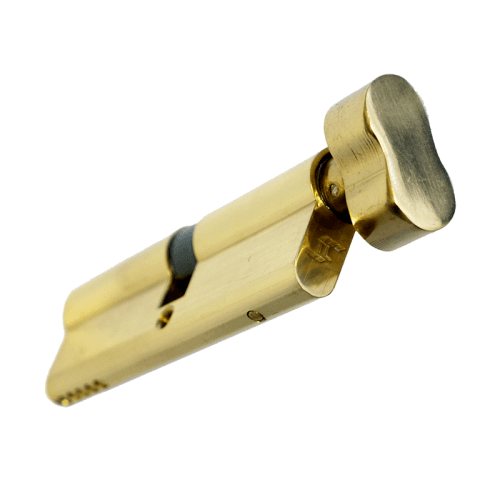
- TL Thumb Turn Euro Cylinder
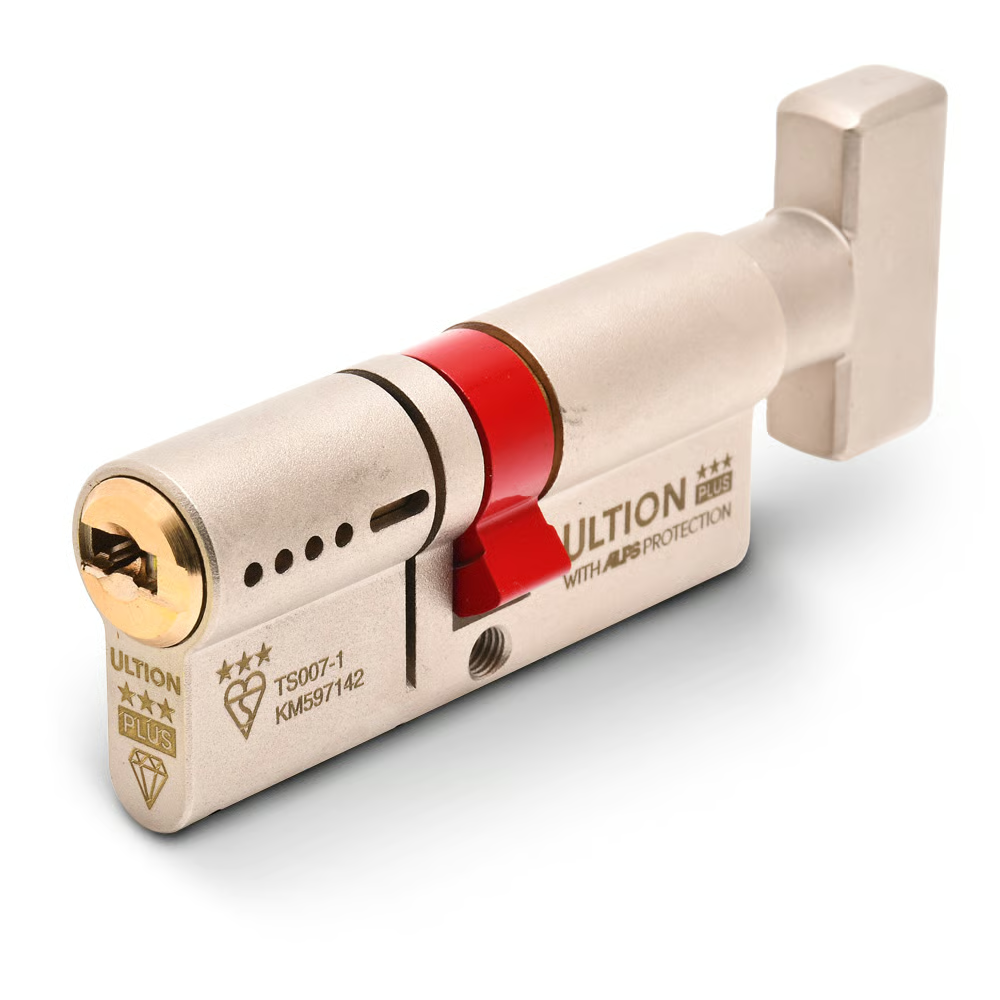
- Ultion Plus TS007 3* Kitemarked Euro Key & Turn Cylinder
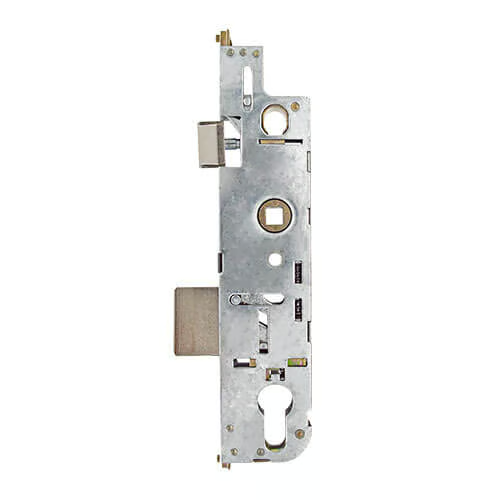
- Multipoint Gearbox GU Old Style
- Top-Hung Window Hinge - Standard
- Side-Hung Window Hinge - Standard
Conclusion and next steps
Selecting the right deadbolt depends on door material, insurance needs and whether a trade or DIY installation is intended. For wooden doors a BS3621 5-lever mortice deadlock is the standard solution; for UPVC and composite doors invest in a quality anti-snap euro cylinder and check multipoint lock condition. Trade professionals should specify long fixing screws and reinforced strike plates; DIYers should measure carefully and use the correct template or jig when cutting mortices.
Next steps: check your door type and insurance policy, measure door thickness and backset, then choose an appropriately certified deadbolt and accompanying cylinder. If you are unsure about fire door implications or structural reinforcement, contact a qualified locksmith or trusted installer to survey and fit the correct hardware.
Products mentioned in this article
Related articles
uPVC Door Lock Maintenance: Keep Your Lock Working Smoothly
uPVC Door Lock Maintenance: Keep Your Lock Working Smoothly A well maintained upvc door lock reduces call-outs, keeps a property secure and extends the lif...
Hook Lock Sizes and Compatibility: Matching Your Existing Lock
Hook Lock Sizes and Compatibility: Matching Your Existing Lock Replacing a hook lock can be straightforward if you know what to measure and what to check f...
Replacing Individual Hook Locks vs Full Multipoint Mechanism
Replacing Individual Hook Locks vs Full Multipoint Mechanism Deciding whether to replace a single hook lock or the entire multipoint mechanism is a common ...