
How to Adjust a Misaligned Deadbolt Strike Plate
How to Adjust a Misaligned Deadbolt Strike Plate: a straightforward, practical approach for homeowners and trade professionals to restore secure, smooth op...
How to Adjust a Misaligned Deadbolt Strike Plate: a straightforward, practical approach for homeowners and trade professionals to restore secure, smooth operation when a door deadbolt fails to engage. This article covers the typical causes of misalignment, checks to make, step-by-step adjustment methods and when to opt for a heavier repair or replacement. For related topics on door security and locks visit our pillar page: /guides/door-locks.
Why deadbolt strike plates become misaligned
Misalignment between a deadbolt and its strike plate is a common fault. Causes include:
- Door or frame movement due to settlement, humidity or seasonal swelling and shrinkage of timber.
- Loose or worn hinge screws allowing the door to sag.
- Incorrect original installation: wrong backset, wrong strike position or inadequate mortice depth.
- Impact or repeated operation wearing the aperture in the strike plate or the timber around it.
- Upgrades or changes such as fitting a new lock or adding a draught seal that alters clearances.
Tools and materials you will need
A basic toolkit will get you through most adjustments. For trade-level fixes you may need power tools:
- Screwdrivers and socket set (Pozidriv/Philips as appropriate)
- Tape measure, pencil and square
- Chisel set and mallet
- Wood plane or block plane
- Drill and wood bits; countersink
- Metal file or steel rasp
- Timber screws 75mm to 100mm (3 to 4 inch) for reinforcing
- Packers and timber wedges
- Wood filler or epoxy for damaged timber; touch-up paint
- Centre punch and hammer; grit or emery cloth for finishing
Assess the problem before you start
Carry out a simple inspection to isolate the fault. With the door open, operate the deadbolt slowly while watching where the bolt meets the strike. A few useful checks:
- Visual alignment: is the bolt hitting the top, bottom or side of the strike aperture?
- Depth: does the bolt fully enter the mortice in the frame or does it stop short?
- Door sag: press down on the handle as you close; if it aligns when depressed, hinges are likely the issue.
- Fire or multi-point considerations: if the door is a certified fire door or fitted with a multipoint lock, consult a professional; alterations can void certification.
Minor adjustments: repositioning the strike plate
If the misalignment is small, moving the strike plate is the quickest repair. Follow these steps:
- Mark the correct position: close the door and apply a thin layer of chalk or grease to the deadbolt face; throw the bolt and observe where it contacts the frame. Mark the centre of the bolt on the frame with a pencil.
- Unscrew the strike plate and test-fit: remove screws and position the plate so the aperture lines up with your mark. If needed, file the strike aperture slightly to allow clearance.
- Mortice adjustment: if the plate sits proud, use a chisel to pare out a slightly larger mortice so the plate sits flush. Keep the faceplate flush with the stile; an uneven face can cause rubbing.
- Refit with long screws: use at least one long 75mm to 100mm screw into the frame jamb to anchor the strike into structural timber rather than only the face. This improves security and alignment resistance.
- Test thoroughly: operate the lock several times and check for smooth engagement and that the door latches without forcing.
Deeper fixes: enlarging or relocating the mortice
When the bolt hits the top or bottom of the aperture, you may need to enlarge the mortice or relocate the strike horizontally or vertically. Methods include:
- Enlarging the pocket: use a sharp chisel or a router to remove timber to the required depth; take small amounts at a time and test fit the bolt. Maintain square edges so the strike plate sits cleanly.
- Relocating the strike: if the entire aperture must move, carefully mark the new position and create a new mortice. Fill the old mortice with a suitable hardwood plug and adhesive; plane flush and redecorate.
- For metal frames or composite doors: use manufacturer-specific strike kits or consult a specialist. Drilling and welding metal frames without the right fixings can weaken the frame or introduce corrosion.
Addressing underlying causes: hinge and frame repairs
Often the strike adjustment is a temporary fix unless you treat underlying movement. Common trade-level remedies:
- Tighten or replace hinge screws: replace short screws with longer screws that reach the frame's structural portion; use stainless steel for external doors.
- Rebating or planing the door: if the door scrapes or the face is uneven, remove a small amount from the door edge with a plane to restore clearance.
- Shimming hinges: pack the hinge leaf with thin shims behind the hinge to alter the door’s fit and bring it back into alignment.
- Frame reinforcement: for badly worn strike areas use a reinforced strike plate that spreads load; these are common in security upgrades.
Special considerations: UPVC, composite and fire doors
UPVC and composite doors often have metal reinforcement and specific lock centres; generic strike movement may void warranty or damage the door. For these doors:
- Check manufacturer guidance and use supplied strike kits where available.
- Composite doors: avoid enlarging mortices beyond recommended sizes; use timber plugs and factory-approved fixings.
- Fire doors: do not alter without certification; any changes must preserve the door’s integrity and be signed off by a qualified installer.
When to replace the strike plate or call a professional
Replace the strike plate if it is bent, the aperture is elongated from wear, or the fixing timber is rotten or split. Call a professional locksmith or carpenter when:
- The door is a fire door or part of an escape route.
- Alignment requires moving the lock case or altering the lock centre significantly.
- Frame timber is rotten or the repair requires structural work.
- It is a multi-point lock or a high-security deadbolt with integrated components.
Safety, security and finishing touches
Security considerations are critical with deadbolts: always ensure the bolt fully enters the frame and that fixings reach into solid timber. Use stainless or coated screws for external doors to resist corrosion. Finish any repaired timber with suitable filler and paint or varnish to protect against moisture. Test operation at least a dozen times and check the lock from both sides to ensure smooth and secure function.
Recommended Products
Based on this article, you may find these products helpful:
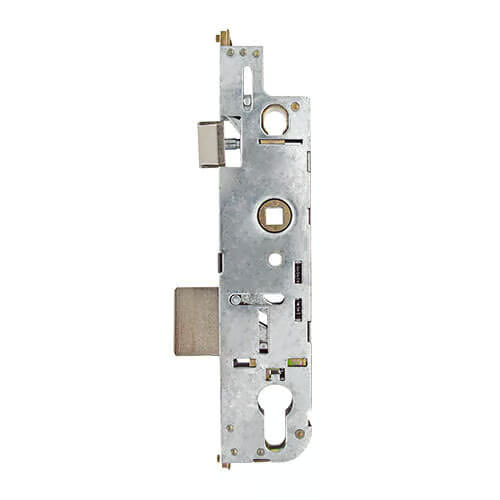
- Multipoint Gearbox GU Old Style
- E-Type Gasket - Black 5m Roll
- E-Type Gasket - Black (Per Metre)
- Top-Hung Window Hinge - Standard
- Side-Hung Window Hinge - Standard
Conclusion and next steps
Most misaligned deadbolt strike plates can be corrected by careful measurement, minor mortice adjustments and securing the strike with longer screws; however, if the issue is caused by door sag or frame movement you should correct the hinges or frame to avoid repeat problems. Next steps: try the minor repositioning steps if you are confident with basic tools; if you have a UPVC, composite or fire door, or if timber is badly damaged, contact a qualified locksmith or carpenter to carry out a safe, compliant repair. For more door lock advice and products suited to professional installers and DIYers, see our wider resources at /guides/door-locks.
Products mentioned in this article
Related articles
uPVC Door Lock Maintenance: Keep Your Lock Working Smoothly
uPVC Door Lock Maintenance: Keep Your Lock Working Smoothly A well maintained upvc door lock reduces call-outs, keeps a property secure and extends the lif...
Hook Lock Sizes and Compatibility: Matching Your Existing Lock
Hook Lock Sizes and Compatibility: Matching Your Existing Lock Replacing a hook lock can be straightforward if you know what to measure and what to check f...
Replacing Individual Hook Locks vs Full Multipoint Mechanism
Replacing Individual Hook Locks vs Full Multipoint Mechanism Deciding whether to replace a single hook lock or the entire multipoint mechanism is a common ...