
How to Fit a Wedge Gasket to Sealed Units: Professional Techniques
How to Fit a Wedge Gasket to Sealed Units: Professional Techniques What is a wedge gasket and when to use one A wedge gasket is a compressible perimeter se...
How to Fit a Wedge Gasket to Sealed Units: Professional Techniques
What is a wedge gasket and when to use one
A wedge gasket is a compressible perimeter seal manufactured from materials such as PVC, EPDM or closed-cell foam. It is designed to close the gap between an insulated glass unit (IGU) and the frame or glazing bead, providing draught proofing, weather resistance and some acoustic improvement. Wedge gasket is commonly used in timber and aluminium frames, secondary glazing and refurbishment work where existing beads are retained or replaced.
Tools and materials you will need
- Wedge gasket of the correct profile and material for the frame
- Sharp craft knife or hot-knife for clean cuts
- Mitre box or a powered mitre saw for repeatable 45 degree cuts
- Measuring tape and a felt-tip marker
- Cleaning solvents compatible with gasket material and frame; isopropyl alcohol is often suitable
- Glazing setting blocks and packers; do not rely on the gasket to carry the unit
- Glazier’s silicone or recommended adhesive/sealant for bonding where required
- Application tools: caulking gun, roller or rubber mallet for seating the gasket
- PPE: gloves, eye protection and suitable ventilation
Preparation: inspect the sealed unit and frame
Before fitting any wedge gasket, inspect the IGU edge and frame rebate. Check for old sealant remnants, glazing compound, dust and moisture. Clean the rebate with an appropriate solvent and ensure surfaces are dry. Confirm that the IGU has been correctly supported using setting blocks at the quarter points; these transfer weight and prevent undue stress on the glass edge seal. The wedge gasket must not be used as a bearing surface for the IGU.
Measuring and cutting the wedge gasket
Measure the internal perimeter of the frame where the gasket will sit. For neat mitred corners measure each run individually rather than relying on a single perimeter measurement. When cutting for mitred corners allow a small tolerance so the gasket sits firmly when compressed: a typical approach is to cut mitres to length to the nearest millimetre and test fit; if using butt joints allow around 2 to 5 mm extra to enable compression and sealing. A sharp blade or hot-knife gives the cleanest edge; frayed or crushed ends will show after compression.
Fitting techniques: mitred corners versus butt joints
There are two widely used jointing methods for wedge gasket: mitred corners and butt joints with corner pieces. Choose the method that best suits the gasket profile and the expected movement of the frame.
- Mitred corners: Cut 45 degree mitres at the ends of each length so they meet neatly in the corner. This gives a continuous appearance and a single compression line. Use a mitre box or saw and check the fit before final seating. Mitres can be tricky on soft gaskets; hold the gasket straight while cutting and use sharp tools.
- Bass-joint or butt joints with corner pieces: For some profiles it is better to butt two straight ends together and use a small corner insert or adhesive to seal. This method can be faster on site and tolerates slight frame movement better; however the joint must be well sealed with adhesive or silicone.
Seating the gasket and ensuring correct compression
Locate the gasket into the rebate by hand and press it into place. Use a rubber mallet or a small roller to seat the gasket evenly; avoid overstretching the material. The gasket should compress sufficiently to form a seal without bulging excessively into the glazing bead area. Aim for modest compression: typically 10 to 20 percent of the gasket’s nominal height depending on manufacturer guidance. Excessive compression can shorten the gasket’s life and place lateral pressure on the IGU edge seal.
Fixing and secondary sealing
Some wedge gaskets clip into dedicated grooves or are retained by a glazing bead; others rely on adhesive. If adhesive is required, use a product compatible with both the gasket material and the frame. Apply adhesive sparingly in a continuous bead behind the gasket or at intervals recommended by the gasket manufacturer. Where a weather seal is required externally, finish with a suitable neutral-cure silicone applied to the outside face; ensure the silicone does not contact the spacer bar of the IGU.
Practical trade tips and refinement
- Always use setting blocks at the specified positions and heights; these establish the glass datum and prevent the IGU bearing on the gasket.
- Store gaskets flat and out of direct sunlight to prevent distortion prior to fitting.
- When fitting long runs, butt the gasket in short lengths and use an adhesive band to hold joints while the sealant cures; this reduces the risk of movement during installation.
- On timber frames allow for seasonal movement; an elasticised gasket material or flexible jointing is preferable.
- For refurbishment, check for existing drainage or weep paths in aluminium frames; do not block drainage with gasket material or sealant.
Common problems and troubleshooting
If you see gaps after seating, check that the gasket has adequate compression and that the frame rebate is square. Bulging or frayed corners indicate over-compression or poor cutting; remove and recut with a sharper tool. If condensation forms at the unit edge after refitting, confirm the IGU edge seals remain undamaged and that you have not trapped moisture inside with inappropriate adhesives. Persistent leaks are often due to incorrect jointing or blocked drainage rather than gasket failure.
Recommended Products
Based on this article, you may find these products helpful:
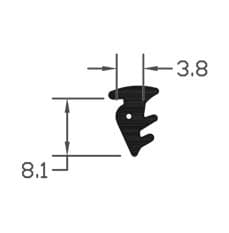
- SYS2 Wedge Gasket
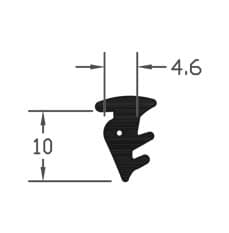
- SYS4 Wedge Gasket
- E-Type Gasket - Black 5m Roll
- E-Type Gasket - Black (Per Metre)
- Structural Glazing Tape - 20mm
Conclusion and next steps
Fitting a wedge gasket to a sealed unit is straightforward when you follow professional practices: prepare the rebate, support the IGU correctly with setting blocks, measure and cut accurately, and ensure proper compression without overloading the edge seal. For product choices, manufacturer installation guides and compatibility charts are essential. For further reading on gasket types and selection, see our pillar resource: /guides/gaskets-seals. If you are unsure about the structural support or the condition of an existing sealed unit, consult a glazing professional before proceeding.
Products mentioned in this article
Related articles
Wedge Gasket Sizes Explained: Finding the Perfect Fit for Your Glazing
Wedge Gasket Sizes Explained: Finding the Perfect Fit for Your Glazing Why the correct wedge gasket matters A wedge gasket is a triangular or tapered seali...
Wedge Gasket vs Flip Gasket: Choosing the Right Seal for Double Glazing
Wedge Gasket vs Flip Gasket: Choosing the Right Seal for Double Glazing Why the right gasket matters Seals are a small component with a big job: they keep ...
Wedge Gasket Installation Guide: Achieving a Watertight Seal Every Time
Wedge Gasket Installation Guide: Achieving a Watertight Seal Every Time A correctly fitted wedge gasket is one of the simplest and most effective ways to p...