
Keyless Deadbolts: Pros and Cons for UK Homes
Keyless Deadbolts: Pros and Cons for UK Homes What is a keyless deadbolt? A deadbolt is a solid metal bolt that projects into a door frame to resist forced...
Keyless Deadbolts: Pros and Cons for UK Homes
What is a keyless deadbolt?
A deadbolt is a solid metal bolt that projects into a door frame to resist forced entry. A keyless deadbolt replaces the traditional keyed operation with an alternative unlocking method: keypad codes, Bluetooth or Wi‑Fi smartphone control, fingerprint scanners, mechanical push buttons, or a combination of these. Keyless deadbolts can be surface mounted, rim types, or morticed into the door like a conventional deadbolt; many smart options fit a euro or round profile cylinder as a retrofit.
Pros of keyless deadbolts
- Convenience: No need to carry keys; access can be granted by code, app, or biometric method. Ideal for families, tradespeople and short‑term guests.
- Access control and audit trails: Many smart deadbolts log entry times and user IDs; useful for landlords, holiday let operators and busy households.
- Temporary access and remote control: Issue time‑limited codes or unlock remotely for trusted visitors; this reduces the need for key exchanges.
- Reduced lockout risk: Mechanical push‑button deadbolts and batteries with low power alerts reduce the chance of accidental lockouts; many models include a mechanical override or emergency key.
- Retrofit options for trades: Devices that attach to an existing euro cylinder or replace the internal thumbturn simplify installation and reduce door modification time.
- Features: Tamper alerts, auto‑lock, schedule locking, and integration with smart home systems add practical value for security and lifestyle.
Cons of keyless deadbolts
- Battery dependency: Most electronic models rely on batteries; if they run flat and there is no mechanical backup then the lock can fail. Choose models with exterior battery access or a reliable mechanical override.
- Cyber and electronic risk: Smart locks connected to Wi‑Fi or Bluetooth present potential attack surfaces; ensure software is updated and use strong passwords and two‑factor authentication where available.
- Not always insurer‑friendly: Some insurance policies require a specific British Standard lock such as BS3621 for external doors; keyless or non‑BS3621 solutions can affect premiums or cover. Always check with the insurer before installation.
- Single‑point security: A deadbolt provides single‑point locking; for uPVC and composite doors a multipoint lock is often stronger against levered or kick‑in attacks. Consider the door type before relying solely on a deadbolt.
- Cost: Good‑quality keyless deadbolts, especially biometric or fully cloud‑connected units, can be considerably more expensive than a conventional lock and may add subscription costs for cloud features.
- Installation complexity: Full mortice deadbolts require accurate cutting and a reinforced strike plate; incorrect fit can reduce security. Tradespeople should install if unsure about templates and frame reinforcement.
Technical considerations and standards
When selecting a keyless deadbolt for a UK home, consider the following technical factors:
- Bolt throw: Aim for a bolt with at least 20 to 30mm throw; shorter throws are easier to compromise.
- Strike plate and frame: Fit the strike plate with long screws that reach the door frame core; use backplates or wrap‑around plates where possible to resist levered attacks.
- Lock grade and testing: Look for independent testing or accreditations such as Sold Secure or Secured by Design; some insurers will also accept specific EN or BS standards. If the property is listed on a policy, consult the insurer for exact requirements.
- Weatherproofing and IP rating: External locks should be suitable for exposure to the elements; check IP ratings for electronic components.
- Emergency egress and fire safety: Any external keyless system must allow rapid escape from inside; avoid solutions that require power or remote unlock only. Fire safety and building regulations must not be compromised.
Practical trade advice
- Survey before specifying: Check door material, thickness, frame condition and existing cylinder type. Recommend multipoint locks for uPVC and composite doors; suggest a deadbolt only where doors and frames are robust.
- Reinforce weak frames: A high‑quality deadbolt fitted into a weak frame is ineffective. Fit a reinforced frame or add a door jamb reinforcement kit and use 70 to 100mm screws to secure strike plates.
- Combine security layers: Pair keyless deadbolts with sash locks, hinge bolts, security chains or glazed door film where appropriate to create multiple lines of defence.
- Offer client choices: Present mechanical keypad, smart Bluetooth, and biometric options, explaining battery life, warranty and connection requirements. Also outline ongoing costs such as subscriptions for cloud services.
- Installation tips: When morticing, use the manufacturer template and a router or chisels for neat, accurate pockets. Ensure the bolt deadens fully into the frame with minimal play to avoid jamming.
DIY guidance for homeowners
- Measure accurately: Note door thickness, handing and existing cylinder type before buying. Some retrofits only support 35 to 45mm doors; others handle wider ranges.
- Choose retrofit friendly models: If you lack carpentry tools, pick a smart lock that replaces an internal thumbturn or clips onto an existing cylinder; these reduce cutting and morticing work.
- Prepare the frame: If fitting a deadbolt, pre‑drill for long screws and, if necessary, fit a strike plate reinforcement. This is the single most effective measure to improve resistance to forced entry.
- Test battery backups and emergency options: Install fresh batteries and test mechanical overrides before finishing. Keep a spare battery kit and know where your emergency key is stored.
- Follow the manufacturer: Use the supplied template and torque settings; incorrect screw lengths or alignment will reduce security and cause premature wear.
Choosing the right product
For most UK homes the safest approach is to match the lock type to the door and occupant needs: multipoint locks for uPVC/composite doors; robust mortice locks or deadbolts with reinforced frames for timber doors. If keyless convenience is required, consider a hybrid solution: a keyless external method with a certified mechanical fallback inside. Check compatibility with your insurance policy and select products with clear technical specifications, proven physical security and software update support.
Recommended Products
Based on this article, you may find these products helpful:
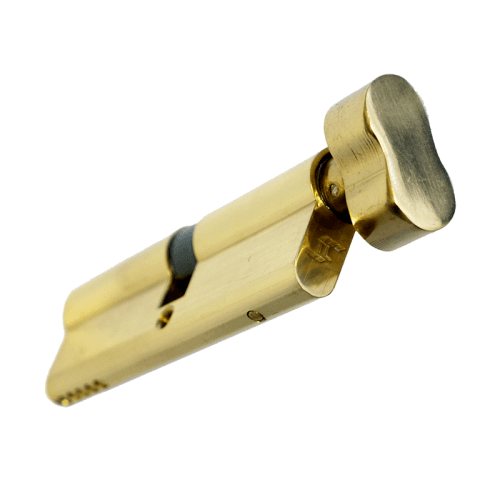
- TL Thumb Turn Euro Cylinder
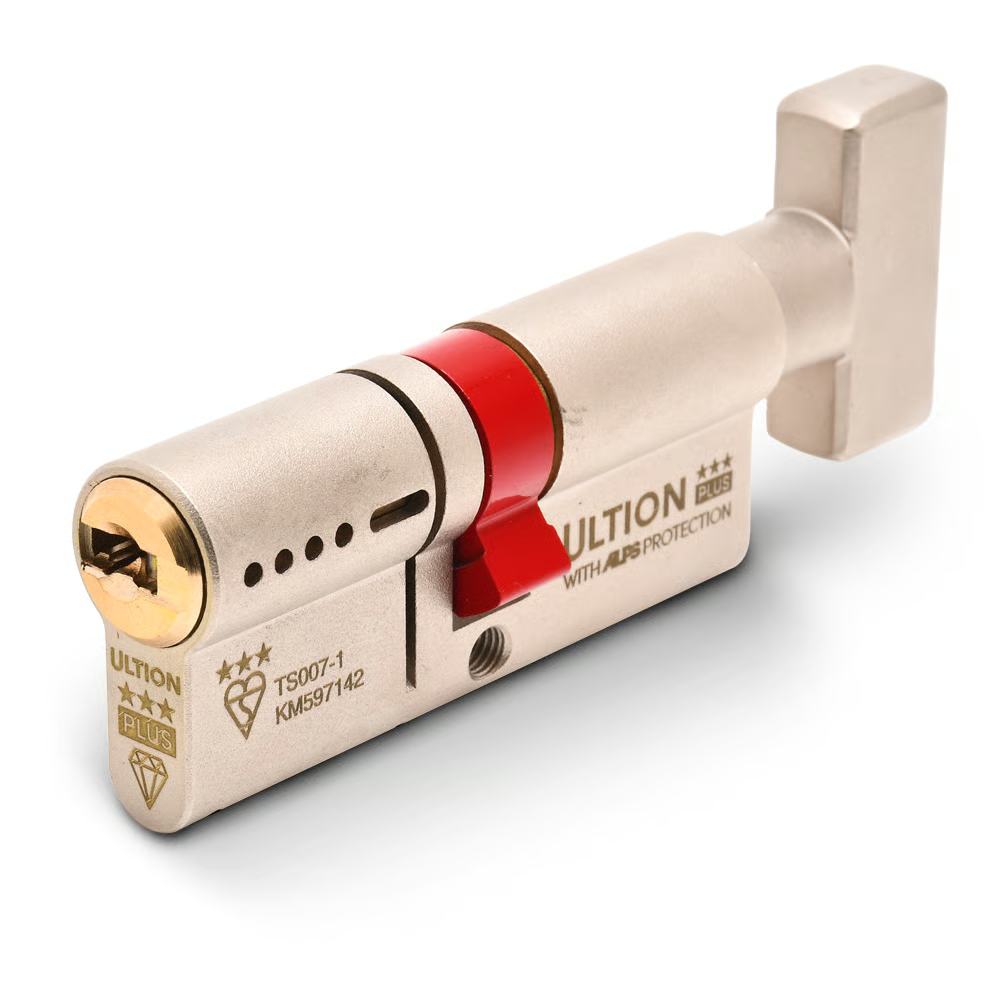
- Ultion Plus TS007 3* Kitemarked Euro Key & Turn Cylinder
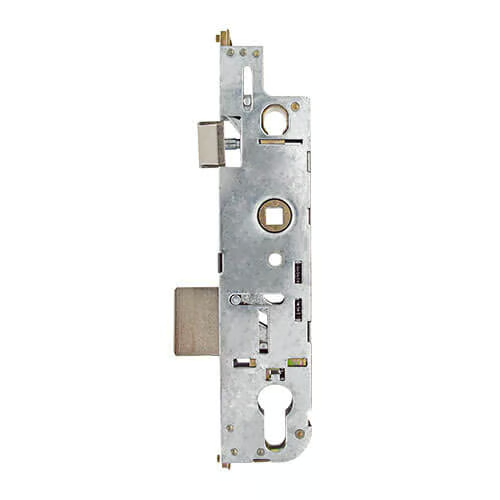
- Multipoint Gearbox GU Old Style
- Top-Hung Window Hinge - Standard
- Side-Hung Window Hinge - Standard
Conclusion and next steps
Keyless deadbolts offer clear convenience and access control benefits, but they must be chosen and installed with an understanding of door type, frame strength, standards and insurance requirements. For trade professionals: survey doors, reinforce frames and specify tested products. For DIY homeowners: opt for retrofit‑friendly models, follow templates precisely and test fail‑safe features.
Next steps: review your door and insurer requirements; visit our pillar page for related resources: /guides/door-locks; contact a qualified installer for a on‑site assessment or speak to a trade supplier for recommended deadbolt models and reinforcement kits.
Products mentioned in this article
Related articles
uPVC Door Lock Maintenance: Keep Your Lock Working Smoothly
uPVC Door Lock Maintenance: Keep Your Lock Working Smoothly A well maintained upvc door lock reduces call-outs, keeps a property secure and extends the lif...
Hook Lock Sizes and Compatibility: Matching Your Existing Lock
Hook Lock Sizes and Compatibility: Matching Your Existing Lock Replacing a hook lock can be straightforward if you know what to measure and what to check f...
Replacing Individual Hook Locks vs Full Multipoint Mechanism
Replacing Individual Hook Locks vs Full Multipoint Mechanism Deciding whether to replace a single hook lock or the entire multipoint mechanism is a common ...