
Thumb Turn Cylinder for Elderly or Disabled Users
Thumb Turn Cylinder for Elderly or Disabled Users A thumb turn cylinder is a common solution where quick, keyless egress from the inside is required while ...
Thumb Turn Cylinder for Elderly or Disabled Users
A thumb turn cylinder is a common solution where quick, keyless egress from the inside is required while retaining keyed security externally. For elderly or disabled users this feature can make daily life safer and more independent: it removes the need to fumble for keys in an emergency and allows doors to be locked and unlocked with one hand. This article covers suitability, security considerations, product selection and practical fitting advice for UK homeowners and trade professionals.
Why a thumb turn cylinder is useful for elderly or disabled users
Thumb turn cylinders replace the internal key slot with a simple rotating knob. Benefits for vulnerable users include:
- Single-handed operation: the thumb turn can be used without holding or manipulating a key.
- Faster escape: in the event of a fall or sudden need to leave, the occupant can operate the lock quickly.
- Reduced handling: less bending or dexterity required, helpful for arthritis or limited grip strength.
- Compatibility: works with most euro profile multipoint locks used in uPVC and composite doors.
Security and compliance considerations
Adding convenience must not significantly reduce security. When specifying a thumb turn cylinder for an external door consider these points:
- Anti-snap protection: choose cylinders tested to TS007 3-star or with anti-snap sacrificial sections to reduce the risk of forced entry.
- Anti-pick and anti-drill features: hardened steel pins and anti-drill plates increase resistance to common attacks.
- Standards: select cylinders that meet EN 1303 and appropriate third-party approvals; check manufacturer data for ratings.
- Protrusion: the cylinder should not protrude excessively beyond the door face; many insurers require minimal protrusion to reduce leverage points.
- Fire doors and communal entrances: some doors, particularly those on escape routes or in blocks of flats, may have restrictions on thumb turns for safety or insurance reasons; consult building regulations, the fire authority or the managing agent before fitting.
Choosing the right thumb turn cylinder
Not all thumb turn cylinders are the same. Match the product to the application with these trade-focused checks:
- Size: measure from the centre of the fixing screw to each end of the cylinder; common sizes include 35/35, 40/40, 45/45. Order the correct length to avoid gap or protrusion problems.
- Cam type and orientation: check the cam position and rotation direction to ensure the new cylinder operates the multipoint lock correctly.
- Thumb turn design: for users with reduced dexterity consider oversized knobs or D-shaped thumb turns for better grip.
- Keying options: supply as keyed alike for multiple doors, or master-keyed for property managers. For communal settings consider keyed access control requirements.
- Finish and profile: match the finish to the existing furniture and ensure the profile aligns with escutcheons or handles.
Practical trade and DIY guidance for fitting
Fitting or replacing a thumb turn cylinder is a routine job for competent tradespeople and experienced DIYers. Follow these steps and safety notes:
- Tools required: crosshead screwdriver, tape measure, replacement cylinder, possibly hex key or Torx depending on handle screws.
- Preparation: confirm the correct cylinder length and features before removal. If fitting for a vulnerable user, consult them on preferred thumb turn shape and operation direction.
- Removal: open the door, remove the handle or escutcheon if necessary, locate and remove the cylinder retaining screw at the edge of the door, turn the existing cylinder slightly to align the cam and slide it out.
- Installation: insert the new thumb turn cylinder with the cam in line; push fully home, replace the retaining screw and reassemble the handle/escutcheon. Test operation from both sides: key turns smoothly and the thumb turn operates the lock without binding.
- Adjustment: if the thumb turn is hard to operate, check handle spindle alignment and multipoint lock engagement; adjusting the striker or gearbox may be necessary to remove excessive torque.
- Check for protrusion: ensure the cylinder end is not proud of the door face by more than a few millimetres; if it is, reorder or swap to the correct length.
Common installation issues and how to avoid them
Tradespeople should be aware of frequent problems that affect usability for elderly or disabled users:
- Wrong cylinder length: leads to security risk or inability to engage the lock. Always measure both sides from the fixing screw to the outer edges.
- Thumb turn interference: internal escutcheons or protective covers can block the thumb turn; choose a profile that clears trims and handles.
- High operating torque: heavy multipoint locks can make thumb turns hard to use; check that the lock gearbox and handle set are in good condition. Replacing worn handles and checking gearbox lubrication can reduce effort.
- Unsuitable location: external gates or side doors with access from outside may not be suitable for thumb turns unless additional security measures are in place; consider laminated glass panes and secure letter plates.
Maintenance and additional options
Regular maintenance keeps thumb turn cylinders reliable for vulnerable users:
- Lubrication: use a graphite or PTFE dry lubricant; avoid oil-based sprays which attract dirt.
- Periodic checks: test the smoothness of operation and ensure there is no excessive play in the thumb turn. Replace cylinders showing wear or corrosion.
- Accessories: consider oversized thumb turns, lever-operated thumb knobs, or keyless electronic cylinders for users who need minimal physical effort.
- Key management: for carers or property managers, provision keyed alike sets or a master key system rather than multiple different keys.
Where to get more technical detail
For full technical specifications on euro profile cylinders, see our pillar resource: /c/locks-security. That page covers sizing diagrams, testing standards and how cylinders interact with multipoint locking systems and door furniture.
Recommended Products
Based on this article, you may find these products helpful:
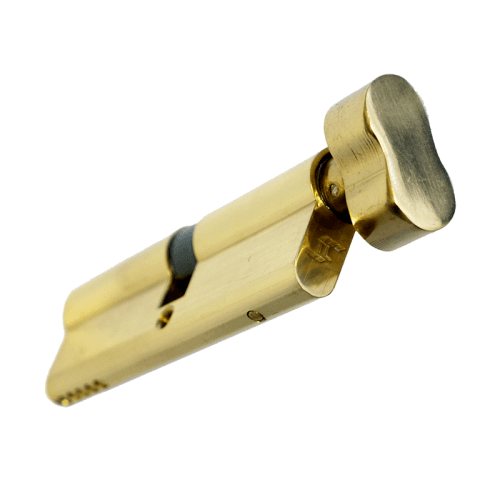
- TL Thumb Turn Euro Cylinder
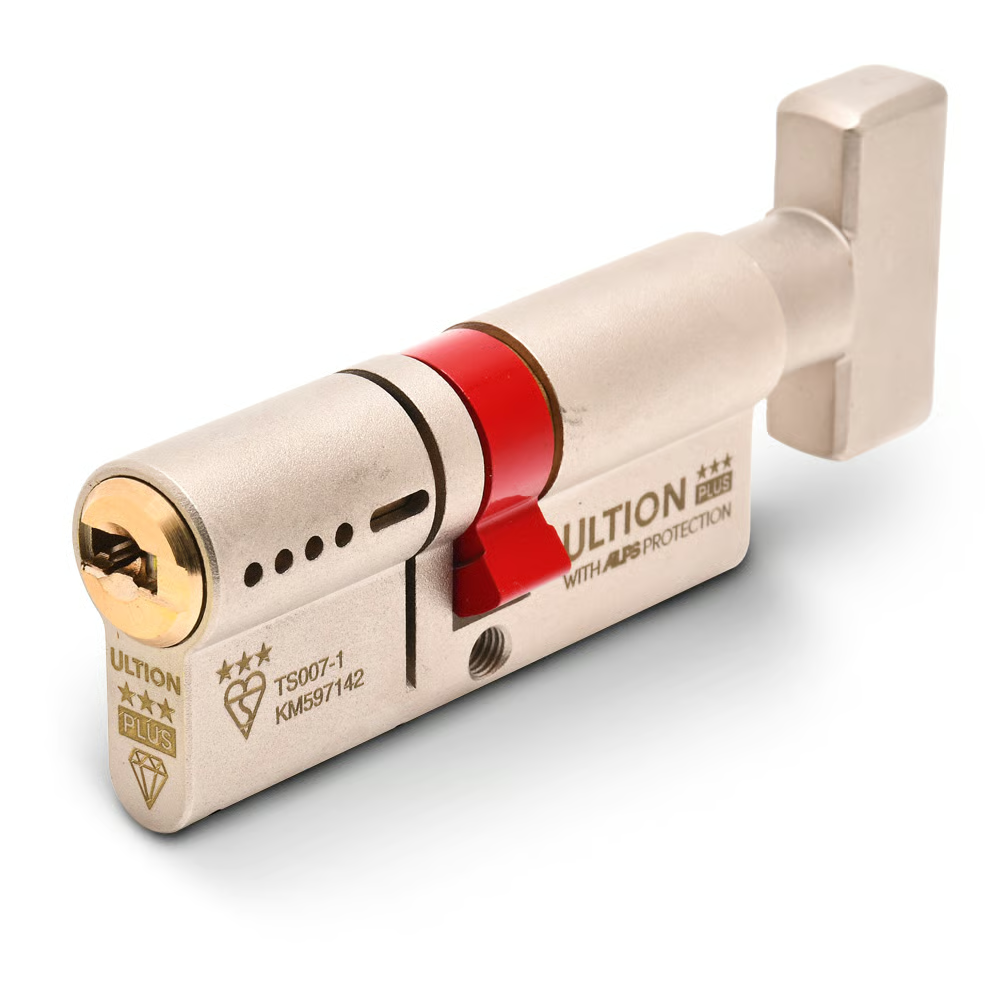
- Ultion Plus TS007 3* Kitemarked Euro Key & Turn Cylinder
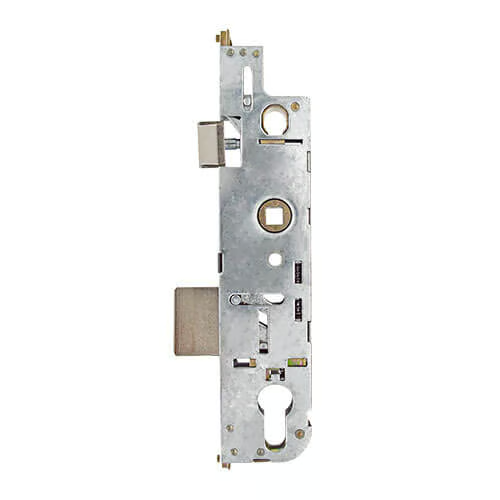
- Multipoint Gearbox GU Old Style
Conclusion and next steps
Thumb turn cylinders offer a practical balance of security and accessibility for elderly or disabled users when selected and installed correctly. Next steps for homeowners or tradespeople are:
- Measure the existing cylinder accurately and choose a product with anti-snap and anti-drill features.
- Consider the user: opt for larger thumb turns or lever options for reduced dexterity.
- Check communal or fire-safety restrictions before fitting; when in doubt consult the building manager or local authority.
- If you need help selecting stock or fitting, contact a reputable supplier or a qualified locksmith for on-site advice.
For trade customers Window Hardware Store can supply a range of thumb turn euro cylinders in security-rated options, keyed alike batches and accessible thumb turn designs. Contact our technical team for product recommendations and sizing support.
Products mentioned in this article
Related articles
What Is a Thumb Turn Cylinder? Convenience vs Security
What Is a Thumb Turn Cylinder? Convenience vs Security What is a thumb turn cylinder? A thumb turn cylinder is a type of euro-profile lock cylinder that ha...
Thumb Turn Cylinder vs Panic Bar: Exit Options Compared
Thumb Turn Cylinder vs Panic Bar: Exit Options Compared examines two very different approaches to door egress and security. The thumb turn cylinder is a co...
Thumb Turn Cylinder Sizes: Finding the Right Length
Thumb Turn Cylinder Sizes: Finding the Right Length Choosing the correct thumb turn cylinder is vital for security, smooth operation and a neat finish on d...