
What Is a Night Latch? Complete Guide for UK Homeowners
What Is a Night Latch? Complete Guide for UK Homeowners A night latch is a rim-mounted door lock commonly used on front and back doors across the UK. It is...
What Is a Night Latch? Complete Guide for UK Homeowners
A night latch is a rim-mounted door lock commonly used on front and back doors across the UK. It is key-operated from the outside and usually has a knob or snib on the inside so the door can be locked or released quickly. This guide explains the types, security benefits and limitations, fitting considerations, maintenance and practical trade advice so homeowners and installers can make the right choices for residential doors.
How a night latch works
A night latch is fitted to the inside face of the door rather than inside the door edge. The main components are the case, a sprung latchbolt, cylinder and external keep or strike on the frame. Turning the external key retracts the latch and allows entry; turning the internal knob or pressing the snib holds the latch back while the door is closed. Some models include a deadlocking plunger that prevents the latch being slipped or lifted from the outside.
Common types of night latch
- Standard rim night latch: Basic latch with internal knob and external key. Easy to fit and popular for timber doors.
- Deadlocking night latch: Includes a deadlocking plunger that engages when the door closes; improves resistance to manipulation and ‘loiding’ attempts.
- Double-cylinder night latch: Key required both sides. Provides extra outward security but compromises quick exit; not recommended where rapid escape is required in case of fire.
- Night latch with anti-snap/anti-drill cylinder: Uses security cylinder technology so the lock is more resistant to forced entry methods common with modern cylinders.
Security: advantages and limitations
Night latches are convenient for daily use and provide a visible deterrent. Deadlocking models are effective against simple bypass techniques. However, a night latch alone will not meet higher insurance or security standards for many doors, especially composite and uPVC doors fitted with multi-point locks. Points to consider:
- Most insurers expect external doors to have a five-lever mortice deadlock certified to BS3621, or a recognised multi-point locking system; a night latch is usually supplementary rather than a sole security device.
- Double-cylinder night latches reduce escape safety; avoid where quick egress is required.
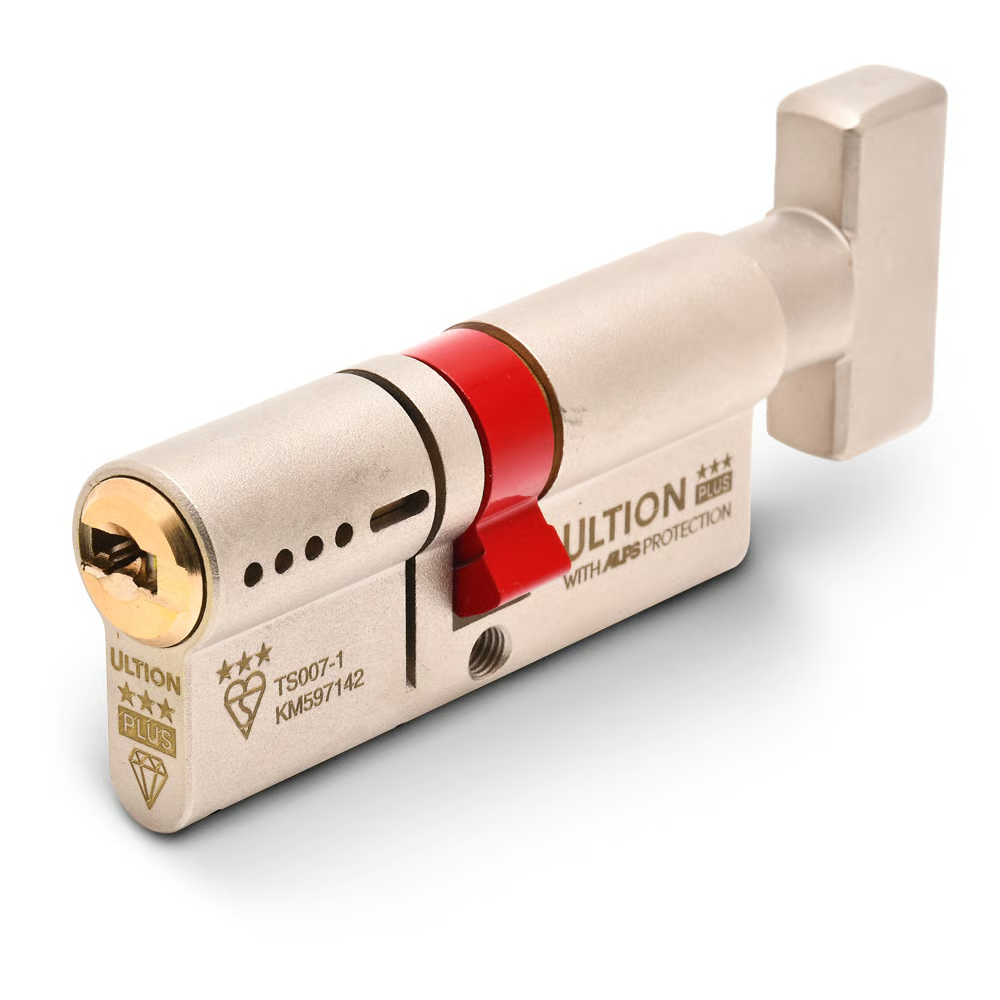
- Choose cylinders tested to TS007 3-star or with anti-snap features for better protection against modern attacks.
- Secured by Design or PAS24 compliance provides additional assurance; check product certificates if security is a priority.
Fitting: trade and DIY guidance
Rim night latches are a popular DIY upgrade, but accurate measuring and the correct fixings are essential for security and function. Use the following checklist and step sequence for a reliable installation.
- Tools and materials: tape measure, pencil, chisel or router, drill and bits, screwdrivers, long security screws (60 to 80 mm for frame fixings), night latch kit, strike plate and appropriate cylinder.
- Pre-fit checks: Measure door thickness and backset; confirm the chosen night latch is compatible with your door material (timber, composite or metal). For UPVC and composite doors, consult the door manufacturer before retro-fitting, because these doors may require specific cylinder types or may be better served with an upgrade to the multi-point system.
- Marking and cutting: Mark the vertical centre at the usual handle height, typically 1000 mm to 1050 mm from the floor, unless matching existing hardware. Position the case on the door face and mark screw and cylinder holes. Cut a shallow recess so the case sits flush against the door face.
- Fitting the case and cylinder: Drill the cylinder hole cleanly at the correct backset. Secure the case to the door with countersunk screws. Fit the cylinder and test the function before final tightening.
- Strike plate and frame work: The strike should be fitted with long security screws penetrating into the frame jamb; these screws are the primary defence against forced entry. Mortice the frame so the strike plate sits flush and the deadlocking plunger can operate freely.
- Testing: Close and open the door repeatedly; check that the latch deadlocks when closed and that the key and internal knob operate smoothly. Ensure there is no binding that could prevent escape.
Trade tips and considerations for installers
- Always fit long screws into the frame; short screws allow the lock to be prised out with minimal force.
- Recommend a deadlocking night latch where a rim lock is required; deadlocking is a key requirement for insurance in many cases.
- Where possible pair a night latch with a mortice deadlock or a multi-point lock for enhanced security; provide customers with a written explanation of the combined protection.
- For uPVC and composite doors, advise clients about compatible cylinders and whether anti-snap upgrades are needed; check the door manufacturer’s guidance to avoid invalidating warranties.
- If the property requires disabled access compliance or has fire-safety considerations, avoid double-cylinder night latches that impede egress; use a thumbturn or internal knob instead.
Maintenance and troubleshooting
Regular maintenance keeps a night latch reliable and long-lasting. Lubricate the cylinder with a dry graphite or specialised lock lubricant every 12 months. Avoid oil-based lubricants that attract dust and gum up mechanisms. Periodically tighten screws, check that the strike plate is secure and inspect for wear on the latch bolt and cylinder.
If the latch sticks or the key struggles to turn, check alignment with the strike plate and that the door has not sagged. Small adjustments to strike plate position or replacing worn fixings usually restores smooth operation. For cylinder issues, an anti-snap cylinder showing visible damage should be replaced immediately.
When to replace a night latch
- Visible signs of wear or corrosion on the case or latch bolt;
- Difficulty operating the key or internal mechanism despite lubrication and adjustment;
- Security upgrades required by insurer or to meet PAS24/TS007 standards;
- Recent attempted burglary or cylinder snap attempt; replace with an anti-snap, anti-drill cylinder and consider a deadlock upgrade.
Further reading and resources
For more information about door locks and compatible hardware options, see our pillar page on door locks: /guides/door-locks. If you are unsure about compatibility with your existing door or multi-point systems, consult a qualified locksmith or installer.
Conclusion: Inspect your current hardware and prioritise a deadlocking night latch with a secure cylinder for everyday convenience plus supplementary protection. If higher security is needed for insurance or peace of mind, pair the night latch with a BS3621 mortice deadlock or upgrade to a multi-point lock. For installation help, contact a registered locksmith or your trade supplier for compatible parts and fixings; if you prefer, browse our door-locks resources at /guides/door-locks to plan the next steps.
Recommended Products
Based on this article, you may find these products helpful:

Related articles
How to Fit a Night Latch: Step-by-Step Installation Guide
How to Fit a Night Latch: Step-by-Step Installation Guide A night latch is a common surface-mounted lock fitted to the inside face of a front door; it lock...
How to Replace a Night Latch Lock: DIY Instructions
How to Replace a Night Latch Lock: DIY Instructions A night latch is a common surface-mounted lock found on many UK front doors; it offers easy exit from t...
Automatic vs Manual Night Latches: Which Type Do You Need?
Automatic vs Manual Night Latches: Which Type Do You Need? Choosing the right night latch for a front or back door is a common decision for UK homeowners a...