
Why Is My Deadbolt Hard to Turn? Common Problems and Fixes
Why Is My Deadbolt Hard to Turn? Common Problems and Fixes A stiff or hard-to-turn deadbolt is a common annoyance for homeowners and an avoidable call-out ...
Why Is My Deadbolt Hard to Turn? Common Problems and Fixes
A stiff or hard-to-turn deadbolt is a common annoyance for homeowners and an avoidable call-out for tradespeople. This problem can reduce security, damage keys and cylinders, and cause door wear over time. Below are the typical causes, practical diagnostic checks and step-by-step fixes suitable for DIYers and trade professionals working on residential doors in the UK.
Common causes of a hard-to-turn deadbolt
- Door or frame movement: seasonal swelling of timber or settled hinges can misalign the bolt and strike plate.
- Dirty or poorly lubricated cylinder: accumulating dust, grit or old lubricants makes the cylinder pins stick.
- Worn keys or internal components: a worn key, damaged cam, or degraded tumblers cause high turning resistance.
- Loose or long fixings: screws that are too long or loose can distort the lock body or push against internal parts.
- Strike plate contact: the bolt may be catching on the strike plate mouth instead of seating freely.
- Mechanical wear: older mortice or rim deadlocks can wear internally; multipoint mechanisms may apply uneven forces.
- Foreign objects and corrosion: rust, salt or debris in external locks will impede movement.
Initial diagnosis: quick checks before you start
Work through these checks in order; each one may solve the problem without further intervention.
- Try another key: if you have a spare, test it; a worn key that only partly engages can feel stiff.
- Operate the lock with the door open: if the bolt turns freely with the door open, alignment is the likely issue.
- Check visible fixings: ensure the cylinder retaining screw and faceplate screws are correctly tightened; do not overtighten.
- Inspect the strike plate: is the bolt contacting the edge of the strike rather than the centre of the hole?
- Look for binding points: mark the bolt edge with a pencil, close the door and operate the lock to see where it rubs.
DIY fixes for homeowners
These repairs are suitable for confident DIYers with basic tools. If you are unsure at any stage, call a qualified locksmith or a trade supplier such as Window Hardware Store.
- Lubricate the cylinder: use a dry graphite powder or a lock-specific silicone spray. Avoid oil-based products like WD-40 as a long-term lubricant; they attract dirt.
- Clean and lubricate the bolt: spray silicone lubricant onto the bolt and operate it several times. For external locks, remove surface corrosion with a wire brush first.
- Realign the strike plate: loosen the strike plate screws, reposition so the bolt centres in the hole, then tighten. If necessary, enlarge the hole slightly with a metal file for a smoother entry.
- Adjust door hinges: tighten hinge screws or replace short screws with longer 50–70 mm screws into the frame to correct sagging. A hinged door that sags by even a few millimetres can make a deadbolt bind.
- Trim swollen timber: if the door sticks near the latch area due to damp or paint, lightly plane the edge where it makes contact with the frame; refinish bare wood to protect it.
- Replace a worn key: have a trade locksmith cut a new key from the lock code or by impressioning; avoid repeatedly using a worn key which damages the cylinder.
Professional and trade-level remedies
For tradespeople and more complex problems, these solutions are appropriate. They often require specialist parts or deeper mechanical work.
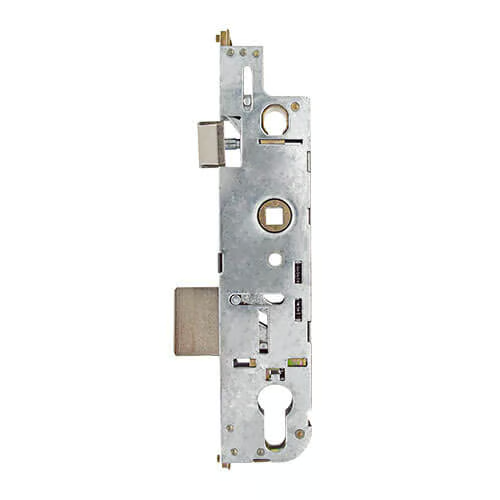
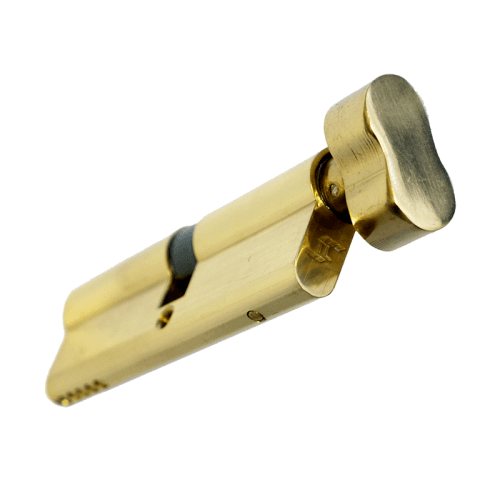
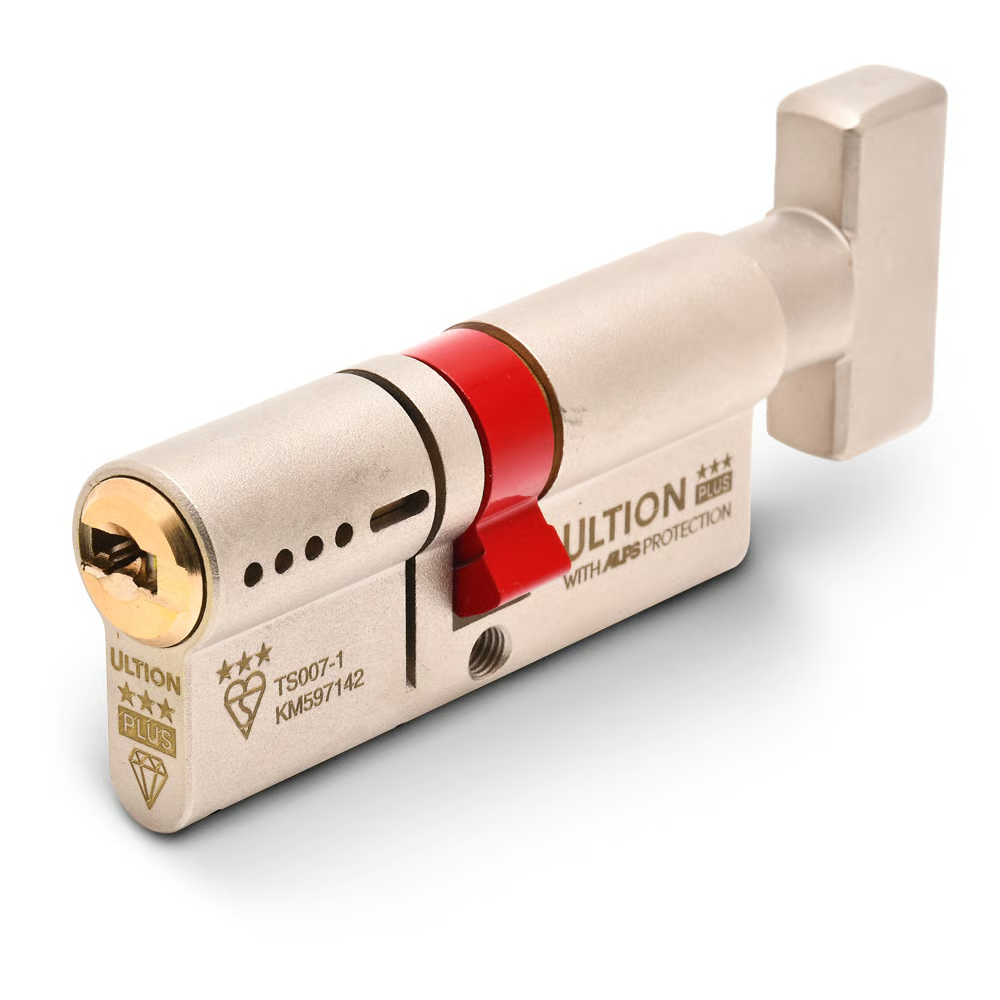
- Replace the cylinder: if tumblers are worn or the cylinder is seized, fitting a new euro cylinder or BS3621-rated deadlock cylinder restores smooth operation and security. Consider anti-snap or anti-bump options for external doors.
- Rekeying and cylinder servicing: a locksmith can re-pin the cylinder and replace worn pins to match new keys without replacing the whole lock.
- Mortice lock overhaul: dismantle the mortice case to inspect cam and bolt faces; replace worn cams, springs or followers and use grease formulated for lock gear where specified by the manufacturer.
- Strike plate modification: for heavy use doors fitted with multipoint locks, install reinforced or adjustable strikes to ensure the bolt operates without side-load.
- Check for frame twist: survey the door and frame with a straight-edge; repair or replace the frame if it is significantly out of square.
Tools, materials and best practice
- Basic tools: screwdriver set, hex keys, metal file, plane, straight-edge, tape measure and masking tape for marking.
- Lubricants: dry graphite, silicone spray for latches and bolts, and lock-specific grease for internal gears on multipoint mechanisms; avoid general-purpose oils in cylinders.
- Replacement parts: correct-size euro cylinder, mortice lock case, strike plates, and long hinge screws for realignment.
- Safety and security: when replacing cylinders on external doors, ensure the new cylinder meets your insurance requirements; record serial numbers or certificates if required.
When to call a locksmith or trade professional
- If a key breaks in the cylinder; do not attempt to force removal without the right extractor tools.
- If the cylinder is seized and lubrication does not help; forcing can cause irreparable damage.
- If the lock is part of a multipoint system showing uneven operation; these systems often need specialist adjustment.
- If you suspect security defects: snapped cylinders, damaged cams or non-compliant replacements that affect insurance cover.
Further resources and compliance
For more detailed technical specifications and component options, see our door locks pillar page: /guides/door-locks. Always follow manufacturer guidance for torque settings and approved lubricants; incorrect servicing can void warranties or reduce security.
Conclusion: Start with the basics: try a spare key, lubricate the cylinder with a lock-friendly product and check door alignment. If these steps do not resolve the stiffness, inspect or replace the strike plate, or engage a locksmith for cylinder replacement or mortice overhaul. For tradespeople, ensure any replacement meets the required British standards and insurer specifications to maintain security and compliance.
Recommended Products
Based on this article, you may find these products helpful:
Products mentioned in this article
Related articles
uPVC Door Lock Maintenance: Keep Your Lock Working Smoothly
uPVC Door Lock Maintenance: Keep Your Lock Working Smoothly A well maintained upvc door lock reduces call-outs, keeps a property secure and extends the lif...
Hook Lock Sizes and Compatibility: Matching Your Existing Lock
Hook Lock Sizes and Compatibility: Matching Your Existing Lock Replacing a hook lock can be straightforward if you know what to measure and what to check f...
Replacing Individual Hook Locks vs Full Multipoint Mechanism
Replacing Individual Hook Locks vs Full Multipoint Mechanism Deciding whether to replace a single hook lock or the entire multipoint mechanism is a common ...