
Why Your Draught Seals Aren't Working: Troubleshooting Common Problems
Why Your Draught Seals Aren't Working: Troubleshooting Common Problems Why draught seals matter Draught seal failure is one of the most common causes of he...
Why Your Draught Seals Aren't Working: Troubleshooting Common Problems
Why draught seals matter
Draught seal failure is one of the most common causes of heat loss, condensation and noise ingress around windows and doors. Whether you are a homeowner fixing a single sash or a tradesperson tasked with weatherproofing multiple properties, identifying why a draught seal is underperforming saves time and expense. This post explains typical failure modes and gives practical repair and replacement advice that works for uPVC, timber and aluminium frames.
Common signs that a draught seal is not working
- Noticeable cold spots or draughts near the perimeter of a window or door.
- Visible gaps when the door or window is closed; seal compression is uneven.
- Difficulty in operating the window or door after seal replacement; binding or excessive friction.
- Seal material appears cracked, brittle, flattened or has permanent set.
- Adhesive or mechanical fixings have failed; seal is peeling away.
- Multipoint locking does not engage fully because the frame is misaligned or the seal is too thick.
Inspect first: simple checks before you replace seals
Start with a thorough visual inspection and a few quick tests. Use a candle, incense stick or a piece of tissue to find where air is moving. Check the following:
- Surface cleanliness: dirt, paint and old adhesive stop new seals from bonding.
- Seal condition: look for compression set, cracks, UV damage or hardening.
- Gap measurement: measure the clear opening when closed. Compare to the nominal compression range of the seal profile.
- Hardware: check hinges, rollers and keeps for wear or incorrect adjustment; these affect compression.
Material and profile issues
Choosing the wrong profile or material causes many failures. Common problems include:
- Incorrect profile: using a bulb or brush seal where a P-profile or compression strip is required leads to poor contact.
- Wrong material: EPDM is generally good for external applications; TPE and silicone may be better where low friction or high temperature resistance is required.
- Hardness mismatch: a seal that is too hard will not compress enough; a seal that is too soft wears quickly and can take a permanent set.
- UV and ozone degradation: some elastomers become brittle outdoors unless UV-stabilised.
Trade tip: specify seals by profile, material and Shore A hardness when ordering; carry samples on site to double-check fit before full replacement.
Fitting errors that compromise performance
Even the correct seal will fail if fitted poorly. Typical installation mistakes include:
- Poor jointing: butt joints without sealant or mitred corners left open allow air paths; mitre corners and use compatible adhesive or a small bead of neutral-cure silicone where necessary.
- Overcompression: forcing a seal into an oversized rebate can prevent the door or window from closing correctly and will damage multipoint locks.
- Undercompression: leaving too little compression creates gaps and noise ingress; aim for a moderate compression so the seal is effective but not overloaded.
- Inadequate backing: some large gaps need a compressible backer rod before applying a seal or sealant.
Adhesive and carrier problems
Adhesive-backed seals are convenient, but tape failure is common on poor surfaces. Solutions include:
- Surface prep: clean with isopropyl alcohol or a mild solvent; remove paint and sanding dust. Primer may be needed for porous timber.
- Temperature: apply adhesive-backed seals in recommended temperature ranges; low temperatures reduce tack.
- Mechanical fixing: for high-traffic doors use aluminium carriers fixed with screws or rivets; these provide a reliable retention method.
- Replace tapes: where tape has failed and surface cannot be made suitable, switch to a mechanical carrier or profile designed for retrofit.
Frame and hardware alignment
Many draught issues are caused by frame distortion or hardware problems rather than the seal itself. Check:
- Hinge and shootbolt settings: adjust hinges and keep positions so the sash sits squarely and applies even pressure to the seal.
- Settlement and warping: timber frames may have twisted; aluminium frames can come out of square. Correct the frame or select a more forgiving seal profile.
- Thresholds and droppers: worn thresholds or missing door closers let under-door draughts persist even with good perimeter seals.
For trade professionals: measure lock engagement and keep spacing; if the locking mechanism will not seat fully because of seal thickness, change to a lower-compression profile or adjust the keep position.
Maintenance and practical repairs for homeowners and trades
Routine maintenance prolongs seal life and avoids premature replacement. Follow these practical steps:
- Clean seals periodically with a mild detergent and rinse; avoid petroleum-based cleaners that swell rubber.
- Apply a silicone-based lubricant to sliding seals and moving parts to reduce wear; do not use oil-based lubricants on rubber.
- Replace small sections rather than entire runs for quick fixes; ensure joints are sealed to prevent air ingress.
- When replacing: measure rebate width, depth and required compression; cut seals square for butt joints or mitre for corners; press firmly onto a clean, dry surface.
- Trade approach: keep a stock of common profiles (P, D/bulb, brush, T, V) and multiple hardnesses to match on-site requirements quickly.
When to call a specialist
If you find structural issues such as severe frame distortion, rot in timber frames, or persistent condensation after sealing, call a glazing specialist or joiner. Complex multipoint lock adjustments are best handled by trained fitters to avoid compromising security. For high-spec projects, specify seals from recognised manufacturers and refer to standards for airtightness where required.
Recommended Products
Based on this article, you may find these products helpful:
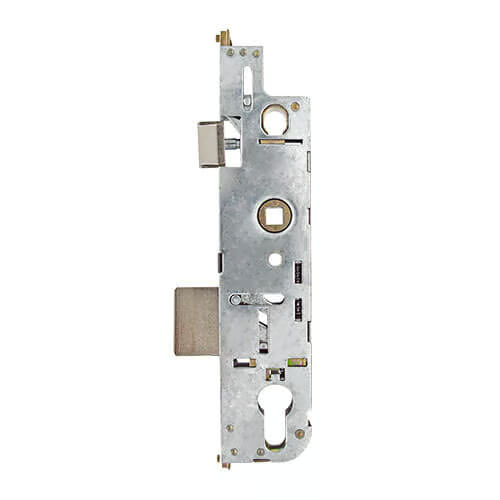
- Multipoint Gearbox GU Old Style
- In-Line Window Mechanism
- Offset Window Mechanism
- E-Type Gasket - Black 5m Roll
- E-Type Gasket - Black (Per Metre)
Conclusion and next steps
Failing draught seals are often the result of material mismatch, poor installation, adhesive failure or hardware misalignment. Start with a careful inspection: identify the type of leak, measure gaps and check frame alignment. For DIY repairs clean and prepare surfaces, choose an appropriate profile and material, and ensure correct compression and jointing. Trade professionals should carry multiple profiles and use mechanical carriers where necessary.
For more technical information on gasket and seal types, profiles and materials visit our pillar page: /guides/gaskets-seals. If you need help specifying the right draught seal for a job, contact our technical team with the frame type, rebate dimensions and the operating hardware details.
Products mentioned in this article
Related articles
How to Prepare Surfaces for Draught Seal Installation: Getting Adhesion Right
How to Prepare Surfaces for Draught Seal Installation: Getting Adhesion Right Proper surface preparation is the single most important factor for long-lasti...
Draught Seal Types Compared: Foam, Rubber, Brush, and Compression
Draught Seal Types Compared: Foam, Rubber, Brush, and Compression Draught seal selection matters for energy efficiency, comfort, and the longevity of windo...
How to Fit Draught Seals Around Windows: Complete Installation Guide
How to Fit Draught Seals Around Windows: Complete Installation Guide Fitting a draught seal is one of the most cost-effective ways to reduce heat loss, eli...