
What Is a Window Restrictor? Child Safety and Security Guide
What Is a Window Restrictor? Child Safety and Security Guide A window restrictor is a device fitted to a window to limit how far the sash can open. It is a...
What Is a Window Restrictor? Child Safety and Security Guide
A window restrictor is a device fitted to a window to limit how far the sash can open. It is a simple but effective method of reducing the risk of falls, deterring unauthorised access and meeting safety expectations for homes, schools and care settings. This article explains the main types of restrictor, where to use them, practical trade advice and DIY installation pointers for UK homeowners and trade professionals.
Why use a window restrictor: child safety and security
Window falls are a recognised hazard for young children and vulnerable adults; restrictors reduce the opening to an amount that makes a fall unlikely. They also act as a passive security device: limiting how far a window can be forced open from the outside makes opportunistic intrusions harder. Consider restrictors where windows are low to the floor, open onto patios or balconies, or where small children are present.
Be aware of escape requirements: windows used as means of escape or rescue must still allow rapid egress in an emergency. For those locations choose quick-release or emergency egress restrictors that can be released from the inside without a key; ensure they meet any applicable fire-safety requirements and building control advice such as Approved Document K regarding protection from falling.
Types of window restrictor and common applications
- Fixed stop or sash stop: A simple mechanical stop fitted to the frame to limit travel; common on vertical sliding sash windows and inexpensive to fit.
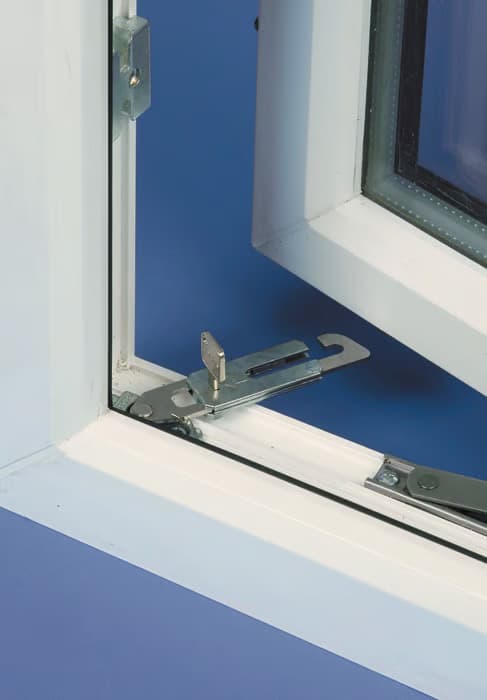
- Keyed or lockable restrictor: Provides a positive lock so the sash cannot be opened beyond the limit without a key; good for security but avoid on escape windows unless a key is stored by occupants or a quick-release backup is fitted.
- Quick-release restrictor: Designed for child safety but with an internal release that opens fully in seconds; used where escape is required.
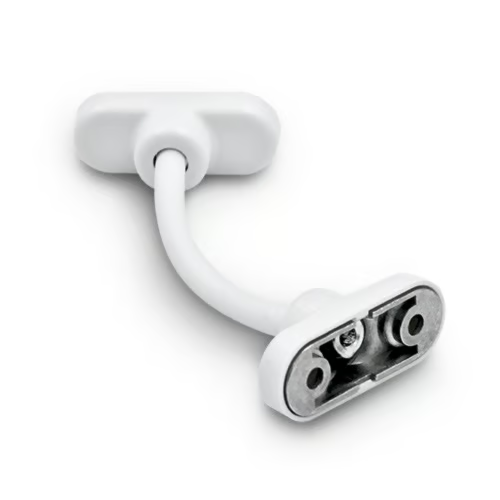
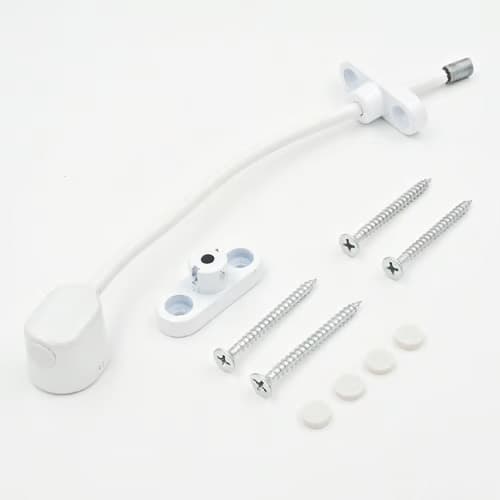
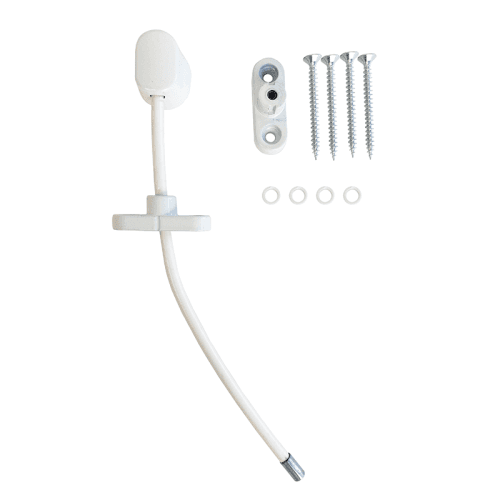
- Cable or stainless-steel strap restrictors: Allow partial opening while bearing high loads; typically used on casement and top-hung windows. They are discreet and robust for trade installations.
- Hinge limiters and friction stays with limiting positions: Built into the window hardware; popular on uPVC and aluminium casements because they combine restrictor function with standard window operation.
- Sash limiters for sliding windows: Specifically for vertical or horizontal sliders; they prevent sash removal and limit opening distance.
Selecting the right restrictor: trade considerations
When specifying restrictors for a project consider the following:
- Window type and operation: choose a product designed for casement, top-hung, tilt-and-turn or sliding sashes as appropriate.
- Load rating and durability: select restrictors from reputable manufacturers with test data for fatigue and load; for commercial or high-risk applications favour stainless steel components and corrosion-resistant finishes.
- Escape requirements: where the window is a designated escape route use quick-release devices that are operable without tools; ensure occupant awareness and signage where necessary.
- Fixing substrate: uPVC, softwood, hardwood and aluminium each require different fixings and pilot-hole sizes; plan for reinforcement plates where frames are thin or hollow.
- Security: where security is the primary aim consider lockable restrictors or security screws to deter unauthorised removal.
DIY installation: practical steps and tips
Many restrictors are straightforward to fit for a competent DIYer; tradespeople will follow manufacturer installation instructions and quality-checks. Typical installation steps:
- Choose the restrictor and test-fit in the closed position to identify location; locate so the restrictor does not foul handles or furniture.
- Mark screw positions on both the frame and sash; ensure one fixing is into solid material, not only into a hollow section or glazing bead.
- Drill pilot holes sized to the screws supplied; on hardwood or metal frames use appropriate drill bits and consider thread-cutting screws for aluminium.
- Fit the frame plate first, then the sash plate or cable assembly; tighten screws so the unit sits flat but do not over-torque and distort plastic components.
- Set the required opening limit: many restrictors are adjustable on-site; commonly fabricators recommend limiting the opening to around 100mm for child safety, but verify with the product guidance and risk assessment.
- Test operation multiple times: open and close the window, engage and release the restrictor and check that the escape release functions where present.
- Secure keys in a known location out of reach of children but accessible to adults; for multi-occupancy or rented properties ensure occupants are informed of the key policy.
Practical trade tips: for uPVC or thin aluminium frames fit reinforcement plates behind the frame fixings; for sash windows use countersunk screws and consider a sash hook combined with a brass plate for a sympathetic finish. Always avoid attaching restrictors to glazing beads where the fitter will be relying on the bead rather than the structural frame.
Maintenance and inspection
Window restrictors are safety items and need routine checks: inspect annually or sooner in high-use areas. Look for:
- Corrosion on metal parts; replace corroded components.
- Fraying or elongation of cables and straps; replace if there is any visible damage.
- Loose fixings: tighten screws, replace stripped threads and install larger fixings or reinforcement plates if necessary.
- Operational function: quick-release mechanisms should operate smoothly; lubricate moving parts with a light machine oil suitable for the material.
Legal and safety considerations
There is no single mandatory national requirement that all domestic windows must have restrictors; however, building regulations and guidance require suitable protection from falling where risks exist. Landlords and duty-holders must consider both safety and fire escape obligations. For public and care settings follow the relevant health-and-safety and fire-safety standards; use restrictors from accredited suppliers and check technical data sheets for load and endurance testing.
Recommended Products
Based on this article, you may find these products helpful:
- UAP Keyless Window Restrictor
- TSS Keyless Cable Window Restrictor
- TSS Fixed Cable Window Restrictor
- RES Lock Concealed Window Restricto
- Top Hung Friction Stay - 12"
Conclusion and next steps
Window restrictors are a cost-effective way to improve child safety and deter unauthorised access while allowing ventilation. Choose a product suited to the window type and intended use: keyed restrictors for additional security, and quick-release units where escape is required. For homeowners carry out a simple risk assessment and consider professional installation for tricky frames or higher-risk situations. Trade professionals should specify restrictors with tested performance, use correct fixings and document installations for compliance and maintenance.
Next steps: inspect your premises for windows that are low or accessible to children; read product data sheets and installation instructions; if in doubt contact a reputable supplier or a registered installer via our pillar page: /c/windows-restrictors.
Related articles
Window Restrictors
What Is a Cable Window Restrictor? How They Work
What Is a Cable Window Restrictor? How They Work A cable window restrictor is a simple mechanical device fitted to a window to limit how far it can open. I...
Cable Window Restrictor Safety Features Explained
Cable Window Restrictor Safety Features Explained What a cable window restrictor does and where it is used A cable window restrictor is a safety device fit...