
Cable Window Restrictor Safety Features Explained
Cable Window Restrictor Safety Features Explained What a cable window restrictor does and where it is used A cable window restrictor is a safety device fit...
Cable Window Restrictor Safety Features Explained
What a cable window restrictor does and where it is used
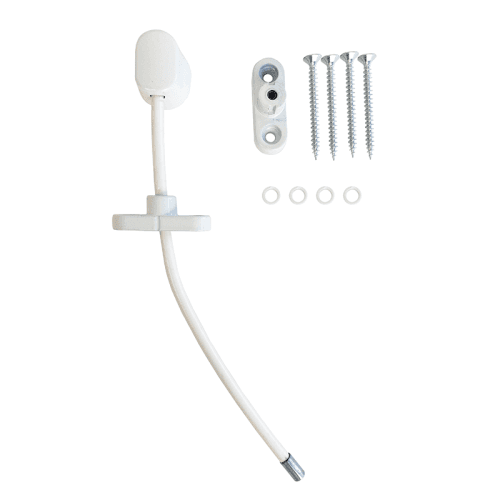
A cable window restrictor is a safety device fitted to windows to limit how far the sash can open. It reduces the risk of falls, prevents children from climbing out, and can act as a theft deterrent while still allowing ventilation. These devices are commonly used on casement, top-hung and tilt-and-turn windows in domestic and light commercial settings; they are also appropriate for balconies and rooflights where limiting opening is required without sacrificing airflow.
Core safety features of cable restrictors
- Material construction: quality restrictors use stainless steel cable or galvanised steel with a corrosion-resistant coating; many have a nylon sheath to prevent abrasion and to protect the finish of the window. Stainless steel prevents rust in coastal or humid environments.
- Breaking strength: cables and fixings are specified to resist significant tension; reputable products will state test values and load ratings. This ensures the cable will restrain accidental loads but not be misrepresented as a full security device.
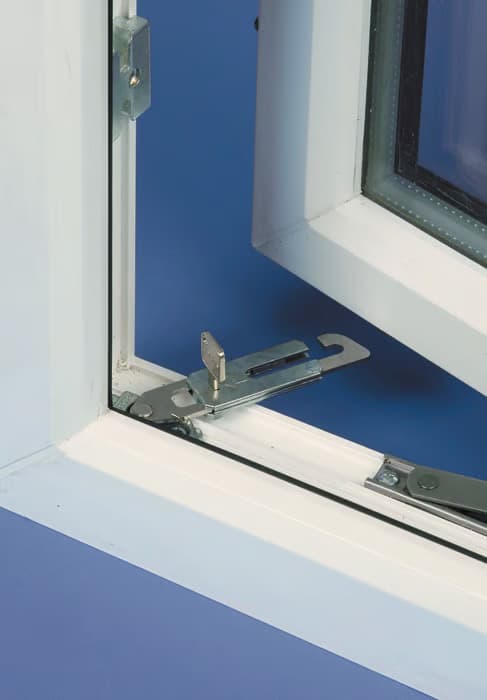
- Locking mechanism: options include key-lock, push-button or tool-free quick-release. For safety, quick-release mechanisms allow escape in an emergency; key-lock models provide additional tamper resistance where unauthorised opening is a concern.
- Tamper-resistant fixings: countersunk security screws or concealed fixings reduce the chance that a child or intruder can remove the unit from the outside. Some designs use one-way screws or cover plates.
- Controlled travel: many cable restrictors are supplied pre-set to a maximum opening distance or adjusted on site; this allows compliance with site-specific safety requirements for ventilation and fall prevention.
- Rotation and multi-point anchoring: for larger or heavier sashes, twin anchors or swivel mounts distribute load and prevent window rotation under load. This maintains the effective anchor point and reduces stress at any single fixing.
- Release for egress: certain models provide a break-away or rapid-release function that can be operated from the inside without tools. This is crucial where an escape route must be preserved for fire safety.
Compatibility and technical considerations
Choose a cable window restrictor that suits the window material and operation: UPVC, timber and aluminium frames each require different fixings and screw lengths. For UPVC with internal steel reinforcement pick self-tapping screws recommended by the restrictor manufacturer; for soft timber use longer woodscrews or backplates to spread load. Avoid fixing into rubber seals or glazing beads; always secure into the structural frame or reinforcement.
Practical trade advice for specification and fitting
- Specify the right type: where emergency egress is mandatory, select a quick-release model that can be operated by an adult from inside without a key. For child-safeguarding in nurseries or schools, consider key-operated restrictors with tamper-proof screws.
- Number and positioning: one restrictor is often adequate for small casements; wider or heavier sashes benefit from two units installed symmetrically to avoid distortion. For top-hung vents mount the restrictor close to the hinge side to reduce leverage on the cable anchor.
- Fixing details: ensure a minimum embedment of 20 to 30mm into timber or into the steel reinforcement of a UPVC frame. Use stainless steel screws in coastal areas. Use pilot holes in hardwood to prevent splitting; countersink where recommended.
- Testing and certification: check manufacturer test data for load rating and longevity. Where a project has fire-safety or building control requirements, keep documentation proving chosen restrictors allow required egress or comply with relevant regulations.
DIY fitting: step-by-step guidance for homeowners
Fitting a cable window restrictor is straightforward for a competent DIYer provided the correct product and fixings are used. Follow these steps:
- Prepare: read the manufacturer instructions; assemble tools: drill with suitable bits, screwdriver, tape measure, pencil, and a block to protect frames while drilling.
- Position: decide on the mounting positions on both sash and frame. Mark pilot holes ensuring the cable will not foul the handle or trim. Typical mounting locations are near the top corner of the sash and directly on the frame opposite.
- Drill pilot holes: use a smaller diameter pilot than the screw shank; in hardwood pre-drill to avoid splitting. For UPVC check for reinforcement and choose screws that will bite into the metal liner.
- Attach anchors: fit the frame and sash plates securely; tighten screws evenly but avoid over-torquing which can strip threads in plastic frames.
- Set travel: adjust the cable length or stopping mechanism to achieve the required maximum opening. Test the stop by opening the window gently to its limit and checking that the restrictor engages without slack.
- Test release and emergency egress: if the unit has a quick release, practise opening it to ensure it can be done easily; if it is key-operated store the key where it is accessible in an emergency but secure from children.
Maintenance and inspection
Regular checks extend service life and ensure safety. Inspect cable sheath and fittings annually or after any impact. Look for fraying, corrosion, loose fixings or play in the mechanism. Lubricate moving parts with a light silicone spray and replace any worn components immediately. Keep the release mechanism clear of paint or debris which can prevent operation in an emergency.
Choosing the right product
Select a restrictor that balances safety, escape requirements and aesthetics. For high-traffic properties consider models with replaceable cables and spare parts availability; for coastal homes specify marine-grade stainless steel. If uncertain about compliance or compatibility with specific windows, consult a trade specialist or the manufacturer. For further reading on locks and restrictors, see our pillar resource: Window locks and restrictors.
Recommended Products
Based on this article, you may find these products helpful:
- UAP Keyless Window Restrictor
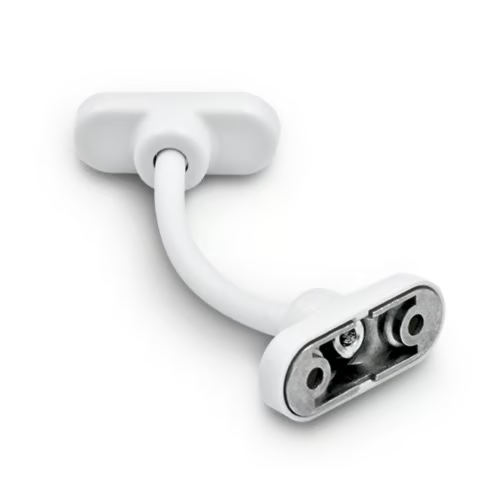
- TSS Keyless Cable Window Restrictor
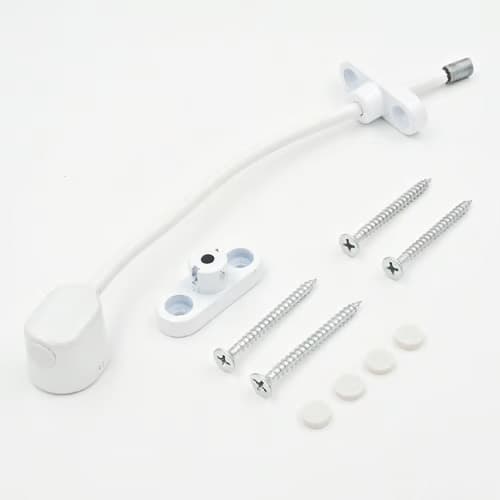
- TSS Fixed Cable Window Restrictor
- RES Lock Concealed Window Restricto
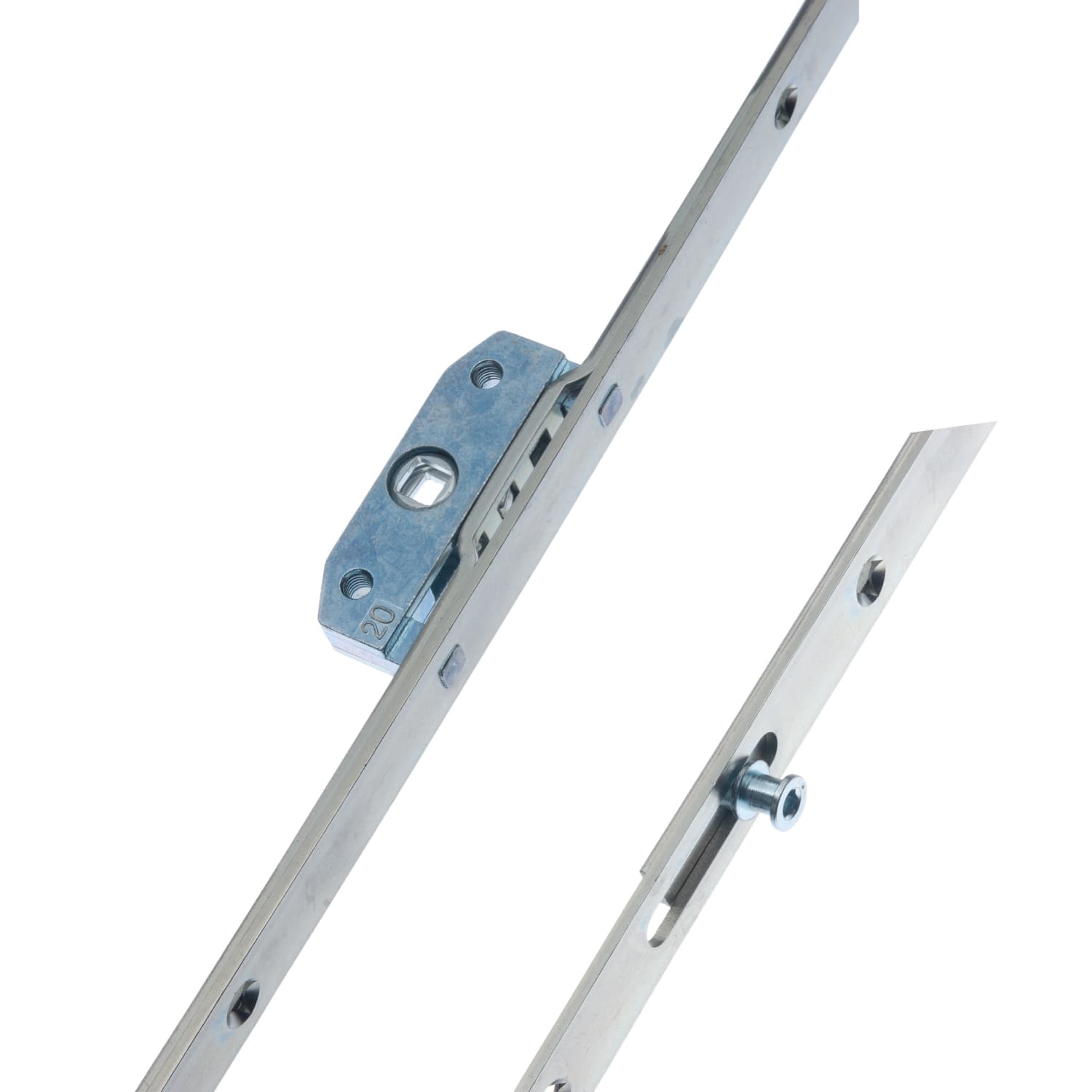
- ERAB Espagnolette Window Lock Universal Lock Replacement
Conclusion and next steps
Cable window restrictors provide a practical balance of safety, ventilation and convenience when specified and installed correctly. For tradespeople: confirm frame structure and choose appropriate fixings, consider dual anchoring on large sashes, and document product data for compliance. For homeowners: choose quick-release options where escape is important and carry out regular checks. If you need help selecting the correct cable window restrictor for a particular window type, contact Window Hardware Store for technical advice, product datasheets and fitting kits.
Related articles
Window Restrictors
What Is a Cable Window Restrictor? How They Work
What Is a Cable Window Restrictor? How They Work A cable window restrictor is a simple mechanical device fitted to a window to limit how far it can open. I...
Window Restrictor Safety Standards: EN 14351 Explained
Window Restrictor Safety Standards: EN 14351 Explained Window restrictor products are a common specification on both new builds and retrofit projects; they...