
Window Restrictor Regulations: Safety Requirements Explained
Window Restrictor Regulations: Safety Requirements Explained Why window restrictors matter Window restrictors are small devices fitted to windows to limit ...
Window Restrictor Regulations: Safety Requirements Explained
Why window restrictors matter
Window restrictors are small devices fitted to windows to limit how far the sash can open. Their primary purpose is to reduce the risk of falls, especially for children, while still allowing ventilation. For trade professionals and homeowners, the correct specification and installation of a window restrictor are essential: a poorly fitted restrictor can give a false sense of security, while the wrong type can block an escape route in an emergency.
Relevant regulations and standards
There is no single piece of UK legislation that mandates a specific restrictor for every circumstance. However, several duties and standards affect how restrictors should be selected and used:
- Landlord and housing duties: landlords must ensure properties are safe and free from hazards under the Homes (Fitness for Human Habitation) Act and relevant HMO regulations; window safety is assessed under the Housing Health and Safety Rating System.
- Building Regulations: Approved Document K covers protection from falling, and Approved Document B covers means of escape; restrictors must not prevent escape where a window is intended as an escape route.
- British and European product standards: choose restrictors that are tested to recognised hardware standards; many manufacturers state compliance with the relevant BS/EN series for window hardware and safety devices. After Brexit, check for the applicable UK conformity marking (UKCA) or recognised third-party certification.
For trade installers, it is good practice to follow manufacturer instructions and to record conformity and test results at handover. When in doubt about escape requirements or building compliance, consult the building control officer or fire authority for the site.
Choosing the right restrictor: types and application
Match the restrictor type to the window style, use-case and the occupants' needs:
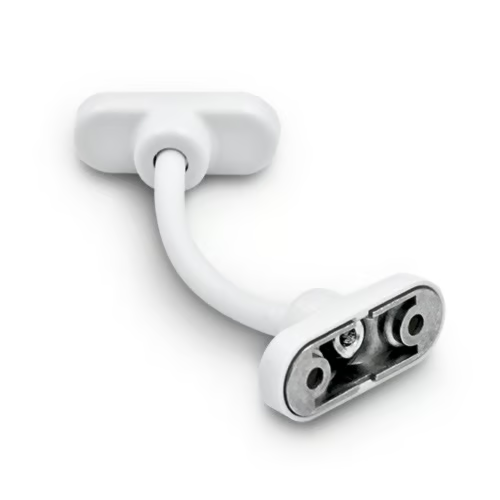
- Fixed cable or chain restrictors: simple devices that limit opening; economical and suitable where escape is not required.
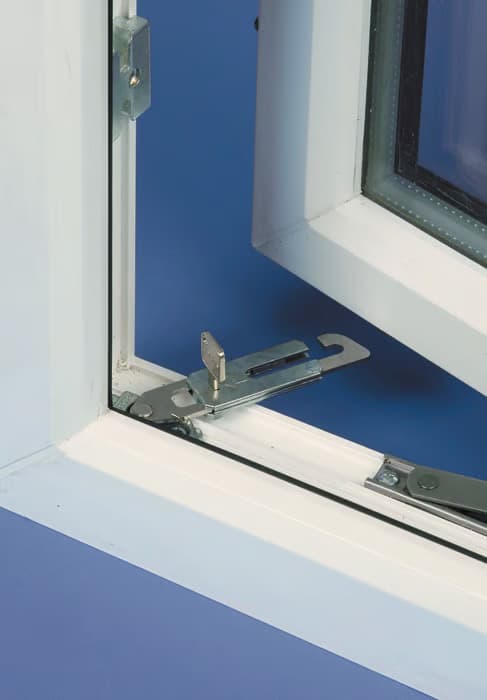
- Key-operated restrictors: offer a higher level of security but require a key to release; consider key storage to avoid delaying evacuation.
- Push-button or quick-release restrictors: these allow the window to be opened fully for emergency escape; choose a version that can be operated single-handedly by an adult.
- Sash restrictors for vertical sliders and friction stays for casement or tilt-and-turn windows: ensure compatibility with the sash weight and opening geometry.
Factors to check before ordering: maximum sash weight and moment, recommended fixing positions, material compatibility (wood, aluminium, uPVC), and the restrictor’s rated performance. Avoid generic fittings; select products with documented test data and clear installation guidance.
Installation and testing: practical trade and DIY guidance
Good installation separates a safe restrictor from an unsafe one. Follow these practical steps:
- Read the manufacturer instructions before starting: match fixing type and screw length to the window frame material. For uPVC, screws should engage into reinforcing steel where possible; for timber, choose screws that penetrate the structural timber, not just the trim.
- Mark fixing positions carefully so the restrictor limits the opening at the desired gap; use a spirit level for alignment on wide frames to avoid binding.
- Drill pilot holes appropriate for the screw and frame material; for masonry or plasterboard reveals use suitable wall plugs or toggles designed for the load.
- Fit fixings with firm, controlled torque; avoid over-tightening which can crack frames or strip threads. Stainless steel or corrosion-resistant fixings are best for wet environments.
- Test operation: open and close the window several times with the restrictor engaged and disengaged. Check that the opening is limited to the intended gap and that the release mechanism operates smoothly and returns to secure condition.
For DIYers: if the window is above ground-floor level or could be required as an emergency exit, consider using a trade installer or consult your local fire authority to confirm the correct restrictor. For tradespeople: demonstrate the release and hand over any keys, record installation details and provide the customer with care instructions.
Maintenance, inspection and record-keeping
Regular maintenance keeps restrictors effective. Recommended practice:
- Inspect restrictors every six months: check fixings, moving parts and any wear. Replace frayed cables, bent links or seized mechanisms immediately.
- Lubricate moving parts with a light machine oil where specified by the manufacturer; do not use heavy greases that collect dust.
- Keep a record of installation dates, manufacturer, model and inspection results. For landlords and contractors, maintaining a log supports compliance and can be required by insurers or building control.
- If a restrictor fails a safety check, isolate the window if necessary and arrange prompt replacement; do not use temporary fixes that are not rated for the intended load.
Special cases: means of escape, HMOs and vulnerable occupants
Where a window is part of an escape route, the restrictor must allow rapid release without tools or excessive force. Quick-release units designed for emergency egress are appropriate; any key-operated device is unsuitable for escape windows unless a key is kept immediately accessible. Properties that house vulnerable occupants, children or elderly residents require a higher level of risk assessment: consider restrictors combined with other measures such as window guards, window sensors and occupant education.
Recommended Products
Based on this article, you may find these products helpful:
- UAP Keyless Window Restrictor
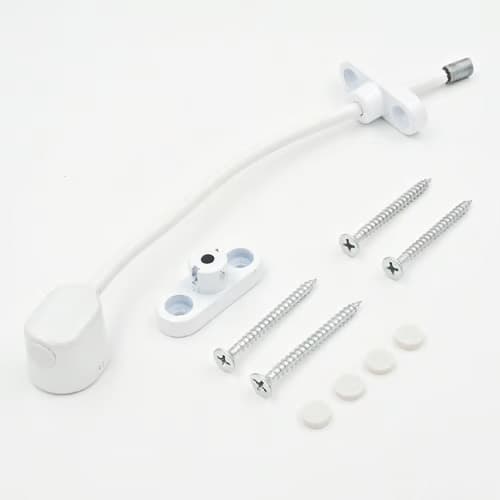
- TSS Keyless Cable Window Restrictor
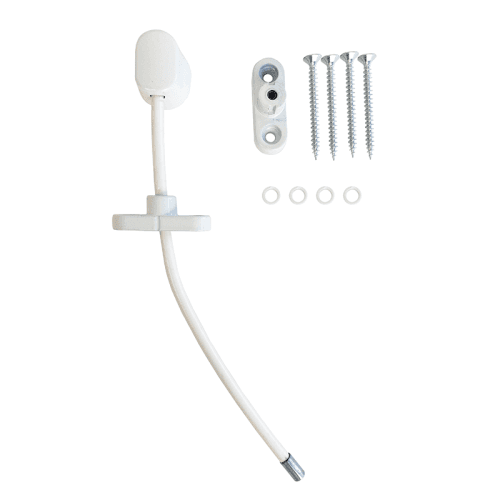
- TSS Fixed Cable Window Restrictor
- RES Lock Concealed Window Restricto
- Top Hung Friction Stay - 12"
Conclusion and next steps
Window restrictors are an important safety measure when correctly specified, installed and maintained. For tradespeople, specify restrictors to suit the window type, follow manufacturer guidance and document installations. For homeowners and landlords, assess whether windows act as escape routes before choosing a restrictor, keep maintenance records and arrange professional help for complex situations.
Next steps: review the windows in your property, consult the product data for any restrictor you plan to fit, and visit our detailed resource on window security for further specifications: window locks & restrictors guide. If you need product recommendations or technical support, contact a specialist supplier to confirm compatibility with your frames and building requirements.
Related articles
Window Restrictors
What Is a Cable Window Restrictor? How They Work
What Is a Cable Window Restrictor? How They Work A cable window restrictor is a simple mechanical device fitted to a window to limit how far it can open. I...
Cable Window Restrictor Safety Features Explained
Cable Window Restrictor Safety Features Explained What a cable window restrictor does and where it is used A cable window restrictor is a safety device fit...